
Car deliveries during the nine-day period saw sharp year-on-year (double-digit increase for most automobile companies.

MSI has been producing about 5,000 units per day from its Gurgaon and Manesar plants.

HMIL sells a range of vehicles starting from entry-level small car Eon to premium SUV Santa Fe, which are priced between Rs 325,000 and Rs 31.75 lakh
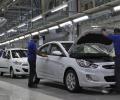
As the second wave of the Covid-19 pandemic abates, India's automakers are hopeful of a quick recovery in sales volumes, led by better rural sentiment, low interest rates, improved availability of finance and a gradual uptick in business and economic activity. In fact, companies have started to ramp up production already, encouraged by high order books and the growing preference for private transport in both rural and urban areas as a means to avoid infections. In early April, the industry had been bullish as the sales trend for March showed that the effects of the Covid-19 pandemic had been left behind. The total vehicle sales had grown by 77 per cent, albeit on a lower base, and for the past few months, sales had consistently touched 300,000 units per month.

Vehicle prices have gone up as manufacturers gear up for the transition to stricter emission norm BS-VI from BS-IV beginning April 1.
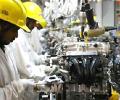
The company adopted the scheme from parent Suzuki, where employees are rewarded for making suggestions to improve productivity and cut wastage.

Cars and two-wheelers attract 28% GST and a cess in the range of 3-22%, taking the effective tax rate to up to 50%.

Maruti announced 10,000 pre-bookings for Ciaz of which 60 per cent was for diesel models.

The company sells a range of vehicles from three-wheelers to high-end sports utility vehicles.

Maruti's Alto retained the top position in June with 14,856 units, as against 15,750 units in June last year.

DLF, Indiabulls Real Estate, HDIL, YES Bank, Union Bank of India and Maruti Suzuki are down 4-12% on NSE.

A clutch of automakers including Maruti Suzuki, Hero MotoCorp, Mercedes Benz India, Eicher Motors, TVS Motor, and Isuzu Motors India announced they had got the clearance from the governments of the states they operate in to resume operations.

Maruti Suzuki India (MSI) on Monday reported a 29.1 per cent rise in total sales in October.

The cumulative m-cap of the companies listed on the BSE soared to a new peak of Rs 82,02,907 crore at 1200 hours.

The company has also exported over 3.8 lakh Alto cars to over 70 countries.

After the hit of the pandemic, India Inc is now worried about the adverse impact of inflation and higher commodity prices on their revenues and margins. The inflation scare is the strongest among manufacturers of consumer goods such as automobiles, consumer durables, and fast-moving capital goods (FMCG). Companies across sectors fear they will not be able to pass on the hike in input costs to their consumers due to weak demand, which, in turn, would lead to a hit on margins and profitability in the forthcoming quarters.

In the domestic market, the car has been well accepted and currently the company has over 80,000 bookings for the model.

In September, sales of 125cc models - that include the Hero Glamour, Splendor, Pulsar 125, Victor Star City, among others - grew by a whopping 30 per cent over the same period a year ago to 305,615 units.
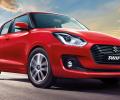
Maruti launched the Baleno in May 2016 and the new Swift in February this year

Improving human resource capability and communication with workers are among the top priorities of Kenichi Ayukawa, the new Managing Director and CEO of Maruti Suzuki India, which witnessed violent labour unrest at its Manesar plant last year.

The NSE Nifty gained 77.85 points, or 0.71 per cent, to finish at 11,008.30. Intra-day, it shuttled between 10,821.55 and 11,035.65.

Once the 21-day lockdown is lifted, which may happen in phases, those who have been contemplating purchasing a car may actually do it, said analysts. Thanks to social distancing norms and rising hygiene awareness, daily commuters may ditch public transport and shared mobility solutions like Ola and Uber. Many are likely to prefer the confines of a car over roughing it up in crowded public transport services such as a metro, local sub-urban trains and buses, they said.

7 Maruti models among top 10 best selling passenger vehicles in April

Passenger vehicle wholesales in India increased by 17 per cent in the second quarter of the current fiscal year as buying sentiment improved and companies stocked up to cater to enhanced demand in the festive season, auto industry body SIAM said on Friday. According to the latest data by the Society of Indian Automobile Manufacturers (SIAM), passenger vehicles sales in the July-September quarter increased to 726,232 units from 620,620 units in the same period last year. Similarly, two-wheeler sales during the September quarter this fiscal rose marginally to 46,90,565 units as compared with 46,82,571 units in the same period last fiscal. However, commercial vehicles sales saw a dip of 20.13 per cent at 133,524 units in the quarter under review as compared with 167,173 units in July-September 2019.

Maruti Suzuki and Hyundai would make the largest gain.

The list clearly shows the dominance of Maruti and Hyundai in the Indian passenger vehicle market.

Indian auto and pharma industries import several critical components and raw materials from China.

There was no sale of premium sedan Kizashi during the month.

The Brezza is Maruti's answer to the Ford EcoSport and Mahindra TUV300 and was developed in India at a cost of Rs 860 crore.
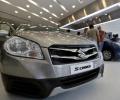
Rs 15,000-cr investment planned to protect vendors from rising realty prices
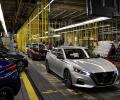
Pandemic-hit auto majors are likely to set aside these time-tested strategies for now, and, instead, focus on attractive finance schemes and an enhanced digital experience.

Carmakers usually come up with such year-end announcements.
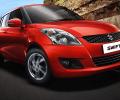
Car makers see good sales post Diwali.

The recall is only for the diesel variants of the three models. Out of the total, 55,938 units are of old Dzire, 12,486 units of old Swift and 1,131 units of Ritz, which were manufactured between March 8, 2010 and August 11, 2013, the company said.

Morgan Stanley Sales & Trading, US, believes the stock is better value for money than others and has a upside as high as 73 per cent. A slowdown in the economy has hit demand and led to a fall in overall consumption in an auto market which till recently was one of the fastest growing in the world.

Seeking to make a mark in the big car segment, the country's largest car maker Maruti Suzuki India will open bookings of its upcoming mid-sized sedan Ciaz from Wednesday.

German car-maker Volkswagen on Thursday said it will increase its vehicle prices by up to 2.5 per cent in India from next month in order to offset impact of high input costs.

The company, which sells every second car in the domestic market, said it expected production and sales to grow between 4 per cent and 8 per cent for the financial year started in April.

Maruti Suzuki India continued its grip in the passenger vehicles market in India with five of its models in the top ten best selling models in June.

Maruti is sticking to this strategy at a time when rival Hyundai is looking to make the most of the monopoly it will have in the compact diesel segment from April 1, 2020, when the BSVI emission norms kick in. The market leader's confidence stems from the rapid shift in favour of petrol in the PV segment. For newer models such as MG Hector and Seltos, nearly 75 per cent bookings are for petrol variants, Kia has 55 per cent from petrol variants. The change in customer preference from diesel variants to petrol has happened quickly over the past few years.
 © 2026 Rediff.com - Investor Information - Advertise with us - Disclaimer - Privacy Policy - Sitemap - Feedback - About us - Terms of use - Grievances