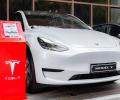
The Delhi high court has granted interim injunction in favour of US-based Tesla Inc by directing Indian company Tesla Power India not to use trademarks 'Tesla Power' or 'Tesla Power USA' in any form, including manufacturing of electric vehicles.
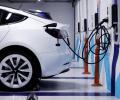
India's electric vehicle (EV) industry hit a new milestone in 2024, with sales surging 26.5 per cent year-on-year to 1.94 million units as of December 29, according to Vahan data from the Ministry of Road Transport and Highways (MoRTH).
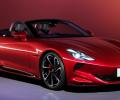
Maruti Suzuki, Tata Motors, Mahindra & Mahindra, Hyundai and MG Motors are gearing up to introduce EVs in India.

Why is Shailesh Chandra, managing director of Tata Motors Passenger Vehicles and Tata Passenger Electric Mobility, not worried about the competition?
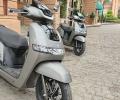
'Price competition is fierce, with many companies selling at zero margin.' 'This pricing pressure is challenging smaller companies and will likely drive some out of the market over time.'

The Rs 500-crore Electric Mobility Promotion Scheme (EMPS) 2024, introduced by the Centre to provide incentives to the electric mobility industry, will conclude on July 31 with barely 3.6 per cent of the targeted vehicle sales achieved so far. This is in stark contrast to the earlier flagship Faster Adoption and Manufacturing of Electric Vehicles (FAME) scheme, which exceeded its sales targets. According to data from the Ministry of Heavy Industry (MHI), only 13,499 of the 372,215 targeted vehicles have been sold under the EMPS scheme.
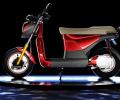
The government has taken a slew of steps to boost the sales of electric two-wheelers and three-wheelers under its Electric Mobility Promotion Scheme (EMPS) 2024, which includes allowing manufacturers to upload claims twice a month and gives them a 120-day window to submit it. The Rs 500-crore scheme -- which had replaced the flagship Faster Adoption and Manufacturing of Electric Vehicles (FAME) scheme-- comes to an end on July 31st.

The Ministry of Heavy Industries (MHI) has debarred Hero Electric and Benling India, two defaulters under its flagship Faster Adoption and Manufacturing of Electric Vehicles in India Phase-II (FAME-II) scheme, from participating in any of its incentive programmes in future. This action follows the ministry's findings that the phased manufacturing programme (PMP) guidelines were violated by these two companies, senior officials told

The Ministry of Heavy Industries has approved 11 electric vehicle (EV) manufacturers, including Ather Energy, Bajaj Auto, Hero MotoCorp, Ola Electric, and Mahindra, to receive incentives under the recently introduced Electric Mobility Promotion Scheme (EMPS) 2024. "A total of 11 firms have been granted approval under the EMPS, with several more under consideration," informed a senior official of the ministry to Business Standard. The scheme aims to sustain the growth in EV sales, replacing the Faster Adoption and Manufacturing of Electric Vehicles - II (FAME-II) scheme.

The new scheme, promoting manufacturing of electric vehicles (EVs) by global majors, will give a fillip to companies like Tesla and its upstart rival Vinfast, both of whom have lobbied for lower import duties from the Centre. While Vinfast has already announced an investment of Rs 4,000 crore to set up an electric vehicle (EV) plant in Tamil Nadu, Tesla's next move will be watched carefully. Four years ago, Musk announced that his company would come to India.
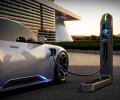
Manufacturers of electric vehicles (EVs) have been lukewarm to the ad hoc subsidy scheme announced by the Centre for them. Sector majors have not been enthused by the lower level of incentives in the scheme, which has replaced the flagship Faster Adoption and Manufacturing of Electric (and Hybrid) Vehicles-II. Moreover, increased stringency in claiming subsidies and delays in disbursement have been cited by several original equipment manufacturers (OEMs).

With just a month left in this financial year, electric two-wheeler sales, so far, are at just 62 per cent of the ambitious target of 1 million units set for 2022-23 by the NITI Aayog. According to VAHAN data, compiled by the Society of Manufacturers of Electric Vehicles (SMEV), 620,006 units of electric two-wheelers were sold across the country in FY23 until February 21. Though the industry may miss the 1-million target, sales in FY23 are already up 146 per cent from 249,621 units sold in FY22.
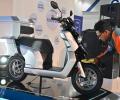
Based on discussions with stakeholders, the ministry is proposing to allocate Rs 26,400 crore for FAME-III subsidy alone with electric two wheelers getting around Rs 8,158 crore, electric buses Rs 9,600 crore and electric three-wheelers Rs 4,100 crore, according to sources in the know. Along with some other components like setting up an innovation fund and money for testing , the total allocation could cross Rs 33,000 crore, estimates suggest.

Companies making electric two-wheelers, through their association Society of Manufacturers of Electric Vehicles (SMEV), have taken on the Department of Heavy Industries (DHI), saying they did not get subsidies for even half the mandated 1 million units they manufactured. Subsidies are given under Faster Adoption and Manufacturing of Hybrid and Electric Vehicles 2 (FAME II). In a petition to the parliamentary standing committee on industry energy and estimates, the SMEV said the department had done an "accounting error" by showing that it (the department) was close to achieving the mandated target by including sales of the EVs that were "not funded" under the scheme.
Seven electric two-wheeler companies have suffered a cumulative loss of over Rs 9,000 crore on account of unpaid dues and loss of market after their subsidies were stopped last year, the Society of Manufacturers of Electric Vehicles (SMEV) said on Wednesday. These companies have also been directed by the govt to refund the subsidies availed by them. The audit by SMEV's chartered accountants indicates the total, cumulative damages to affected companies could account for over Rs 9,000 crore on a conservative basis, it noted.

'India joined a select group of countries at the global level after this finding and it will fulfil the vision of Prime Minister Narendra Modi's 'Aatmanirbhar Bharat' (self-reliant India)'

Honda Motorcycle and Scooter India (HMSI), India's second-largest two-wheeler maker, on Wednesday revealed its electric vehicle (EV) roadmap, which includes setting up a dedicated EV factory, launching the first two EVs in 2023-24, and establishing 6,000 battery exchange points in the country. HMSI plans to establish a specialised unit for the manufacturing of electric vehicles (EVs), named 'Factory E', at its Narsapura plant located in Karnataka. Factory E will be created by converting an existing production line that currently manufactures internal combustion engine (ICE) vehicles, said Atsushi Ogata, HMSI managing director and chief executive officer.

Auto Expo 2023 may not trigger a fresh rally in automobile stocks, say analysts, as this year's edition lacks participation from major listed players. It is also owing to the focus on electric vehicles (EVs), a segment where four-wheelers have minuscule market share. "In the passenger vehicles (PV) segment, Maruti Suzuki India and Tata Motors are the only listed players.

China's covid crisis could provoke a raw material crunch for India's EV industry later this year.

Silver, which is currently trading at Rs 68,453 per kilogram, has appreciated 21.7 per cent over the past three months. Investors, however, shouldn't get carried away by its recent performance and put their money in it. Instead, they should evaluate its pros and cons and then take a considered decision based on their risk appetite.
as the FAME II deadline of March 31, 2024, nears, EV manufacturers are worried about their investments and future plans.

The Union Cabinet on Wednesday approved a Rs 26,058 crore production linked incentive (PLI) scheme for auto, auto-components and drone industry to enhance India's manufacturing capabilities, Union Minister Anurag Thakur said on Wednesday. The PLI scheme will incentivize the emergence of advanced automotive technologies' global supply chain in India.
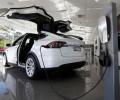
Sales of total electric vehicles in India are expected to be around 10 lakh units this year, equal to what was sold collectively in the last 15 years, mainly riding on the good traction witnessed by electric two-wheelers, Society of Manufacturers of Electric Vehicles (SMEV) said on Thursday. In 2021, the sales of electric two-wheelers (E2Ws) in the country jumped over two-fold at 233,971 units driven by a good traction of high-speed scooters as compared to 100,736 units in 2020, SMEV said in a statement. "We haven't seen better days than the last few months in the entire EV journey.
Arun Jaitley presented the Budget in Parliament on Saturday.

Under the scheme, the government will provide financial incentives for each electric vehicle sold in India during the remaining part of the 11th Plan.

Wants road map for GST, reduction in duties and no additional tax on diesel cars.
With Budget concessions in place to propel the Indian automobile industry on a green drive, manufacturers are planning electric and hybrid variants of cars and two-wheelers.
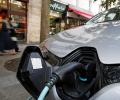
Society of Manufacturers of Electric Vehicle (SMEV) on Thursday said sales of EVs in India fell 20 per cent in the financial year 2020-21 to 236,802 units. In 2019-20 sales of electric vehicles (EVs), including electric two-wheelers (E2W), electric three-wheelers (E3W) and electric four-wheelers (E4W), stood at 295,683 units. For FY21, the E2W segment sales declined by 6 per cent to 143,837 units, as compared to 152,000 units in FY20, SMEV said in a statement, adding that the FY21 E2W sales included 40,836 high-speed and 103,000 low-speed E2W. The E3W segment registered sales of 88,378 units as against 140,683 units sold in FY20.


With only a handful of models by a few manufacturers including Tata Nexon, MG ZS, Hyundai Kona, among others, the segment has remained under tapped.
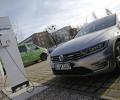
Eyes investments of Rs 31,000 cr in research and manufacturing of electric vehicles
This is part of the nine memorandums of understanding (MoUs) worth Rs 5,027 crore, including Hero Group-backed Ather Energy's over Rs 600 crore investment, to establish a manufacturing facility for e-vehicles.

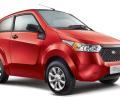
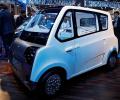
The much awaited Mahindra e20 launched on Tuesday.
An EV has to be purchased along with the battery as there are hardly any battery swapping, rental, or leasing business models available across India.

Ahead of the upcoming Union Budget, Society of Manufacturers of Electric Vehicles (SMEV) has asked Finance Minister Nirmala Sitharaman to either rejig the FAME II scheme or reintroduce FAME I, saying the programme meant to promote EVs in its second avatar has been able to achieve less than 10 per cent of its target. The Rs 10,000-crore FAME-II scheme which is to be implemented over a period of three years, came into effect from April 1, 2019. It is the expanded version of FAME India I (Faster Adoption and Manufacturing of (Hybrid) and Electric Vehicles (FAME) which was launched on April 1, 2015, with a total outlay of Rs 895 crore.
The government will create an EV Venture Capital Fund, for financial support to start-ups in the segment. The overall aim is to make Tamil Nadu the preferred destination for EVs and component makers.
The new scheme may link the incentives to the battery power - higher the power, higher the incentive and most electric two-wheelers running on Indian roads use low power and fast charging batteries.
EV players suggest a reduction in the goods and services tax on batteries from 18 to 5 per cent as it would help push demand.
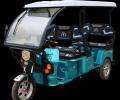
A series of flip-flop on policies and a non-existent charging infrastructure are the biggest challenge in achieving the target of selling 6-7 million hybrid and electric vehicles by 2020.

Hemlatha Annamalai and P Bala's Ampere Vehicles makes e-vehicles in Coimbatore.
 © 2026 Rediff.com - Advertise with us - Disclaimer - Privacy Policy - Sitemap - Feedback - About us - Terms of use - Grievances