
Railways ramps up project to instal AI-based cameras that can recognise faces.
'It does two things that even our erstwhile colonial masters did not deem fit for their subjects: The Bill does away with any checks or balances on the exercise of interception and surveillance powers, including any penalty whatsoever for unauthorised interception, opening, scrutiny, or destruction of postal materials.'

The Right to Privacy judgment reinstates the individual as VIP, says Mitali Saran.
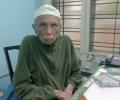
The retired Karnataka high court judge is frail but sharp as a tack is a staunch disbeliever of Aadhaar, saying all it does is replace other forms of identification.

Dhananjaya Y Chandrachud, however, had no qualms about overturning the judgements of father Y V Chandrachud on hot- button issues like adultery and the right to privacy.

He will take oath on November 9, a day after incumbent CJI Justice Uday Umesh Lalit demits office on attaining the age of 65.

President Droupadi Murmu administered him the oath at a brief ceremony held at the Rashtrapati Bhavan.

Counted as a judge who enriched the 'verdict docket' of the apex court, Justice Chandrachud is viewed as sharp, articulate and forward looking.
.jpg)
The implementation of the much-hyped Aadhaar Card scheme is in trouble following the Supreme Court's interim order on Monday, which observed that the card can be issued only to Indian nationals and the identification number cannot be made mandatory for availing of benefits of the government's subsidy schemes.

The Aadhaar issuing authority, Unique Identification Authority Of India, has no data on those who have been denied benefits for want of the 12-digit biometric identification number, the Supreme Court was informed on Thursday.

A five-judge constitution bench headed by Chief Justice Dipak Misra, hearing a petitions challenging Aadhaar, said no system in the world was secure and the issue was not as to how data is collected, but how the information so collected are used or misused.

Justice Ranjan Gogoi, who will demit office as the Chief Justice of India in a week's time, has etched his name in the annals of history by giving finality to one of the most politically and religiously sensitive cases, the Ayodhya land dispute, which dates back to even before the Supreme Court came into existence in 1950.

The apex court's five-judge Constitution bench headed by Chief Justice Dipak Misra said Aadhaar is meant to help benefits reach the marginalised sections of the society and takes into account the dignity of people not only from personal but also from community point of view.

Biometric authentication is based on the unscientific and questionable assumption that there are parts of human body that does not age, wither and decay with the passage of time.

Admittedly, EVMs too have a UID number and any convergence of data can make the secret ballot system a party of history, warns Dr Gopal Krishna in the 5th part of his series against Aadhaar.
 © 2026 Rediff.com - Investor Information - Advertise with us - Disclaimer - Privacy Policy - Sitemap - Feedback - About us - Terms of use - Grievances