
IIM Lucknow has concluded its 2020-21 final placements.
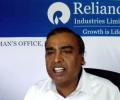
Billionaire Mukesh Ambani's Reliance Industries has announced the contours of carving out of its oil-to-chemicals (O2C) business into an independent unit with a USD 25 billion loan from the parent, as it looks to unlock value by selling stakes to global investors like Saudi Aramco.

Billionaire Mukesh Ambani's Reliance Industries on Friday reported a 43 per cent jump in its September quarter net profit as its businesses from oil to retail fired on all cylinders, growing both sequentially and on a year-on-year basis. Net profit of Rs 13,680 crore, or Rs 20.88 per share, in July-September compared with Rs 9,567 crore, or Rs 14.84 a share, in the same period a year back, the company said in a statement. While better realisation and a sharp rise in crude oil prices benefited the old-economy business, retail saw footfalls at stores reach pre-Covid levels and per user earning from telecom business rose.

Billionaire Mukesh Ambani's Reliance Industries Ltd on Friday reported a 22.5 per cent rise in net profit for the quarter ended March on the back of bumper oil refining margins, steady growth in telecom and digital services and strong momentum in the retail business. The oil-to-retail-to-telecom conglomerate's consolidated net profit rose to Rs 16,203 crore in the quarter ended March 31, 2022 from Rs 13,227 crore, the firm said in a statement. Net profit, however, fell 12.6 per cent sequentially -- breaking a six-quarter chain of quarter-on-quarter improvement.
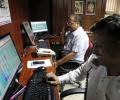
SBI was the top gainer in the Sensex pack, surging around 8 per cent. Tata Steel, Bajaj Finance, HDFC Bank, NTPC, Axis Bank and ICICI Bank also ended with firm gains. On the other hand, TCS, HUL, Bajaj Auto and Infosys were among the laggards.

RIL plunged around 4% after scaling its life-time high of Rs 1,978.50 as investors rushed to book profits after the company's AGM. Bharti Airtel, ONGC, IndusInd Bank, Bajaj Finance and SBI were also among the laggards. On the other hand, shares of Infosys rallied around 6 per cent ahead of its quarterly earnings. HCL Tech, TCS, Tech Mahindra, Axis Bank and HUL too ended with robust gains.

India's shift towards US companies for technology investments and partnerships fits well with the present government's 'Atmanirbhar Bharat' and 'Make in India' initiatives, say experts.
To help 2G customers who have to buy a new phone to upgrade to 4G, the company had earlier introduced 4G feature phones, to make it affordable for them to make the switch.

Reliance Jio, together with partners, has tested its 5G solutions in India, successfully demonstrating speeds of over 1 GBPS, and its 'Made in India' solution is "globally competitive", RIL chairman Mukesh Ambani said on Thursday. Ambani also exuded confidence that the company will be the first to launch full-fledged 5G services in the country. Jio is not just working to make India '2G-mukt' (free from 2G) but also '5G-yukt' (5G empowered), he added. Jio's engineers have developed a 100 per cent home-grown and comprehensive 5G solution that is fully cloud native, software defined, and digitally managed.

For last two months, much of the discussion, a large part of due diligence, agreement negotiations, etc, have happened remotely.

Reliance Industries on Friday reported a 41.5 per cent jump in its third quarter net profit as oil, retail and telecom businesses fired on all cylinders. Net profit of Rs 18,549 crore in October-December compared with Rs 13,101 crore a year back, the company said in a stock exchange filing. Income from operations rose to Rs 1.91 lakh crore from Rs 1.28 lakh crore.

Despite the $11.7 billion raised by Reliance Industries Ltd (RIL) through stake sales, venture investments in 2020 have declined by a fifth to $28.9 billion till September, consultancy firm EY said in a report on Thursday. Since mid-March, coronavirus infections started getting reported in the country, which has now become the second highest globally in terms of numbers. The lockdowns severely dented economic activity, leading to a 23.9 per cent contraction in the gross domestic product (GDP) for the April-June period and expectations of a 9.5 per cent contraction by the Reserve Bank of India (RBI) for 2020-21.

TCS, HDFC Bank, Infosys and Kotak Mahindra Bank were the other firms in the top-10 list which witnessed a rise in their market capitalisation. On the other hand, HUL, HDFC, Bharti Airtel, ITC and ICICI Bank finished with losses.

Jio's global partnerships took shape this year when Jio Platforms, a 100 per cent subsidiary of Reliance Jio which has invested in various digital platforms, was able to woo a bevy of marquee investors: Facebook, Google, Qualcomm, Intel, and a numerous PE funds.

Reliance Industries chairman Mukesh Ambani on Thursday said Jio and Google have jointly developed a power-packed and affordable smartphone 'JioPhone Next', which will be available in the market from September 10. Ambani promised that JioPhone Next will be the most affordable smartphone not just in India but globally. Speaking at RIL's annual general meeting, Ambani asserted that an ultra-affordable 4G smartphone is essential to make India '2G-mukt' (free of 2G).

Globally, the focus has moved back to India, especially in terms of telecom assets. Vodafone Idea, with some 300 million customers, continues to be attractive with shares available at a low price.
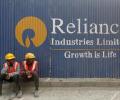
Reliance Industries Ltd on Friday reported a 7 per cent drop in its June quarter net profit as retail business got hit by the second wave of COVID infections.

A rare bonhomie among three private telecom companies in raising tariffs coming on the back of a bailout package by the government may have helped the telecom sector avert a crisis but the challenges haven't ceased to exist as the industry faces a cash-guzzling task of rolling out 5G networks in the coming months. The sector that provides direct and indirect employment to millions is projected to see Rs 1.3 lakh crore to Rs 2.3 lakh crore of investments in the coming years in creating robust infrastructure and building telecom and network products that have been incentivised by the government through PLI and other initiatives. After years of cut-throat competition and the apex court ruling on payment of past statutory dues left some players in the lurch, billionaire Sunil Mittal's Bharti Airtel and struggling Vodafone Idea almost in tandem raised tariffs, taking the plunge they had long been talking about.
Given the company's expansion into internet and retail, more investments including mergers and acquisitions seem highly likely.
After missing two self-imposed deadlines, billionaire Mukesh Ambani's Reliance Industries Ltd on Friday announced recalibration of a proposed $15 billion deal to sell 20 per cent stake in its oil refinery and petrochemical business to Saudi Aramco, saying the two firms have agreed to re-evaluate the proposed investment in light of the Indian firm's new energy forays. The stake sale talks, which were first officially revealed in August 2019, are being reset in light of Reliance making forays into new energy business in recent months by investing $10 billion in alternative energy over three years. To pivot to green energy, it has already bought a German maker of photovoltaic solar wafers and signed a deal with a Danish company to manufacture hydrogen electrolysers in India.

While Mukesh Ambani-led RIL posted a 108 per cent YoY rise in profit after tax for Q4FY21 at Rs 13,227 crore, it fell short of Bloomberg estimate of Rs 13,704 crore.

Stock markets squandered early gains but managed to end in the green on Friday, propped up by heavyweight Reliance Industries which announced another stake sale deal for its digital platform. A strengthening rupee and firm global cues also supported the domestic bourses, traders said.

ICICI Bank was the top laggard in the Sensex pack, sinking over 10 per cent, followed by Bajaj Finance, HDFC, IndusInd Bank, Axis Bank and Maruti. Bharti Airtel and Sun Pharma were the gainers in the BSE index. NSE Nifty suffered a heavy loss of 566.40 points, or 5.74 per cent, to settle at 9,293.50.

Despite a massive underperformance at the bourses since the last six months, analysts are turning optimistic on Reliance Industries (RIL). Those at Jefferies, for instance, say that the company is a proxy play for India's consumption growth story. The key catalysts for the stock, according to a Jeffries note, include faster-than-expected market share gain in retail, oil-to-chemicals (O2C) stake sale, recovery in gross refining margins (GRM), potential public listing of Jio and even a possible banking licence going ahead. That apart, analysts feel any tariff hike in Reliance Jio (RJio) - its telecom venture - will also aid performance. With balance sheet adequately de-levered, proceeds from a strategic stake sale in the O2C business will create a sizeable war chest for the company, analysts say.

Live commerce, quick commerce, group buying, WhatsApp commerce, dukaantech have made their mark.

The deal street has come out of the record lows in the pandemic-washed out June quarter with transaction value growing almost 6 per cent to $21.64 billion in the July-September quarter, thanks to a string of equity sales by Reliance in its telecom and retail arms, says a report.

More than a year of Covid-19 has pushed most businesses into gloom but Reliance Industries Ltd (RIL) managed to reduce its gross debt 25 per cent, enabling it to turn towards its next phase of capital expenditure that has come in the form of a Rs 75,000-crore plan for green energy and power storage. The company managed to stay afloat during the pandemic because of its large presence in the consumer-centric businesses of retail and telecommunication (see chart: "A new Reliance"). These two businesses constituted 45 per cent of its EBITDA during FY21 from 36 per cent in FY20.

Billionaire Mukesh Ambani on Tuesday hinted at rolling out 5G telecom services in the second half of 2021 and said policy steps are needed to accelerate the early rollout of ultra-high-speed 5G services that are affordable and available everywhere. Ambani, whose four-year-old telecom venture Jio has captured the No.1 spot offering free voice calling and data at dirt-cheap rates, also pitched for developing hardware manufacturing in India, saying the nation cannot rely on imports in such a critical area. 5G is the 5th generation mobile network that enables connecting virtually everyone and everything together including machines, objects, and devices. India, he said, is today among the best digitally connected nations in the world.
Reliance Industries shareholders will have to pay only 25 per cent for subscribing to the company's mega Rs 53,125-crore rights issue, and the balance will have to be paid in two instalments in May and November next year, the company said.

Billionaire Mukesh Ambani's Reliance Industries has started a limited test use of WhatsApp to connect customers to grocery stores, days after Facebook decided to invest USD 5.7 billion in digital assets controlled by the company. JioMart, an e-commerce venture of Reliance Retail, "has already started interacting with customers on WhatsApp for grocery orders" in Navi Mumbai, Thane and Kalyan, Credit Suisse said in a report.

As many as 3.2 lakh shareholders attended the meeting on the newly-minted JioMeet platform from 550 cities in 48 countries.

Among all the geographies where Amazon is fighting regulators, India is the only place where its lines are also tangled in a major corporate battle, this one with India's largest company by market capitalisation over the acquisition of Mumbai-based Future Group's retail chain, the country's second largest. No other corporate entity in any country offers a challenge to Amazon's hegemony in a way Reliance Industries does - and the final hearing of an arbitration case filed at the Singapore International Arbitration Centre between the two may decide at least some of these issues. This legal battle between one of the world's most powerful corporations and one of India's most powerful conglomerates could be complicated by a host of other developments.
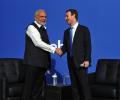
Facebook CEO Mark Zuckerberg has said steps taken by the social media giant have helped protect the integrity of more than 200 different elections around the world, including in India, and have also played an important role in stopping abuse ahead of US elections.

Axis Bank was the top laggard in the Sensex pack, plunging more than 5 per cent, followed by HDFC, Bajaj Finance, ICICI Bank, Tata Steel, Bajaj Auto, HDFC Bank and IndusInd Bank. On the other hand, M&M, Infosys, Asian Paints, UltraTech Cement and Tech Mahindra were among the gainers.

The company expects net proceeds of Rs 53,036.13 crore from the rights issue that opens on May 20 and closes on June 3.
RIL's debt stood at Rs 3.06 trillion as of December 2019, against Rs 2.87 trillion in March 2019.
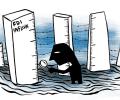
Foreign Direct Investment into India rose by 13 per cent in 2020, boosted by interest in the digital sector, and while fund flows "declined most strongly" in major economies such as the UK, the US and Russia due to the Covid-19 pandemic, India and China "bucked the trend", the UN has said.

'The reality is no one, including some of the names that have shown up in the last few weeks, have any unilateral decision-making power in this,' Facebook India MD Ajit Mohan tells Peerzada Abrar.

India's economy could prove to be the "most resilient" in the subregion of South and South-West Asia over the long term, according to a report by the UN, which says a positive but lower economic growth post COVID-19 pandemic and the country's large market will continue to attract investments. The report titled 'Foreign Direct Investment Trends And Outlook In Asia And The Pacific 2020/2021', and compiled by United Nations Economic and Social Commission for Asia and the Pacific (UNESCAP), stated that inward FDI flows to South and South-West Asia slightly decreased by 2 per cent in 2019, from $67 billion in 2018 to $66 billion in 2019. The growth, however, was mainly driven by India, which accounted for 77 per cent of the total inflows to the subregion and received $51 billion in 2019, up 20 per cent from the previous year.

A plunge in fuel demand after the raging pandemic forced people to stay home and stifled the economy dealt a body blow to the firm's traditional cash cow oil refining and petrochemicals, even as consumer-facing businesses, which account for 35 per cent of the oil-to-telecom-to-retail conglomerate's revenues, continued to do well.
 © 2026 Rediff.com - Investor Information - Advertise with us - Disclaimer - Privacy Policy - Sitemap - Feedback - About us - Terms of use - Grievances