
The year 2021 could turn out to be India's year of IPO with the domestic unicorns through their public issues setting "domestic stock markets on fire and global investors in a frenzy", an RBI article said on Tuesday. The successful Initial Public Offerings (IPOs) by new age companies in the recent months are a reflection of bullishness about Indian technology, it said. "...growth impulse is igniting financial markets. 2021 could well turn out to be India's year of the IPO.

Taking a cue from Zomato's stellar initial public offering (IPO), through which it garnered a valuation of Rs 1 trillion, the government has asked its advisors and valuers to ascertain if the Life Insurance Corporation of India (LIC) should be valued at Rs 10 trillion or more. The government is looking to offload about 10 per cent stake in LIC through the IPO. At that valuation, the government stands to net at least Rs 1 trillion from LIC's proposed IPO, which will boost the Centre's efforts to meet its disinvestment target of Rs 1.75 trillion for the current financial year.

The retail frenzy over initial public offers (IPOs) seen over the past few months is not without reason. Over the past two years, 61 companies have tapped the primary market and raised funds via IPOs. Of these, 24 companies (nearly 39 per cent companies) have more than doubled at the bourses with Happiest Minds, IndiaMart Intermesh, Indian Railway Catering and Tourism Corporation (IRCTC), Affle India and Route Mobile surging 468 per cent to 722 per cent since their listing date till now. Retail participation in the equity market, according to analysts, has just reached an inflection point due to the low interest rate regime amid lack of investment-worthy avenues that can generate a good return for investors.

Capital markets regulator Sebi has kept the proposed Rs 4,500-crore initial share-sale of edible oil major Adani Wilmar Ltd (AWL) in "abeyance". However, the Securities and Exchange Board of India (Sebi) did not clarify further. The company had filed preliminary papers with Sebi on August 3, to raise funds through an initial public offering (IPO).

Private equity (PE) activity in India between January and November 2024 recorded a total value of $30.89 billion across 1,022 deals, a 22.7 per cent increase in value and an 18.4 per cent rise in deal count compared to $25.17 billion across 863 deals during the same period in 2023. Notable large deals during the period include Walton Street India Investment Advisors at $1.5 billion, and KiranaKart Technologies at $1.35 billion.

Hospitality and travel-tech firm OYO is looking to launch its initial public offer after September and has written to stock market regulator Sebi, seeking to file updated and restated consolidated financial information. The company, which had filed preliminary papers with Sebi to raise Rs 8,430 crore through an initial share sale in October last year, is now prepared to settle for a lower valuation of around $7-8 billion against the $11 billion it was targeting initially, according to people in the know of the development. OYO's move to launch the IPO after the September quarter is mainly driven by the expectation of improvement in its financial performance and the current volatile nature of the market, they said.

India witnessed 22 initial public offers worth over $2.5 billion in the first three months of 2021 amid "high momentum" in the country's capital markets and the trend is likely to stay bullish in the current quarter also, according to a report. Leading consultancy EY India's IPO (Initial Public Offer) report released on Wednesday showed that consumer products and retail, diversified industrial products, automotive and transportation were the most active sectors in terms of the number of IPOs in the 2021 first quarter. The IPOs include both in the main as well as SME (Small and Medium Enterprise) markets.

A lot of work is needed to be done on the part of the insurance sector behemoth, and the government, before it is ready for its market debut.
Growth-oriented technology companies have raised Rs 15,000 crore through initial share sales in the last 18 months and IPOs worth around Rs 30,000 crore by such firms are in the pipeline, Sebi chairman Ajay Tyagi said on Thursday. "Growing number of unicorns in the startup ecosystem is a testimony of the new age tech companies coming of age in our economy. These companies often follow a unique business model focusing more on rapid growth than immediate profitability," Tyagi said at an event organised by industry body CII. During the last 18 months, growth-oriented technology companies have raised a sum of around Rs 15,000 crore through IPOs (Initial Public Offerings).

The buzz in the IPO market continues with four companies launching their initial share sales this week to raise over Rs 14,628 crore collectively. This comes after four companies -- Devyani International, Krsnaa Diagnostics, Windlas Biotech and Exxaro Tiles-- launched their initial share-sales last week to mobilise Rs 3,614 crore. So far in the current fiscal, 16 companies have raised Rs 30,666 crore through IPOs against Rs 31,277 crore by 30 firms in the entire 2020-21. Going forward, market analysts expect the IPO environment to remain buzzing during the entire 2021-22.

'The race is now on for Indian IT firms to develop their AI prowess and focus on a software-first approach to services as the people element becomes more complicated with Trump's expected new regulations.'

'We have focused on profitable revenue, cash generating businesses, throughout our journey.'

Foreign investors have poured Rs 57,359 crore into Indian equities in September, making it the highest inflow in nine months, mainly driven by a rate cut by the US Federal Reserve. With this infusion, foreign portfolio investors' (FPIs) investment in equities has surpassed the Rs 1 lakh crore mark in 2024, data with the depositories showed. Going ahead, FPI inflows are likely to remain robust, driven by global interest rate easing and India's strong fundamentals.
Oravel Stays Limited, the parent company of travel-tech firm OYO, has received in-principle approval from BSE and NSE to list on the respective bourses, sources said. OYO has filed preliminary documents for a Rs 8,430 crore initial public offering (IPO). The offering will consist of a fresh issue of shares of up to Rs 7,000 crore and an offer-for-sale of as much as Rs 1,430 crore.

Quarterly earnings of corporates, trading activity of foreign investors and inflation data are the key factors that are expected to drive the momentum in the equity markets this week, analysts said.
Japan's Softbank investment arm Softbank Vision Fund exited from Paytm in the June quarter at a loss of around $150 million, sources aware of the development said. Softbank invested about $1.5 billion in One97 Communications -- the owner of Paytm brand -- in tranches in 2017. "Softbank has exited Paytm at a loss of 10-12 per cent.
The country's largest private sector lender HDFC Bank on Saturday said it will grow its loan book slower than the industry in the current financial year (FY25). The move comes as the lender looks to bring down its elevated credit - deposit (CD) ratio to pre-merger levels. "We will bring down the CD ratio faster than what we had anticipated.
The primary market has seen hectic fundraising activity in April-November 2021, with 75 companies garnering Rs 89,066 crore through their IPOs, much higher than in any year in the last decade, Economic Survey showed on Monday. Moreover, a flurry of technology startups made their public debuts during the period. In comparison, 29 companies raised Rs 14,733 crore through initial public offerings (IPOs) during April-November 2020.

Digital payments provider Paytm is all set to make its market debut as early as this year, with an aim to raise $3 billion (around Rs 22,000 crore). If successful, this could be the biggest initial public offering (IPO) by an Indian company, breaking Coal India's 2010 record of Rs 15,475 crore. According to media reports, the board of One97, parent company of Paytm, is all set to meet this Friday to formally approve the IPO plan.

The so-called high networth individual portion saw 620x more demand than shares on offer.

Unprecedented bribery charges, farewells, separation, failed union, monumental mergers and record-breaking IPOs, along with a healthy dose of online happenings in the form of spat and lessons in customer care, corporate India saw it all in 2024.

Ask rediffGURU and PF expert Milind Vadjikar your insurance, stocks, mutual fund and personal finance-related questions.
At least five companies looking to raise a cumulative Rs 6,595 crore could launch their initial public offerings (IPOs) next month after a busy August that saw eight IPOs. On Thursday, south-based diagnostic chain Vijaya Diagnostics announced its plans for a Rs 1,895-crore IPO. Ami Organics will announce its plans for a Rs 600-crore issue on Friday.

Shyam Metalics and Energy (SMEL) will end the over two-month drought in the initial public offering (IPO) market. The steelmaker will launch its Rs 909-crore offering soon. SMEL has pruned its IPO size from Rs 1,107 crore, with the promoters deciding to offload shares worth Rs 252 crore as against Rs 452 crore planned earlier. The company has priced its IPO between Rs 303 to 306 per share.

The Centre has set a steep divestment target of Rs 80,000 crore for 2018-19. In the first six months, it has managed to mop up less than Rs 10,000 crore.

The primary issue market has hit an all-time high with 63 corporates raising Rs 1,18,704 crore through main-board initial public offerings (IPOs) so far in 2021, which is nearly 4.5 times more than the Rs 26,613 crore raised through 15 issues in 2020 and almost double of the previous best of Rs 68,827 crore in 2017, according to a report. Pranav Haldea, managing director of Prime Database Group, said the IPO frenzy was driven by new-age loss-making technology start-ups along with strong retail participation, and the resultant massive listing gains were the key highlights of the year. Another highlight was only 51 per cent or Rs 103,621 crore of the total Rs 202,009 crore was fresh capital raising and the remaining Rs 98,388 crore were offers for sale.

The institutional portion was subscribed 143 times, the wealthy investor portion by 360 times and the retail investor portion by 24.5 times.
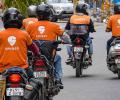
For food aggregator platform Swiggy, quick commerce (qcom) is proving to be a better growth opportunity than food delivery. Its qcom arm Instamart is rapidly outpacing its core food delivery vertical across several key financial metrics, the company's recently filed draft red herring prospectus (DRHP) shows.
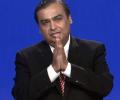
The board of Reliance Industries Ltd on Thursday approved issuing 1:1 bonus shares -- the first bonus issue in seven years. Reliance, the nation's most valuable company, had last issued bonus shares in September 2017.

The SME segment has been grappling with lack of liquidity and lacklustre institutional participation.

FSN E-Commerce Ventures, which runs online marketplace for beauty and wellness products Nykaa, has filed preliminary papers with markets regulator Sebi to raise Rs 3,500-4,000 crore through an initial share-sale.

Equity supply may hit Rs 6 trillion soon.
The government is likely to cut the size of the initial public offering of LIC to 3.5 per cent to raise around Rs 21,000 crore from the issue which would hit the capital markets in the first week of the next month. The government in February had planned to sell a 5 per cent stake in Life Insurance Corporation (LIC). However, the ongoing market volatility due to the Russia-Ukraine war has made it lower the IPO size. At this price, LIC, which is 100 per cent government-owned, is valued at Rs 6 lakh crore.

'Opportunity is there in each segment of the market. There is opportunity in affordable and specifically governed by government initiatives as well as for housing for all.'

Five to six issues may hit the market if Chalet Hotels's IPO is successful and if there are no negative surprises in the Union Budget on February 1.

Paytm founder and chief executive officer (CEO) Vijay Shekhar Sharma will receive his stock grants only after the company's market capitalisation (m-cap) stabilises at its initial public offering (IPO) level, the financial technology (fintech) major said on Wednesday. Paytm's stock price has been in free fall since its IPO at Rs 2,150 apiece, with m-cap at around Rs 1.4 trillion - plunging 76 per cent to a lifetime low of Rs 520 on March 23, when m-cap dropped below Rs 34,000 crore. Since then, the company's share price on the BSE has recovered some value and closed at Rs 637 on Wednesday.
After a month long gap, the primary market is heading for a busy time, with five firms including Paytm parent One97 Communications and policybazaar parent PB Fintech have lined up their IPOs in the first half of November to raise over Rs 27,000 crore collectively. The other three firms whose initial share-sales are set to open are Sapphire Foods India, which operates KFC and Pizza Hut outlets, decorative aesthetics supplier SJS Enterprises and microcrystalline cellulose manufacturer Sigachi Industries. The IPOs of FSN E-Commerce Ventures Ltd, which runs online marketplace for beauty and wellness products Nykaa, and Fino Payments Bank are currently open for public subscription.

The country's legacy two-wheeler giants - Bajaj Auto and TVS - are fighting a neck-and-neck battle for market share, with the former threatening to dislodging its rival soon. The Pune-based giant, which was trailing far behind TVS just two months ago in e-two-wheelers (e2Ws), has upped the ante. It has increased its market share based on Vahan registrations from 11.6 per cent in June (when it sold only 9,046 electric two wheelers) to 19.3 per cent (when it sold 14,977 this month till August 30).

'Expect our food delivery business to deliver sustainable adjusted EBITDA margins of about 5 per cent in the medium term.'
