
Activity in the corporate bond market is set to gain momentum following a 25-bp policy repo rate cut by the rate-setting panel of the Reserve Bank of India (RBI). State-owned public cebPower Finance Corporation (PFC) and Small Industries Development Bank of India (Sidbi) are planning to raise up to Rs 11,500 crore through bonds on Tuesday as issuers expect borrowing costs to ease.

Investors must account for currency depreciation in their financial plans and use instruments that can cushion the erosion in purchasing power.
The RBI is likely to reduce the key interest rate by 25 basis points this week after keeping it on hold for two years, complementing the Union Budget initiatives to push consumption-led demand, though the sliding rupee continues to be a concern. As the retail inflation has remained within the Reserve Bank's comfort zone (less than 6 per cent) for most of the year, the central bank can take rate action to boost growth hit by sluggish consumption, opined experts.

Tasting success with the relaunch of Sensex derivatives in the onshore market, BSE is preparing for the 'offshore' debut of its 30-share index, which has become synonymous with the domestic markets. Sources in the know said that the India International Exchange (India INX), a subsidiary of BSE, received approval in July from the International Financial Services Centres Authority (IFSCA) to launch Sensex 30 derivatives contracts.

One of the key factors contributing to the decline in the value of the rupee against the US dollar is the tightening yield spread between the 10-year India government bond and the US government bond. The yield on 10-year Indian government bonds is now only 295 basis points higher than that of US 10-year treasury bonds, the lowest since January 2007. Lower spread means lower incentive for foreign investors to invest in rupee assets, which adversely affects foreign capital inflows into the country and weighs on the rupee-dollar exchange rate.

IOC said the movement of prices in the international oil market and INR-USD exchange rate shall continue to be monitored closely

Actual reduction in price will be more after taking into account local VAT.

The price of petrol has been hiked by Rs 1.39 per litre and that of diesel by Rs 1.04 a litre, in sync with firming international rates.

The retail selling price of petrol at Delhi would come down by Rs 1.82 a litre.

Singapore Exchange plans to launch more India-based products to provide opportunities for global investors interested in tapping the Indian market.


This is the third increase in two months

The report, however, said a sustained weakness in USD against the emerging market forex remains a key risk to this view.
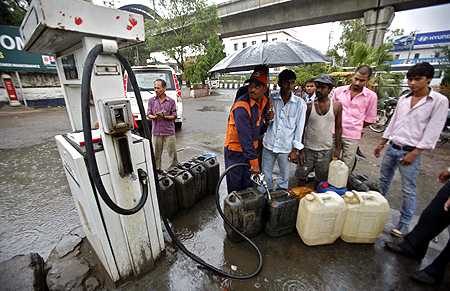
Petrol price was on Saturday cut by Rs 0.50 per litre but there will be no change in rates of diesel.
Petrol price has been cut by 58 paise a litre and diesel by 25 paise with effect from midnight tonight.

Petrol price will go up by Rs 3.18 per litre, diesel by Rs 3.09.

A litre of petrol in Delhi will cost Rs 57.31 from Monday.

Petrol price was cut by Rs 2.43 per litre and diesel by Rs 3.60 a litre, the third reduction in rates this month.

The price reduction will be effective midnight tonight, announced Indian Oil Corp

Upstream firms have a tremendous financial pressure due to selling crude at subsidised rates to oil marketing firms.

Oil companies on Wednesday slashed petrol and diesel prices by Rs 2, with effect from midnight tonight.

While TCS, Infosys and Cognizant have hinted at a weak quarter, analysts say the slowdown is cyclical and growth will return after the US elections

Shares of rate sensitive sectors such as realty, infrastructure, banking and automobiles ended higher ahead of the Reserve Bank of India (RBI) mid-quarter policy review on June 17.
 © 2026 Rediff.com - Advertise with us - Disclaimer - Privacy Policy - Sitemap - Feedback - About us - Terms of use - Grievances