
Byju's has quietly moved into other global markets such as the UK, Australia and New Zealand. It recently launched operations in Latin America.
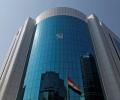
Growth-oriented technology companies have raised Rs 15,000 crore through initial share sales in the last 18 months and IPOs worth around Rs 30,000 crore by such firms are in the pipeline, Sebi chairman Ajay Tyagi said on Thursday. "Growing number of unicorns in the startup ecosystem is a testimony of the new age tech companies coming of age in our economy. These companies often follow a unique business model focusing more on rapid growth than immediate profitability," Tyagi said at an event organised by industry body CII. During the last 18 months, growth-oriented technology companies have raised a sum of around Rs 15,000 crore through IPOs (Initial Public Offerings).

Very gradual fiscal consolidation glide path with looser-than-expected fiscal policy; good quality spending mix and reasonable assumption on fiscal math; and focus on privatisation, asset monetisation and long-term funding for infrastructure investments, according to Morgan Stanley, are the three key themes from the Budget 2021.

The Delhi-headquartered bank had favoured private placement over an initial public offer due to the stock market's volatility, a source familiar with the development said. "An initial public offer now is out of question," the source said. The private placement of shares is likely to be with public sector companies Life Insurance Corporation, UTI and Small Industries Development Bank of India but private sector participation is not completely ruled out.

For large start-ups the US market is considered to be a preferred destination, as Indian investors were seen as hesitant to pay the kind of valuation private equity investors or the US markets pay. However, Zomato's listing has quashed these notions.

The new wing will be known as the corporate finance investigation department, which will be headed by one of Sebi's executive directors. This department will have information technology solutions experts, particularly to detect the menace of frauds.

Stock market minnows put up a stellar show in 2021 giving returns of up to 60 per cent amid Dalal Street dream run and are likely to continue sailing northwards in the New Year too. Trumping pandemic-induced uncertainties, the Indian equity market posted stunning gains this year achieving several feats and smaller stocks benefited the most from the strong momentum. From reaching the momentous 50,000-mark in January to scaling 61,000-level in October, the BSE Sensex had an epic journey this year.

Initial share sales are set to dazzle the Dalal Street in 2022 too as companies are expected to garner up to Rs 1.5 lakh crore in the New Year, continuing with the bullish momentum after 2021 turned out to be the best IPO year in two decades for the Indian market. Excessive liquidity and increased retail investor participation ensured a persistent euphoria in the Initial Public Offer (IPO) space wherein companies mopped up more than Rs 1.2 lakh crore this year even as pandemic gloom shadowed the broader economy. In 2022, the higher amount of funds through the primary market will be largely driven by the mega IPO of state-owned Life Insurance Corp (LIC).

India's real estate industry staged a rebound from 2020's downturn, with housing sales seen rising by over 50 per cent. The performance, though short of pre-COVID levels, has property developers hoping for stronger gains in the New Year and the beginning of a long upcycle. A strong foundation has been laid this year for revival in the Indian real estate sector, which is projected to reach $1 trillion mark by 2030 from $200 billion in the pre-pandemic year.

Naved Masood, former secretary in the Ministry of Corporate Affairs and Sebi board member; TV Mohandas Pai, chairman of Manipal Global Education and Dinesh Kanabar, CEO, Dhruva Advisors have ceded their position on the NSE board following end of their tenure.
This year is set to be the third consecutive year when India's share of IPOs has fallen relative to the rest of the world.

Changing tracks helps. But, not taking the beaten path isn't always helpful. This is the story of two of India's biggest privatisations - Air India and Bharat Petroleum (BPCL). Nearly two decades after the last privatisation, a landmark divestment concluded this year when the loss-making national carrier Air India was sold to the Tatas.

The challenges before the coming Budget are more daunting than those in 2021, reveals A K Bhattacharya.


Sebi has asked intermediaries to stagger the offerings as much as possible, said people in the know and ensure adequate capacity building.
Power sector firms that entered the capital market this year include Power Finnace Corp and PowerGrid Corp. Besides, there have been smaller issues from Suryachakra Power and Indowind Energy, which mopped up nearly Rs 135 crore (Rs 1.35 billion) collectively from their IPOs.
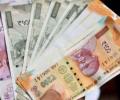
Rapid strides in digital payments notwithstanding, the Indian economy will likely remain cash-dependent for many years to come, at least that's what the automated teller machine makers and cash logistics companies are betting on. After growing at over 20 per cent for most of 2020, currency in circulation growth fell to 8.5 per cent as of October 29 this year, shows data from the Reserve Bank of India (RBI). The reason for the steep rise in currency last year was the uncertainties related to the Coronavirus (Covid-19) pandemic, where people preferred to hoard cash to meet exigencies.
Facebook made history by launching one of the largest initial public offerings.
Business process outsourcing company Genpact has set the ball rolling for a $600 million (around Rs 2,500 crore) initial public offer on New York Stock Exchange
The ongoing initial public offers have suffered the brunt of the crash in the secondary market with issue of two companies -- Cords Cable and J Kumar Infra Projects -- receiving low responses from investors. The initial public offer of Cords Cable Industries has got bids for just 39 per cent of the shares on offer. The issue received bids for over 12.09 lakh shares against 30.85 lakh shares on offer.

The buzz in the IPO market continues with four companies launching their initial share sales this week to raise over Rs 14,628 crore collectively. This comes after four companies -- Devyani International, Krsnaa Diagnostics, Windlas Biotech and Exxaro Tiles-- launched their initial share-sales last week to mobilise Rs 3,614 crore. So far in the current fiscal, 16 companies have raised Rs 30,666 crore through IPOs against Rs 31,277 crore by 30 firms in the entire 2020-21. Going forward, market analysts expect the IPO environment to remain buzzing during the entire 2021-22.

It is not the job of regulators to ensure that users make profits. It is not the job of regulators to prevent people from making losses. It is not the job of regulators to prevent people from doing stupid things, argues Ajay Shah.

Lawyers say compensation may be an uphill task for investors because of a lack of judicial precedent and broader institutional difficulties.

The draft amalgamation scheme of Punjab and Maharashtra Co-operative (PMC) Bank with Unity Small Finance Bank (SFB) allowed quick relief to depositors with savings of up to Rs 5 lakh, but a long wait for those who had their nest egg with the scam-tainted bank. If the scheme gets approved, 96 per cent (or 880,000 of 924,000) depositors will get their full money straightaway after PMC is merged with Unity SFB. According to the draft scheme, retail investors may get up to Rs 5 lakh from the Deposit Insurance and Credit Guarantee Corporation (DICGC) instantly, and then some more in phases till they can recall their full deposits after 10 years.

Even if the Paytm fiasco does not mark the end of the bull run, at least some sanity will return to the wild IPO market, observes Debashis Basu.

Through the IPO, Burger King has raised Rs 450 crore, which will be used to rollout new outlets and retire debt.
Foreign institutional investors are likely to be debarred from taking part in initial public offerings of stock exchanges, while foreign direct investment may be permitted even in pre-IPO stage.

Ola has reported its first operating profit of Rs 89.82 crore for 2020-21, even as the ride-hailing company's revenue declined 65 per cent to Rs 689.61 crore amid COVID-19 induced lockdowns. As per regulatory documents filed by ANI Technologies - the parent company of Ola - it had logged standalone operating profit (profit before finance cost, depreciation, amortisation and tax (EBITDA)) of Rs 89.82 crore in FY21 on a standalone basis, while it had registered a loss of Rs 610.18 crore in the preceding fiscal year.
Many companies go public by launching IPOs, but not all turn out to be roaring success.
Mobile service provider Spice Communications has raised Rs 520 crore (Rs 5.20 billion) through its initial public offer, for which the issue price has been fixed at Rs 46 a share.
Sebi meet this weekend to also discuss physical delivery in options.

Fresh capital raised by companies by way of initial public offerings (IPOs) is set to hit a 14-year high, thanks mainly to Zomato's maiden offering. India Inc has raised about Rs 19,300 crore in fresh capital by maiden offerings, including the Rs 9,000 crore the food delivery company will raise this week, so far in 2021. The best year in terms of fresh fund-raise was 2007, when companies had raised Rs 32,102 crore. With Paytm planning to issue fresh shares worth Rs 12,000 crore, the domestic market looks set to surpass that tally this year.
Hectic fundraising through initial public offerings (IPOs) is expected in October-November, with at least 30 companies are looking to collectively raise over Rs 45,000 crore through initial share-sales, merchant banking sources said. Of the total fundraising, a large chunk would be garnered by technology-driven companies. The successful IPO of food delivery company Zomato, which was overwhelmingly subscribed by over 38 times, encouraged new-age tech companies to come out with their primary share-sales.

While the fresh issue portion of IPOs has been going down over the years, this financial year has been abysmally low at only Rs 2,663 crore, 82 per cent lower compared to the last financial year.

The fundamental debate remains where you stand on the long-term growth question. That is what every investor must monitor and come to their own conclusions, suggests Akash Prakash.

The primary market is set for a bumper Rs 80,000-crore bonanza with 30 companies already filing IPO papers to raise Rs 55,000 crore, while around 10 more are lined up for this month itself, seeking to mop up another Rs 25,000 crore, say investment bankers. The market has been on a non-stop rally, hitting new records almost every week, on the back of an influx of investors -- a vast majority of them first-timers -- coupled with a flood of liquidity. Foreign funds alone had pumped in a record $35 billion into the market in FY21, while the trend has continued this fiscal as well. Domestic institutions led by LIC have also infused trillions of rupees, helping woo retail investors in troves -- the year saw over 20 million new investors coming to the market.
WNS is all set to list in the US after an initial public offer that has been priced well above the forecasts.
Let's take a look at some of the biggest IPOs floated by Internet companies.
Bank of China Limited launched on Thursday the world's biggest initial public offering in six years in Hong Kong stock exchange.
 © 2026 Rediff.com - Advertise with us - Disclaimer - Privacy Policy - Sitemap - Feedback - About us - Terms of use - Grievances