
The 50-issue NSE Nifty too cracked below the 10,400-mark and hit a low of 10,323.90 before finishing 99.50 points, or 0.95 per cent down at 10,358.85.
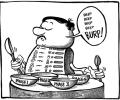
India was already in the midst of a protracted economic slowdown before the virus hit due to a festering crisis among shadow lenders and declining consumer demand and private investment. Service sector activity in India is still effectively on hold.
However, predictions that economic conditions will normalise after the elections underpinned optimism regarding the outlook and supported a stronger upturn in employment.

The country is gripped in an unprecedented economic downturn which is certainly going to spill over into the second half of this year unless the infection rate can be brought under control.

On the job front, Indian service providers continued to add to their payrolls and the sector witnessed the second-strongest increase in employment since March 2011.

New businesses have been secured from the public and private sectors, as well as domestic and international markets.
The headline seasonally adjusted Nikkei India Composite PMI Output Index, that maps both the manufacturing and services sectors, rose from 53.3 in June to 54.1 in July.

The seasonally adjusted Nikkei India Services Business Activity Index fell to 50.2 in May, from 51.0 in April, pointing to the slowest growth rate in the current 12-month stretch of expansion.

The HSBC India Services Business Activity Index, that tracks changes in activity at Indian services companies on a month-by-month basis, fell from 51.6 to exactly 50.0 in October.

Business confidence remained positive in August and was driven by upbeat forecasts of sales, an expected improvement in demand and promotional activities

The survey noted that advertising campaigns supported the increase in new work growth in the sector amid competitive pressures.

The broader NSE Nifty rose nearly 124 points to settle just below the psychological 11,000 level.
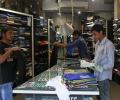
The improvement in business conditions promoted job creation, while confidence towards the year-ahead outlook for activity was at a four-month high during March.
A figure above 50 indicates that the sector is expanding, while a figure below that level means contraction.

A reading below 50 means contraction in the sector.
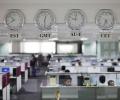
Strong new business growth was the primary factor.
The RBI left interest rates unchanged, saying there was no substantial development on inflation or fiscal fronts to warrant a fresh reduction.
The index went below the crucial 50 mark.

The Sensex has now lost 878.32 points in six sessions -- its longest string of losses in six months.

It was the second straight week of gains for the benchmarks.

The Sensex ended up 244 points at 28,504 on strong global cues.
 © 2026 Rediff.com - Investor Information - Advertise with us - Disclaimer - Privacy Policy - Sitemap - Feedback - About us - Terms of use - Grievances