
Fitch Ratings has affirmed India's sovereign credit rating at 'BBB-' with a stable outlook, acknowledging robust growth prospects and strong external finances. However, the agency highlighted concerns over elevated government debt, lagging structural metrics, and potential fiscal spending pressures due to rising youth unemployment.

India's retail inflation, measured by the Consumer Price Index (CPI), rose to 4.45 per cent in July, up from 4.38 per cent in June, primarily due to higher food prices, particularly onions and ginger. This marks the second consecutive month the inflation rate has remained above the Reserve Bank's median target.
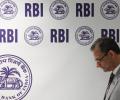
India Ratings and Research predicts the Reserve Bank of India (RBI) will maintain the repo rate at 5.25 per cent throughout FY27, despite potential inflationary pressures from higher fuel prices, with inflation expected to remain within the central bank's tolerance band.

New players like Maruti Suzuki, VinFast, and Tesla are significantly expanding India's electric passenger vehicle (e-PV) market, capturing an 8.1 per cent share and contributing 18 per cent of incremental registrations in the first half of 2026, according to Fada Research data.
India's wholesale price inflation (WPI) increased to 9.87 per cent in June, up from 9.68 per cent in May, primarily due to significant price increases in non-food and food products, with food inflation alone rising to 5.49 per cent.
India's retail inflation rose to 4.38 per cent in June, driven primarily by costlier food items, pushing it above the Reserve Bank of India's median target of 4 per cent for the first time under the new series.

The Indian corporate bond market witnessed a significant surge, with companies raising nearly Rs 16,000 crore in a single day, primarily led by state-owned financial institutions and NBFCs. This strong momentum, driven by improved borrowing conditions and investor confidence, is expected to persist.

Passenger vehicle (PV) sales growth in India is expected to moderate to 3-5 per cent year-on-year (Y-o-Y) in financial year 2027 (FY27) due to a high base and preponed replacement demand, according to a report released by India Ratings and Research on Thursday.

India's economy in FY26 saw significant momentum from investment demand, with gross fixed capital formation (GFCF) accelerating to 8.2 per cent, while private final consumption expenditure (PFCE) also grew steadily, according to provisional estimates.

India's eight core infrastructure sectors recorded a two-month high growth of 1.7 per cent in April, primarily boosted by strong performances in steel, cement, and electricity production, according to government data.

Insights from behavioural economics suggest that an ambitious nudge can be effective if three conditions are met, points out Ram Singh Insights from behavioural economics suggest that an ambitious nudge can be effective if three conditions are met, points out Ram Singh, director, Delhi School of Economics.

The Reserve Bank of India (RBI) has announced a record surplus transfer of Rs 2.87 trillion to the central government for FY26, driven by increased income and an expanded balance sheet, despite a reduction in the contingent risk buffer (CRB) to 6.5 per cent.

India's wholesale price inflation surged to 8.30 per cent in April, up from 3.88 per cent in March, primarily driven by a significant increase in the prices of fuel, power, and crude petroleum, according to data from the commerce and industry ministry.
Global rating Moody's on Monday affirmed India's long-term local and foreign-currency issuer ratings and the local-currency senior unsecured rating at 'Baa3' with a 'stable' outlook on the back of robust economic growth and sound external position. The rating agency also affirmed India's other short-term local-currency rating at P-3.

For decades, multinational pharmaceutical companies and Indian drugmakers worked in ways that supported each other: MNCs brought innovation and brands, while Indian companies built scale through generics and cost efficiency. There was an important overlap - generic drugs - but this is shrinking fast. And the consequences are reshaping India's gigantic pharmaceutical market.

India Ratings & Research (Ind-Ra) has projected the aggregate fiscal deficit of states to rise to 3 per cent of gross domestic product (GDP) in 2026-27 (FY27), from an estimated 2.8 per cent in 2025-26 (FY26), citing higher revenue expenditure amid election-related pressures and scheme cost-sharing requirements.

The easing of external commercial borrowing (ECB) norms by the Reserve Bank of India (RBI) is expected to significantly boost overseas fundraising by Indian companies, market participants said.

Like the realisation on the failure of development, we have also internalised the failure on democracy, argues Aakar Patel.

The forthcoming Budget could think of maintaining public capital expenditure at 3 per cent so that domestic resources are available for private investments, points out N R Bhanumurthy.

Supported by strong buoyancy in public sector capital expenditure (capex), growth in infrastructure investment is expected to accelerate in 2025-26 (FY26) compared to 2024-25 (FY25), according to the First Advance Estimates of gross domestic product (GDP) for FY26 released by the National Statistics Office (NSO) on Wednesday.

Retail inflation rose to a three-month high of 1.33 per cent in December 2025 mainly due to higher prices of kitchen essentials, including vegetables and protein-rich items.

The gap between credit and deposit growth in the banking system is expected to decline sharply to 80 basis points (bps) in the next financial year from an average of 386 bps over the FY22-Q3FY25 period, according to rating agency India Ratings. This would be against the backdrop of sharp moderation in the incremental loan deposit ratio (LDR) of the Indian banking system to 85 per cent in February 2025 from 117-118 per cent in the same month of 2024.

Flyers faced a double blow as air fares on Air India flights out of Delhi and those of SpiceJet soared past Rs 1 lakh one-way on some routes, and even those showed 'sold out' despite the airlines adding capacity.

Credit quality of Indian corporate is expected to be stable in the second half of the current financial year (H2FY26), supported by easing monetary cycle, and declining inflation, coupled with income-tax relief and rationalisation of the goods and service tax (GST) rates, among others.

India Ratings on Thursday said that any broad-based or strong recovery in corporate capital expenditure was unlikely in the upcoming financial year 2026 (FY26) due to uncertainty of domestic and external demand. The uncertainty is adversely affecting the overall corporate sector capex. Interest rates on credit are not the primary deterrent to decisions about capital expenditure, said Soumyajit Niyogi, director, core analytical group, Ind-Ra, in a webinar on the credit market outlook.

Wholesale price inflation (WPI) softened to 0.13 per cent in September on easing in prices of food articles and manufactured items, government data showed on Tuesday. WPI-based inflation was 0.52 per cent in August and 1.91 per cent in September last year.
Retail inflation slipped to 1.54 per cent in September from 2.07 per cent in the preceding month mainly due to subdued prices of food items, including vegetables and pulses, according to government data released on Monday. The consumer price index (CPI) based inflation was 5.49 per cent in September 2024.

After three straight quarters of decline, India's housing market is pinning hopes on the ongoing festival season to revive sales momentum. While 2025 may still end with sales volumes below 2024 levels, developers believe the seasonally strong October-December quarter could narrow the gap, aided by stable interest rates, festive incentives, and resilient demand in the premium segment.

A National Crime Records Bureau report indicates a slight increase in suicides in India during 2023, with family problems and illness cited as major contributing factors. Maharashtra reported the highest number of suicides, followed by Tamil Nadu and Madhya Pradesh.

CAG warns most states of fiscal imprudence as March spending overshoots limits, with key departments exhausting large portions of budgets in the last month of FY24.
Fitch Ratings on Monday affirmed India's sovereign rating at 'BBB-', with a stable outlook, saying a strong record of delivering growth and improving fiscal credibility will drive improvements in structural metrics. "India's ratings are supported by its robust growth and solid external finances," Fitch said, as it forecast GDP growth of 6.5 per cent in the fiscal year ending March 2026 (FY26), unchanged from FY25, and well above the 'BBB' median of 2.5 per cent.

Any potential tariffs on pharmaceutical imports into the US are unlikely to impact the credit profiles of Indian firms except for a short-term pricing blip, according to a report by India Ratings and Research (Ind-Ra). The report stated that the US generics market contributes around 35 per cent to the total revenue of the leading Indian pharma firms.

Global rating agency Fitch on Thursday affirmed India's 'BBB-' rating with a stable outlook on strong growth outlook and fiscal credibility. Fitch said India is set to remain among the fastest-growing sovereigns globally with GDP growth of 7.2 per cent in the current fiscal year and 6.5 per cent in FY26, down from 8.2 per cent in FY24. "Fitch Ratings has affirmed India's Long-Term Foreign-Currency Issuer Default Rating (IDR) at 'BBB-' with a Stable Outlook," the global rating agency said in a statement.

Given the stronger rural activity, and potential goods and services tax (GST) impact, investors are bullish on the two-wheeler (2W) segment. In August, dealers in the domestic market picked up 11 per cent more 2Ws year-on-year (Y-o-Y), despite only 2 per cent growth in retail registrations. This indicates inventory stocking ahead of the festival season. Export trends were good. TVS Motor and Royal Enfield may have gained domestic market share.
As the potential threat of a steep 200 per cent tariff on pharmaceutical imports hangs in the air, analysts and industry insiders feel that focus on exports to non-US regions as well as domestic market will increase as a long-term trend. US President Donald Trump told CNBC's Squawk Box in the first week of August that planned tariffs on import of pharmaceutical products to the US could eventually reach up to 250 per cent.

If pharmaceutical exports from India to the US come under a 25 per cent tariff bracket, the impact on earnings before interest, tax, depreciation and amortisation (Ebitda) could be around 5 per cent, felt analysts. This is after assuming that about 75 per cent of the tariff would be passed on.

Tata Motors is hoping to beat its target year of 2030 and have 30 per cent of its portfolio comprising electric vehicles (EVs), according to Chairman N Chandrasekaran, who was speaking at the company's last annual general meeting (AGM) ahead if its demerger.

The famous 'tareekh pe tareekh' dialogue from the Hindi movie Damini captures where we are now.

Conservative investors seeking equity-like tax benefits with low risk may go for them.

Retail inflation declined to over six-year low of 2.1 per cent in June, nearing the RBI's comfort zone, on account of subdued prices of food items, including vegetables, driven by widespread monsoon.
