
'His death is an irreparable loss to the nation'.

India Inc has learnt to take risks and compete with global players to create wealth, industry experts said on Monday.
Corporate magnate Ratan Tata on Friday said that Congress general secretary, Rahul Gandhi had opened a door for investments in Jammu and Kashmir.

This was even as the country's economy grew by 7.3%.

Indian acquisitions have dropped to $27.3 billion in 2009.
Tata Steel, Suzlon mop up $700 million; Tata Power to raise $250 million. Tata Power also joined the queue on Tuesday and launched its $250-million GDR issue, with an option to retain a higher amount.
As many as 76 per cent of the respondents did not expect economic reforms to move forward, given the upcoming 2014 general elections.

Sales growth slows but expenditure control, lower interest burden save the day.
India Inc's order book has more than doubled to an all-time high of Rs 73,320 crore in the second quarter of the current financial year, compared to the first quarter.
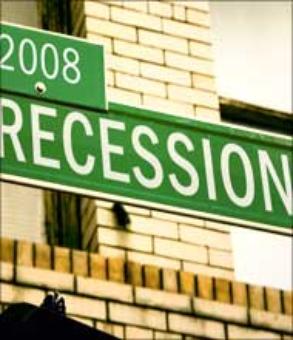
India Inc on Monday saw signs of turnaround in the economy with the GDP showing a growth of 6.1 per cent in the first quarter of the fiscal 2009-10.
Riding high on the buoyant economy, an overwhelming majority of the India Inc lists innovation among the top three strategic priorities as compared to their global counterparts, a survey says.

Reliance Industries, construction major L&T and IRB Infrastructure are some of the top companies that have used an infrastructure investment trust structure to reduce part of their debt and generate returns for their investors. Earlier this month, IRB Infrastructure InvIT was listed on the National Stock Exchange, giving its investors an option to exit by selling their units. The listing came within months of the Securities and Exchange Board of India's (Sebi's) guidelines for conversion of private unlisted InvITs into listed ones were issued.

India Inc borrowed heavily in December.

Mergers and acquisitions are set to become one of the most important trends of 2007 for India Inc, with the total deal value crossing $50-billion mark with one more month still to go. According to data compiled by international consultancy major Grant Thornton, India Inc recorded M&A deals worth $940 million in November, taking the total for first 11 months of 2007 to $50.79 billion.
Individuals will have to wait for some more time; RBI may do away with mid-quarter policy reviews.
Ashok Soota has cited 4 challenges that India Inc is facing. He stressed on a robust risk management strategy for Indian companies. He also stated responding to changes in market environment, resolving legal and regulatory differences and encouraging leadership and accepting cultural diversity as other challenges. Highlighting the challenges faced by the India Inc, experts said globalisation is essential to pursue growth opportunities and leverage comparative advantage.

India Inc welcomed the Railway Budget by describing it as "balanced" focused on passenger safety and infrastructure modernisation.
India Inc has couter attacked claims by US presidential candidates about the drain of jobs from US to India.
Modern Indian women have come a long way from playing the stereotypical role of a housewife to donning the roles of CEOs in leading Indian and foreign companies.

Talking corporate heads are a barometer of the business community's engagement with the economy. If they have nothing to say now there should be cause for concern.
Corporate India continues to be generous in rewarding its shareholders with big dividend payouts. This is especially true for shareholders of companies such as Tata Consultancy Services (TCS), Hindustan Zinc (HZL), and Coal India (CIL) which are seen as cash cows of large business groups and the government. Boosted by a big payout by these three companies, the combined equity dividend payout by listed companies was up 38 per cent year-on-year (YoY) to a record high of Rs 2.27 trillion in 2022-23 (FY23), compared with Rs 1.65 trillion in 2021-22 (FY22).
72 per cent of the revenue of Indian firms (India Inc) is derived from the domestic / home market - the sixth highest in percentage terms in the emerging market (EM) and the Asian region, said a recent report by Morgan Stanley. The balance, according to the report titled 'Global Exposure Guide 2021' co-authored by analysts led by Jonathan F Garner, their chief Asia and emerging market strategist, is split between the developed markets (DMs) and other EMs. The report is based on an analysis of 3,300 companies globally that have revenue exposure in 17 different regions.
According to a report by global research firm Dun & Bradstreet, the composite Business Optimism Index for the second quarter of 2008 has decreased to 153.7 from 168.9 in the previous quarter. This is a 9% fall. BOI measures the pulse of the business community and serves as a reliable benchmark for investors and is arrived at on the basis of a quarterly survey of business expectations. The optimism index for profits represents a decrease of as much as 21 percentage points.
Weighed down by a sharp rise in input costs and limited ability to pass on the burden to customers, India Inc's operating margins took a hard knock in the first quarter of 2008-09 even though demand was buoyant as reflected in zooming sales.
A fundraising boom in the domestic market and tightening of the regulatory framework for overseas issues are responsible for this trend.
Regretting that the concept of voluntary CSR has not picked up in India, Corporate Affairs Minister Veerappa Moily on Wednesday said the new Companies Bill would make it mandatory for corporate to earmark part of their profit for corporate social responsibility (CSR) initiatives.
The market cap of the listed firms on the Bombay Stock Exchange and the National Stock Exchange on Monday declined by a whopping Rs 125,000 crore (Rs 1,250 billion) to Rs 43,75,020 crore (Rs 43,750 billion), thereby falling below the GDP of Rs 46,93,000 crore (Rs 46,930 billion) at current market price, as per the real economy data released by the Reserve Bank of India on April 28 this year.
The market cap of the listed firms on the Bombay Stock Exchange and the National Stock Exchange on Monday declined by a whopping Rs 125,000 crore (Rs 1250 billion) to Rs 43,75,020 crore (Rs 43750.20 billion), thereby falling below the GDP of Rs 46,93,000 crore (Rs 46930 billion) at current market price, as per the real economy data released by the Reserve Bank of India on April 28 this year.

The depreciating Indian rupee (the currency touched a record low for the second day in a row and closed at 53.22/23 to the dollar on Tuesday) has brought the foreign fund-raising cost for India Inc on a par with the domestic borrowing cost.

At present, when Indian corporates declare dividends, a dividend distribution tax is slapped at 15 per cent.
The global economic downturn made 2008 an unforgettable year.
Anil Agarwal breaks into big three; Anil Ambani group out of top 10; Essar, Adani lose out to JSW, Shiv Nadar & Motherson Sumi
Legal fees in such cases can go up to Rs 5 crore.
Revenue and profit contractions to continue till investment cycle does not revive.

16 national and regional industry bodies and sectoral business lobbies video-conferenced with Commerce and Industry Minister Piyush Goyal on Saturday and raised key concerns facing Indian industry in the wake of the 21-day lockdown over coronavirus.

Initial projections, at least, suggest that things are not looking good enough for India Inc, as margins are expected to soften further.
Rising crude oil prices along with hardening interest rates in the domestic market have taken a toll on India Inc's growth outlook in the first quarter of the current fiscal.
