
Codeine-based formulations are under the scanner for misuse as a narcotic product.
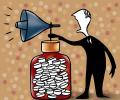
With an eye on improving quality assurance in the wake of increased global scrutiny on Indian pharma products, the Centre on Tuesday said that Schedule M of the Drugs and Cosmetics Act, 1940 will be made compulsory for small and medium scale manufacturers in a phased manner. Union Health Minister Mansukh Mandaviya has asked micro-small and medium enterprises in pharma manufacturing to move towards good manufacturing practices (GMP) through self regulation. "This will help in quality assurance and also reduce compliance burden," Mandaviya.

As fear grips the world, demand for protective gear used by health care professionals and citizens is on a rise. And, supply disruption from China has opened a window of opportunities for Indian medical device makers.

With intermittent disruptions in the supply chain of raw materials from China, the Indian pharma industry has braced itself with bigger inventory. Even smaller drug makers are now carrying a month of buffer stock of key raw materials, said industry insiders. The lockdown in various Chinese provinces, including Shanghai, is likely to delay shipments by two weeks to a month, said domestic players. Shipments are critical for the Indian drug industry, which imports 70 per cent of its raw material from China.
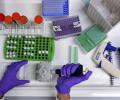
The bone of contention is product approvals, which pharma and neutraceuticals companies say cannot be re-introduced through the regulation route

Proposes to increase Exemption Limit for Small Service Providers from Rs 10 lakh to Rs 25 lakh.

The pre-Budget memoranda of the Indian Drug Manufacturers Association and the Federation of Indian Chambers of Commerce and Industry have said more incentives are needed to spur drug research.

With the government asking the companies to operate with only 50 per cent staff strength, and exports dipping to almost zero, the truck and bus drivers idling at the petrol pump say they hardly have any work now. At a petrol pump on the deserted Bavla-Changodar highway near Ahmedabad in Gujarat, several trucks and buses are neatly parked in a row.

Days after medical representatives said their employers were flouting the government's drug-pricing norms, the pharmaceutical industry has decided to clip their wings. These companies want them to be no longer recognised as "workmen," a classification that gives them the right to form trade unions.

The API of Paracetamol, a fever and pain medication, has grown 25 per cent from Rs 450-480 per kg in December 2020 to Rs 580-600 per kg in April. When compared to the pre-Covid prices of December 2019, the surge is much steeper -- around 140 per cent, reports Sohini Das.

Pharma body wants all excisable goods used for R&D purposes should be exempted from central excise duty.

This is because while the emergency authorisation for treating Covid was a recent move, the drug has been used since years for rheumatoid arthritis and autoimmune lupus.
Indian Drug Manufacturers Association on Friday demanded reduction in excise duty on drugs and pharmaceutical products to 8 per cent from the current 16 per cent.

The products worth Rs 5,000 crore have been banned for manufacture, distribution and sale with immediate effect causing hardship to manufacturers and patients.
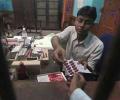
In May, price growth for drugs was in negative territory at (-)1 per cent

Gujarat has around 3,000 licensees for allopathic drug manufacturing, apart from around seven homeopathic licensees, 500 ayuvedic and 600-700 cosmetics licensees
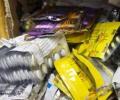
The industry feels that prices of active pharmaceutical ingredients (APIs) can go up in the range of 5-15 per cent.
 © 2026 Rediff.com - Investor Information - Advertise with us - Disclaimer - Privacy Policy - Sitemap - Feedback - About us - Terms of use - Grievances