
India's merchandise exports in June rose by 16.78 per cent year-on-year to $37.94 billion while the trade deficit ballooned to a record $25.63 billion on account of a steep increase in gold and crude oil imports, according to the government's preliminary data released on Monday. The export growth in June moderated from 20.55 per cent in May and 48.34 per cent in June 2021. During the month under review, exports of engineering, pharmaceutical and plastic products recorded negative growth.

Exports in June rose by 23.52 per cent to $40.13 billion while the trade deficit ballooned to a record level of $26.18 billion mainly due to jump in gold and crude oil imports, the government data said on Thursday. The country's export growth in May was 20.55 per cent. Imports expanded by 57.55 per cent to $66.31 billion in June compared to the year-ago month, the data showed.

The production of eight infrastructure sectors rose by 7.5 per cent in October on healthy performance by the segments of coal, natural gas, refinery products and cement, official data released on Tuesday showed. The output of eight core sectors of coal, crude oil, natural gas, refinery products, fertilisers, steel, cement and electricity had contracted by 0.5 per cent in October 2020, according to the data released by the commerce and industry ministry. Core sectors' growth stood at 4.5 per cent in September this year.

Leading automakers Maruti Suzuki India, Hyundai and Tata Motors reported a double-digit increase in dispatches to dealers in April as the demand remained robust especially for the sports utility vehicles. The country's largest car maker Maruti Suzuki India (MSI) said its domestic passenger vehicle wholesales rose 13 per cent to 137,320 units last month as against 121,995 units in April 2022. Sales of mini cars, comprising Alto and S-Presso, fell 18 per cent to 14,110 units as compared with 17,137 units a year ago.

The output of eight core sectors declined by 4.6 per cent in February, the steepest contraction in the last six months which experts said could drag the overall industrial production in the month into the negative territory. All the key segments, including coal, crude oil, natural gas, and refinery products, witnessed a decline in production, according to the official data released on Wednesday. The growth rate of the eight infrastructure sectors -- coal, crude oil, natural gas, refinery products, fertilisers, steel, cement and electricity -- stood at 6.4 per cent in February 2020. Last time in August 2020, the sectors had recorded a negative growth of 6.9 per cent.

Sectors which recorded positive growth were coal, refinery products and fertiliser.

Barring coal and fertiliser, all sectors -- crude oil, natural gas, refinery products, steel, cement and electricity -- recorded negative growth in August.

Barring fertiliser, all seven sectors - coal, crude oil, natural gas, refinery products, steel, cement, and electricity - had recorded negative growth in May.

Barring fertiliser, all seven sectors -- coal, crude oil, natural gas, refinery products, steel, cement and electricity -- recorded negative growth in July.

Growing for the third consecutive month, the country's exports rose marginally by 0.67 per cent year-on-year to $27.93 billion in February even as trade deficit widened to $12.62 billion, according to official data released on Monday.

Coal, crude oil, natural gas, cement, and electricity recorded a negative growth of 8.6 per cent, 5.4 per cent , 3.9 per cent, 4.9 per cent and 2.9 per cent, respectively, in August.

The wholesale price-based inflation rose for the second consecutive month in February to 4.17 per cent, as food, fuel and power prices spiked. The WPI inflation was 2.03 per cent in January and 2.26 per cent in February last year. After witnessing months of softening of prices, the food articles in February saw 1.36 per cent inflation. In January it was (-) 2.80 per cent.

Further relaxation in aircraft capacity deployment coupled with festive season air travel demand helped recovery in the domestic traffic with passenger volume seeing 22 per cent sequential growth in the previous month, ratings agency ICRA said on Wednesday. ICRA also said that the November domestic passenger traffic was close to 50 per cent of the domestic air travel demand in November 2019. The recovery in international passenger traffic, however, is likely to further get delayed in the wake of fresh travel curbs by select countries following the detection of a new virus strain in the UK, it said.

Family-owned companies like those of Tatas, Birlas and Ambanis are dominating the country's corporate landscape, but still face challenges regarding corporate governance norms such as appointment of successors and transparency in functioning, rating agency Moody's said. However, these companies have responded well to opportunities available in the fast-growing and liberalizing economy, according to a joint survey by Moody's Investors Service and its domestic associate.

The government on Thursday more than doubled the price of natural gas that is used to produce electricity, make fertilisers, turned into CNG and piped to household kitchens for cooking, on the back of a spike in global energy prices. The price of gas produced from old regulated fields, such as the nation's largest gas field of Bassein of ONGC, will rise to a record high of $6.10 per million British thermal unit (mmBtu) from the current $2.90 per mmBtu, according to the oil ministry's Petroleum Planning and Analysis Cell (PPAC). The new price, which is likely to result in a hike in CNG and piped cooking gas rates, will be for six months beginning April 1.

Ratings agency ICRA on Wednesday revised downwards growth forecast for the domestic passenger vehicles industry to 8-11 per cent in the ongoing fiscal from the earlier estimate of 14-17 per cent on account of the ongoing semiconductor shortage. Similarly, for the two-wheeler segment, it said the volumes are expected to contract by 1-4 per cent in FY2022 against an earlier prediction of 6-8 per cent growth as affordability and demand sentiments of target clientele was hit sharply by the second wave of COVID-19 pandemic. With around 5 lakh units of production lost by various automakers in the passenger vehicles segment due to the semiconductor shortage, ICRA said the earnings loss for the OEMs (Original Equipment Manufacturers) could be around Rs 1,800 crore to Rs 2,000 crore for the ongoing fiscal.
The forthcoming public issue by rating agency ICRA Ltd will see State Bank of India diluting its stake in the company by a nominal 0.21 per cent, but the meagre divestment has larger implications on both the entities.

Imports too declined 26 per cent to $29.47 billion in August, leaving a trade deficit of $6.77 billion.

Sectors with positive growth during the month include rice, iron ore, oil seeds, oil meals, meat, dairy and poultry products, pharmaceuticals, coffee, engineering goods, and plastic.

New norms are in place to strengthen regulations for this set of lenders which has been playing a critical role in Asia's third largest economy, notes Tamal Bandyopadhyay.

In three separate but similarly-worded orders, Sebi said the default by IL&FS occurred due to "lethargic indifference and needless procrastination and laxity" of the rating agencies.

Import segments which recorded negative growth include gold, silver, transport equipment, coal, fertiliser, machinery and machine tools. However, exports of oil seeds, coffee, rice, tobacco, spices, pharma, and chemicals reported positive growth in June.
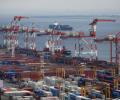
Barring rice, spices, iron ore and pharmaceuticals, all the remaining 26 key sectors registered negative growth in May. Imports too plunged 51 per cent to $22.2 billion in May.

The new system is expected to give emphasis on various in-built credit enhancement structures.

In the context of RBI's view that the real interest rate, defined as the repo rate less "look forward" CPI, should be around 150-200 basis points.

India plans to keep its fiscal deficit within 3.9% of GDP.

The limit of indebtedness comes down to Rs 15,000 crore from 2018-19, and then Rs 10,000 crore from April 2019 onwards
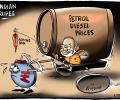
Retail inflation inches up to 3.77%; IIP growth dips to 3-month low

The central government's deposits with the RBI had fallen to just Rs 100 crore as of June 8.

Assocham expressed concern over the precarious situation that the manufacturing sector is in, observing that if the trend does not reverse with monetary and fiscal measures it would be difficult for the industry to generate jobs.

Indian cotton and paddy could see their competitiveness in international markets take a hit

Petrol prices on Thursday crossed Rs 73 a litre mark, the highest level since the BJP government came to power in 2014, while diesel touched a record high of Rs 64.11 a litre.

Will demonetisation lead to a rate cut, leading to higher quantum of lending?

RBI is expected to discuss about the impact of GST in its monetary policy.
RBI has, since January, cut its policy rate four times.
