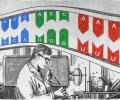
He's the Indian Nobel Prize winner you probably haven't heard of.

Pioneering Indian American biochemist Har Gobind Khorana, who won the 1968 Nobel Prize for medicine, has died of natural causes in Concord, Massachusetts. Khorana, 89, who was Massachusetts Institute of Technology 's Alfred P Sloan Professor of Biology and Chemistry emeritus, died earlier this week. He won the Nobel Prize in 1968, sharing it with two others, for unravelling the nucleotide sequence of RNA and deciphering the genetic code.
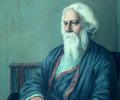
Who have been India's Laureates, winners from India or of Indian-origin?
In the fourth part of the series on Dr Har Gobind Khorana, who passed into the ages on November 9, 2009 Chemistry Nobel winner Dr Venkatraman Ramakrishnan shares his memories of the great scientist.
Nobel laureate Dr Har Gobind Khorana, who passed into the ages on November 9, took pride in mentoring younger scientists. At the same time, he ensured that his work didn't sideline his family life, Suman Guha Mozumder reports.
Nobel laureate Dr Har Gobind Khorana, who passed into the ages last week, was a true pioneer, Suman Guha Mozumder reports.
In the fifth of the series on late Nobel laureate Dr Har Gobind Khorana, a student shares fond memories of his guru

Rights activist Kailash Satyarthi is the eight Indian to win the Nobel Peace Prize. Rediff.com takes a look at other Indians or Indian-origin people, who have been awarded the honour.
The sixth of the special series on late Nobel laureate Dr Har Gobind Khorana
Uttam RajBhandary, the Lester Wolfe Professor of Molecular Biology and Associate Head of the Department of Biology at MIT, knew Dr Har Gobind Khorana for close to half a century. Many consider him the late Nobel Laureate's closest friend and colleague. He spoke to India Abroad.

I suggest we build a Vigyan Mandir (Temple of Science) with the ambience of a place of worship, so that it becomes a destination for pilgrims. We should embed on its walls bronze plaques describing each scientist mentioned here along with about a dozen of our ancient mathematicians, recommends Professor Kalyan Singhal, historian of science and technology.

Banerjee joins the list of Indians and people of Indian origin who have received the prestigious Nobel prize in fields like Physics, Chemistry, Peace, Economic Sciences and Medicine.
'The fruition of Nobel's hope lies in the response of a caring government that can rise above politics and propaganda, not in the frenetic raptures of a public that worships fame for fame's sake,' says Sunanda K Datta-Ray.

What the Indian economy looks like next January will influence her view on India, not her genetics, notes Shekhar Gupta.
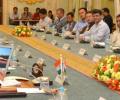
Thirty one outstanding teachers were invited to Rashtrapati Bhavan for a first-ever in-residence programme.
 © 2026 Rediff.com - Investor Information - Advertise with us - Disclaimer - Privacy Policy - Sitemap - Feedback - About us - Terms of use - Grievances