
'...similar to the 2008 global financial crisis, the 2012 taper tantrum, or the 2018 midcap crash.' 'This could lead to a substantial decline in activity and revenues for the broking industry.' 'When this will happen is uncertain, but as brokers, we must be prepared for such a downturn.'

US's terrible political and economic leadership will ultimately cost the dollar its value. India must act early to avoid being dragged down, suggests R Jagannathan.

There was no smooth surge in middle class prosperity for foreign businesses to tap into because of the Indian economy was mismanaged, argues Debashis Basu.
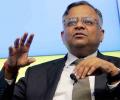
India is well positioned to continue to be the fastest-growing major economy next year, which may mark the lowest global growth since the millennium began barring the pandemic and the global financial crisis, according to Tata Sons chairman N Chandrasekaran. In his New Year message to around 9.35 lakh employees of the Tata Group, he said increasing consumption, consumer confidence and investment will support India's growth story although the global environment has several risk factors, including the energy crisis in Europe, the battle to contain inflation to avoid recession, and ongoing geopolitical conflicts. "Post-pandemic, India opened up, and we have returned to living our daily lives normally, in a year that saw the nation turn 75 years old.

'The prime minister's comment on 'revdi culture' was welcome. But I am disappointed he did not follow up on that.' 'All political parties, including the BJP, have been guilty of this.' 'Now, Modi's guarantees, the Congress's 'nyay' path and both ruling and Opposition parties are vying with each other for freebies in my home state Andhra Pradesh.'

The ongoing conflict between Ukraine and Russia is unlikely to have any major impact on the Indian rupee and the forex volatility in the country (USD/INR) has been much less now as compared to the global financial crisis which took place in 2008, SBI said in its Ecowrap research report. The report said that though the conflict between the two CIS nations may drag on for now, it is expected that the USD/INR, the most tracked pair in the local forex market, will trade at an elevated zone. But ideally, the expected average range of the rupee is expected to be in the band Between Rs 76 to Rs 78 to the USD with an appreciated bias.

Of the eight RBI governors who have held office since the 1991 economic liberalisation, Bimal Jalan had the longest stint and S Venkitaramanan, the shortest. Current Governor Shaktikanta Das will overtake Bimal Jalan before completing his second term in December, points out Tamal Bandyopadhyay.

Finance Minister Nirmala Sitharaman will present her sixth straight Budget ahead of the Parliamentary elections, matching the record of former Prime Minister Morarji Desai. Sitharaman in her pre-election Budget, which technically is a vote on account and popularly termed an interim Budget, will seek Parliament's nod for a grant in advance to meet the central government's essential expenditure for the first four months of the new fiscal year that starts in April. A new government elected after the April/May general elections will present the full Budget, likely in July.

The 54-page document tabled in Parliament detailed how the Modi-government pull the economy from being counted among the most fragile-five in the world to being the fasted growing and the most attractive investment destination.

A third of the global economy will be in recession this year, the IMF chief has said, and warned that 2023 will be "tougher" than last year as the US, EU and China will see their economies slow down. Kristalina Georgieva, the chief of the International Monetary Fund (IMF) made these grim assertions on Sunday during a CBS news programme "Face the Nation." It comes at a time when the ongoing conflict in Ukraine shows no signs of abating after more than 10 months, with spiralling inflation, higher interest rates and the surge in coronavirus infections in China fuelled by the Omicron variant.

Now that the economy is growing at a higher-than-expected rate, it is time to accelerate the pace of fiscal consolidation, and the Budget could be a good starting point, argues Rajesh Kumar.

The message is clear: The 60-year-old wise uncles need to handhold the 40-year-old entrepreneurs when, obsessed with ambition and greed for growth, they become a victim of hubris, points out Tamal Bandyopadhyay.
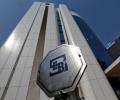
The Securities and Exchange Board of India (Sebi) is mulling doing away with the priority distribution (PD) model in Alternative Investment Funds (AIFs) and introducing in the regulation pro-rata rights (based on the ratio of their commitments) for investors. AIFs are pooled investment vehicles but certain schemes have been observed to be following a differential distribution model where one class of investors, often a junior class, share loss more than the ratio of their contributions in comparison to the senior class of investors. As the senior class of investors have priority in distribution over the junior class of investors, the profit distribution is done first to these investors while they are compensated for loss out of the residual capital of junior class investors.

'When manufacturing or even services cannot generate the kind of employment they are looking for, they prefer to be unemployed rather than under-employed.'

The first-quarter performance of top IT services players, as well as mid-cap firms, has been subdued, reflecting macro uncertainties. The numbers of the top four firms show several misses, hinting at difficult times ahead. One mismatch is the total contract value (TCV) signed by the firms and the revenue growth registered.

The currency in circulation (CIC) declined by Rs 7,600 crore in the Diwali week, making it the first such happening in two decades, a report said on Thursday. This was made possible courtesy of a greater reliance on digital payments by people, the report by economists at SBI said, adding that the Indian economy is undergoing a structural transformation at present. They clarified that the Diwali week in 2009 had also witnessed a marginal Rs 950 crore decline in currency in circulation, but that was purely due to the economic slowdown amid the global financial crisis.

Nirmala Sitharaman will present the budget of the second term of the Narendra Modi government today.

Have the markets already played out their dynamics before the economy has even properly taken off? Are we now destined for a period of mediocre returns despite a strong economy? asks Akash Prakash.

'Silicon Valley people are generally used to layoffs.' 'Every person who has been in the industry for 15-20 years would have been laid off at least 3-4 times.' 'In India, we aren't used to that concept.' 'So when it came here, people were shocked.'
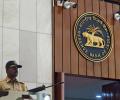
The Reserve Bank (RBI) resisted a 'raid' planned by some in the government to extract Rs 2-3 lakh crore from its balance sheet in 2018 to meet populist spending in run-up to general elections, Viral Acharya, who was deputy governor at RBI at that time, has written.

'They have since only tried to improve systems. Also, with regulatory guidance from time to time, we are in a position to assess a situation and react in time.'

For the banking system a new cycle starts in FY2024. It's fraught with fresh challenges on asset quality and profitability, warns Tamal Bandyopadhyay.

The rupee has depreciated 9.7 per cent against the US dollar over a year and with the RBI stemming the rupee's weakness through dollar sales, its reserves have dropped to their lowest levels since October, 2020. The fall in reserves has widespread implications.

The global turmoil in the banking sector has made analysts cautious, who advise that investors stay away from stocks of this sector till the overall sentiment improves. The recent trouble for the banking sector started with the collapse of US-based Silicon Valley Bank (SVB), Silvergate Capital and Signature Bank. On its part, Moody's Investors Service has also cut its outlook for the US banking system to 'negative' from 'stable', citing the run on deposits at these three banks that led to the collapse of these banking majors in less than a week.

At Rs 30.88 lakh crore, the currency with the public is 71.84 per cent higher than the level for the fortnight ended November 4, 2016.
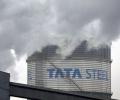
It was August 2007. Tata Steel was turning 100. Jamshedpur, its hometown, had an air of celebration. The line-up for the special event included the launch of Air Deccan's commercial flight connecting Kolkata and Jamshedpur, and release of Russi Lala's new book, Romance of Tata Steel. There was also the screening of The Spirit of Steel, a 20-minute documentary directed by Zafar Hai showcasing Tata Steel's legacy, and a corporate anthem penned by Javed Akhtar and composed by Shankar, Ehsaan and Loy.

Profitability and cash reserves have halved since the global financial crisis.

India must be prepared to deal with climate disasters, geopolitical confrontations, and social strife linked to global events, asserts Jayant Sinha, chairman of Parliament's Standing Committee on Finance.

'We continue to believe that the global economy will narrowly avoid a recession, despite expecting the US, Canada, and most of Europe to fall into recession at some point over the next year or so.'

This year's edition, three years lost to the pandemic and scheduling, wore a distinctive shade of green, and, as would befit an era of technology shift from internal combustion engines to electric motors, had a clutch of high-technology exhibits and concepts. But the excitement of the expo's heyday was missing.
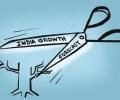
The International Monetary Fund (IMF) on Tuesday cut its projection of India's economic growth in 2022 to 6.8 per cent, as it joins other global agencies that have trimmed forecasts. The IMF had in July projected a gross domestic product (GDP) growth of 7.4 per cent for India in the fiscal year that started in April 2022. Even that forecast was lower than 8.2 per cent projected in January this year. India had grown at 8.7 per cent in 2021-22 fiscal (April 2021 to March 2022).

'This is a period of significant uncertainty, of unknown unknowns.'

The Reserve Bank on Wednesday hiked key benchmark policy rate by 25 basis points to 6.5 per cent, citing sticky core inflation. This is the sixth time interest rate has been hiked by the Reserve Bank of India (RBI) since May last year, taking the total quantum of hike to 250 basis points. Announcing the bi-monthly monetary policy, RBI Governor Shaktikanta Das said the Monetary Policy Committee (MPC) by a majority decided to raise the policy repo rate by 25 basis points and keep a 'strong vigil' on inflation outlook.

Education finance is a complex and dynamic sector. There are too many variables -- the course, the calibre of students, the universities, and the job prospects once the course is over, notes Tamal Bandyopadhyay.

Taxing the rich will fetch nothing; only votes, argues Debashis Basu.

The RBI's decision to hike the benchmark interest rate will make home loans costlier and affect housing sales, especially in affordable and mid-income segments, according to property consultants. The RBI on Wednesday hiked the key benchmark rate by 50 basis points. Property consultancy firms Anarock, Knight Frank India, JLL India, Colliers India, India Sotheby's International Realty and Investors Clinic said that the RBI's move was on the expected line to control inflation and this would result in an increase in interest rates on home loans.

It has been a choppy calendar year 2022 (CY22) for global financial markets amid the spectre of rising inflation that led most central banks, especially the US Federal Reserve (US Fed), to tighten their monetary policy. Most equity indices across the globe have seen a sharp fall from their respective peak levels in this backdrop. FTSE India, for instance, has corrected 16 per cent from its October peak.

Nearly 25 million jobs could be lost worldwide due to the coronavirus pandemic, but an internationally coordinated policy response can help lower the impact on global unemployment, according to a UN agency. In its preliminary assessment report titled 'COVID-19 and world of work: Impacts and responses', the International Labour Organization (ILO) calls for urgent, large-scale and coordinated measures across three pillars -- protecting workers in the workplace, stimulating the economy and employment, and supporting jobs and incomes.

Ten years ago, gold was selling at well below its long-term inflation-adjusted average, and the integration of three billion emerging market citizens into the global economy could only mean a giant long-term boost to demand.
There is a significant risk that advanced economies could experience another downturn, said the World Economic Outlook report released on Thursday.
