
Fitch Solutions on Thursday said the new climate targets announced at the COP26 summit by Prime minister Narendra Modi pose an upside risk to its outlook for renewable growth in the country. With the new targets, it expected to see attempts to alleviate the issues regarding supply chains, manufacturing and project development that have long plagued renewable proliferation.

Fitch Ratings has revised India's GDP forecast to minus 9.4 per cent in the current fiscal year from a previously projected contraction of 10.5 per cent after the economy staged a sharper rebound in the second quarter. In its Global Economic Outlook, Fitch said the coronavirus-induced recession inflicted severe economic scarring and the country needs to repair balance sheets and increase caution about long-term planning. "We now expect GDP to contract 9.4 per cent in the fiscal year to end March 2021 (plus 1.1 percentage point) followed by plus 11 per cent growth (unchanged) and plus 6.3 per cent growth in the following years," the rating agency said.

Moody's and Fitch on Thursday downgraded Russia's sovereign rating to 'junk' grade following severe sanctions by western countries. While Moody's Investors Service downgraded Russia's long-term issuer and senior unsecured (local-and foreign-currency) debt ratings to 'B3' from 'Baa3', Fitch pulled down the rating on the country to 'B' from 'BBB', putting it on 'Rating Watch Negative'. The downgraded rating is in speculative or junk category reflecting default risk. It signifies that even through financial commitments are currently being met, the sovereign is vulnerable to high credit risk.

Domestic commercial-vehicle (CV) sales volume will witness significant growth over the next few years and the overall CV volume is likely to reach close to 1-million units by FY24, a report said on Wednesday. The report by credit ratings agency Fitch Ratings also expects growing demand and the resultant rise in operating leverage to boost the profitability of the domestic CV-focused original equipment manufacturers after FY22, despite elevated production costs. A recovery in medium and heavy CVs from multi-year lows, along with sustained growth in light CV categories, will help overall CV volume to reach close to 1-million units by FY24 - the level of the last cyclical peak recorded in FY19, it said.

Using the debt-to-GDP ratio as a fiscal anchor aligns with efforts to promote fiscal transparency through proper disclosure of off-budget borrowings.

Fitch Ratings on Thursday said the resurgence of COVID-19 infections may delay India's economic recovery, but won't derail it, as it kept the sovereign rating unchanged at 'BBB-' with a negative outlook. It projected a 12.8 per cent recovery in GDP in the fiscal year ending March 2022 (FY22), moderating to 5.8 per cent in FY23, from an estimated contraction of 7.5 per cent in 2020-21. Fitch had in June last year revised outlook for India to 'negative' from 'stable' on grounds that the coronavirus pandemic had significantly weakened the country's growth outlook and exposed the challenges associated with a high public debt burden.

According to Fitch, the scheme could open a window for banks to build capital buffers while putting off full recognition of COVID-19 pandemic's impact on loan portfolios, but is reminiscent of a strategy adopted over 2010-2016 that delayed and exacerbated problems for banks.

Fitch Ratings on Monday said the plan to privatise two state-owned banks in the current financial year ending March 2022 could face delays amid renewed challenges for the Indian banking sector due to the second wave of Covid-19. The government in the Budget announced plans to privatise two public-sector banks. NITI Aayog has been entrusted with the task of selecting the banks and one general insurance company for the privatisation.

Fitch expected economic activity to contract by 5 per cent in FY21 due to the strict lockdown measures imposed since March 25, before rebounding by 9.5 per cent in FY22.

Fitch Ratings has upgraded Reliance Industries Ltd's (RIL) rating to 'BBB', one notch above India's sovereign rating, as the company benefits from cash flow generation across diversified business segments and continuation of deleveraging. In a statement, Fitch said it has upgraded RIL's long-term foreign-currency issuer default rating (IDR) to 'BBB', from 'BBB-', with a negative outlook. At the same time, the agency has affirmed RIL's long-term local-currency IDR at 'BBB+' with a stable outlook.

In Q1, India's GDP shrank by a staggering 24 per cent year-on-year amid the imposition of one of the most stringent global nationwide lockdowns.

Fitch Ratings on Wednesday cut India's growth forecast to 10 per cent for the current fiscal, from 12.8 per cent estimated earlier, due to slowing recovery post second wave of COVID-19, and said rapid vaccination could support a sustainable revival in business and consumer confidence. In a report, the global rating agency said the challenges for banking sector posed by the coronavirus pandemic have increased due to a virulent second wave in the first quarter of the financial year ending March 2022 (FY22). "Fitch Ratings revised down India's real GDP for FY22 by 280bp to 10 per cent, underlining our belief that renewed restrictions have slowed recovery efforts and left banks with a moderately worse outlook for business and revenue generation in FY22," it said. Fitch believes that rapid vaccination could support a sustainable revival in business and consumer confidence; however, without it, economic recovery would remain vulnerable to further waves and lockdowns.

Mounting repayment pressure for some borrowers, particularly micro, small and medium-sized enterprises, amid India's interest rate hikes will test banks' loan underwriting quality, Fitch Ratings said on Thursday. However, asset-quality risks from higher rates should generally be moderate for most banks, it said in a statement. Higher rates will also affect securities valuations and could make it harder for banks to raise fresh capital, particularly at state banks, although wider net interest margins (NIM) will have offsetting positive credit effects, it added.

The proposed reorganisation plan by Reliance Industries Ltd to transfer its refining, marketing and petrochemical (oil-to-chemicals) businesses to a wholly-owned subsidiary is a step towards facilitating participation by strategic investors in the unit, Fitch Ratings said on Tuesday. The reorganisation of the business in Reliance O2C Limited (O2C) "will have a neutral impact on RIL's credit metrics and rating," it said in a statement. The transfer will be on a "slump sale basis", subject to attaining the requisite approvals.

Fitch Solutions sees RBI keeping benchmark interest rates unchanged during the fiscal to March 2022 following its decision to buy Rs 1 lakh crore of government bonds. "We had initially expected another policy rate cut to arrest the rise in government bond yields since the Union Budget announcement in February. "However, having an explicit bond purchase guidance from the RBI following the announcement of the G-SAP will also achieve a similar effect, if not even be more effective than a rate cut on capping the increase in bond yields," it said in a note. The Reserve Bank of India (RBI) held its policy repurchase (repo) rate unchanged at 4 per cent at its monetary policy meeting on April 7.

Fitch Ratings has cut India's economic growth forecast to 8.7 per cent for the current fiscal but raised GDP growth projection for FY23 to 10 per cent, saying the second COVID-19 wave delayed rather than derail the economic recovery. In its APAC Sovereign Credit Overview, Fitch Ratings said India's 'BBB-/Negative' sovereign rating "balances a still-strong medium-term growth outlook and external resilience from solid foreign- reserve buffers, against high public debt, a weak financial sector and some lagging structural factors". The 'Negative' outlook, it said, reflects uncertainty over the debt trajectory following the sharp deterioration in India's public finances due to the pandemic shock.

Non-banking finance companies face renewed asset quality and liquidity risks amid a second wave of COVID-19, Fitch Ratings said on Thursday. These challenges are likely to increase if recent restrictions to contain the pandemic are expanded or prolonged, leading to greater economic and operational disruption, it added. The rating agency further said that an increase in the rate of infections and broadening of social distancing restrictions pose downside risks to its 12.8 per cent growth projection for the current fiscal.

The upward revision in growth forecast for current fiscal comes in the backdrop of GDP expanding 8.2 per cent in April-June quarter, higher than Fitch's expectation of 7.7 per cent.

Fitch Ratings on Monday cautioned that the Indian government has little fiscal headroom at its disposal to respond to possible shocks to growth given the country's lowest investment grade credit rating with a negative outlook. "India's public debt/GDP ratio, at about 87 per cent in FY21, is well above the median of around 60% for 'BBB' rated sovereigns. "We revised the Outlook on India's rating to Negative, from Stable, in June 2020, partly owing to our assumptions about the impact of the pandemic on public finance metrics. "The government has little fiscal headroom at its current rating level to respond to possible shocks to growth," it said in a report.

S&P Global Ratings on Wednesday upgraded India's sovereign rating outlook to positive from stable while retaining the rating at 'BBB-' on robust growth and improved quality of government expenditure. S&P said it could upgrade India's sovereign rating in the next 2 years if the country adopts a cautious fiscal and monetary policy that diminishes the government's elevated debt and interest burden while bolstering economic resilience.
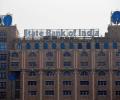
The rating agency revised the outlook for EXIM, SBI, Bank of Baroda, Bank of Baroda (New Zealand), Bank of India, Canara Bank, Punjab National Bank, ICICI Bank, Axis Bank while affirming their ratings. At the same time, Fitch has affirmed IDBI Bank Ltd's (IDBI) rating, while maintaining the outlook at negative.

The ties between India and the Maldives came under severe strain since Muizzu, known for his pro-China leanings, took charge of the top office in November.

Stating that a weak fiscal position continues to constrain India's sovereign ratings, Fitch said the next government's medium-term fiscal policy will be of particular importance from a rating perspective.

The rating affirmation reflected RIL's strong business profile - a large-scale refinery with a capacity of around 1.2 million barrels a day and dominant market position in petrochemicals.

Fitch Ratings has affirmed ICICI Bank's ratings at 'BB+' with a negative outlook and retained the lender's viability rating at BB. The negative outlook comes despite the agency recently revising upwards the operating environment outlook of domestic banks to stable from negative, citing better than expected recovery in business and economic activity following the COVID-19 second wave. Economic momentum and regulatory measures should support modest improvements in the domestic banks' financial profiles over the next 12-24 months, even though challenges remain the agency said in a late Monday note.

Fitch Ratings director Thomas Rookmaaker said India's debt-to-GDP ratio is likely to rise to 76 per cent from 70 per cent currently due to wider fiscal deficit and low economic growth.

Fitch Ratings on Monday said the shock to economic activity from the latest wave of COVID-19 pandemic will be less severe than the one in 2020, but recovery is likely to be delayed as economic activity dropped in April-May. The global rating agency said there are growing indications that the latest wave of COVID-19 infections will add to risks among financial institutions (FIs) and anticipates that the Reserve Bank of India (RBI) may introduce additional measures to support the financial sector if indications of economic stress mount.

Fitch said the full implications of Patel's resignation will only become clearer once there is some indication of the RBI's policy approach under his replacement, Shaktikanta Das

Vodafone Idea will gradually lose market share given its weak balance sheet and limited financial flexibility, says Fitch.

According to Fitch rupee is expected to weaken to 72 to a dollar by the end of December 2019, and further to 73 by December 2020, from 69.82 to a dollar in end December 2018.

Fitch Ratings has revised India's GDP growth estimate to 12.8 per cent for the fiscal year beginning April 1 from its previous estimate of 11 per cent, saying its recovery from the depths of the lockdown-induced recession has been swifter than expected. In its latest Global Economic Outlook (GEO), Fitch said revision is on the back of "a stronger carryover effect, a looser fiscal stance and better virus containment." "India's second half of 2020 rebound also took GDP back above its pre-pandemic level and we have revised up our 2021-2022 forecast to 12.8 per cent from 11.0 per cent," it said. "Nevertheless, we expect the level of Indian GDP to remain well below our pre-pandemic forecast trajectory."

Struggling to meet budget targets, the government had in the just concluded fiscal asked cash-rich PSUs to pay second interim dividend as well as undertake share buyback.

Fitch Ratings had in December affirmed India's 'BBB-' rating with a stable outlook.

Fitch reaffirmed India's rating at 'BBB-' with a Stable Outlook saying the rating balances a still strong medium-term growth outlook compared with similar category peers and relative external resilience stemming from solid foreign-reserve buffers against high public debt, a weak financial sector and some lagging structural factors, including governance indicators and GDP per capita.

India has pitched for a sovereign credit rating upgrade with Fitch Ratings, after announcing its budget last month.

Adani Green Energy Ltd, the renewable energy arm of billionaire Gautam Adani's conglomerate, plans to raise $409 million through US dollar-denominated bonds to repay a debt obligation falling this year. In a regulatory filing, the company said the bond will have a door-to-door tenor of 18 years. The proceeds will be used to redeem the $500 million 6.25 per cent senior secured notes due 2024, it said adding these notes were issued on June 10, 2019.

After a contraction in the current financial year, India's economy is forecast to bounce back with a sharp growth rate of 9.5 per cent next year provided it avoids further deterioration in financial sector health, Fitch Ratings said on Wednesday. The coronavirus pandemic will lead to shrinking of the already slowing economy in 2020-21 that started in April. Fitch Ratings forecast a 5 per cent contraction in the GDP in the ongoing financial year.

The comments from Fitch sovereign analyst Art Woo sent the rupee lower, reinforcing worries that India is still at risk of losing its investment-grade rating from the credit agency.

Sitharaman's Budget missed deficit target for the third year in a row, pushing shortfall to 3.8 per cent of GDP in the current fiscal as compared to 3.3 per cent previously planned.

Fitch had last upgraded India's sovereign rating from BB+ to BBB- with a stable outlook on August 1, 2006.
 © 2026 Rediff.com - Investor Information - Advertise with us - Disclaimer - Privacy Policy - Sitemap - Feedback - About us - Terms of use - Grievances