
Pakistan was put in the inglorious list in 2018 for its failure to check risk of money laundering, leading to corruption and terror financing.
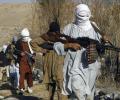
Pakistan has been on the grey list of the Paris-based Financial Action Task Force since June 2018 for failing to check money laundering, leading to terror financing, and was given a plan of action to complete it by October 2019.

Pakistan will remain on the 'grey list' of the Financial Action Task Force (FATF) until it further demonstrates that action is being taken against Jamaat-ud-Dawah chief Hafiz Saeed and Jaish-e-Mohammed founder Masood Azhar who are listed as global terrorists by the United Nations, the global anti-money laundering and terror financing watchdog said on Thursday.
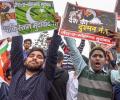
A dossier will be given to the FATF, an international terror financing watchdog.

The Financial Action Task Force (FATF) on Friday retained Pakistan on its 'grey list' for failing to check money laundering, leading to terror financing, and asked Islamabad to investigate and prosecute senior leaders and commanders of United Nations-designated terror groups, including Hafiz Saeed and Masood Azhar.

"The FATF plenary decided continuation of Pakistan in 'Grey List' till its next meeting to be held in October," an official privy to the development told PTI.

India has been maintaining that Pakistan extends regular support to terror groups like Lashkar-e-Taiba, Jaish-e-Mohammad and Hizbul Mujahideen, whose prime target is India, and has urged FATF to take action against Islamabad.
The Paris-based global watchdog for curbing terror financing and money laundering will hold its virtual plenary session from October 21 to 23. It will review Pakistan's progress on the 27-point action plan.

The mandates which Pakistan has failed include action against all United Nations-designated terrorists like Jaish-e-Mohammed chief Azhar, Lashker-e-Tayiba founder Hafiz Saeed and the outfit's operational commander Zakiur Rehman Lakhvi.

India's stand at the FATF plenary and other related discussions have always been consistent regarding Pakistan.
Pakistan failed to fulfil six of the 27 mandates so far as a result of which the country continues to be in the grey list of the FATF.

Seeking to wriggle out of the FATF's grey list, Pakistan has imposed tough financial sanctions on 88 banned terror groups and their leaders, including Hafiz Saeed, Masood Azhar and Dawood Ibrahim, by ordering the seizure of all of their properties and freezing of bank accounts, a media report said.
With this, multilateral lenders like the International Monetary Fund, the World Bank and the European Union may continue downgrading Pakistan, making its financial situation more precarious.

Dawood Ibrahim is wanted in India to face the law of the land for carrying out serial blasts in Mumbai in 1993 in which scores of people were killed and injured.
The Paris-headquartered FATF said Pakistan should continue to work on implementing its action plan to address its strategic deficiencies

The FATF continuing Pakistan in the 'Grey' list means its downgrading by IMF, World Bank, ADB, EU and also a reduction in risk rating by Moody's, S&P and Fitch.

If Pakistan continues with the 'Grey List' or put in 'Dark Grey' list, it would be very difficult for the country to get financial aid from the IMF, the World Bank and the European Union, making its financial condition more precarious.
 © 2026 Rediff.com - Advertise with us - Disclaimer - Privacy Policy - Sitemap - Feedback - About us - Terms of use - Grievances