
We invited China expert and rediff.com columnist Dr Srikanth Kondapalli, associate professor of Chinese Studies at the Jawaharlal Nehru University, New Delhi, for a chat with our readers on the Sino-India ties. Here's the transcript...
Transcript of the chat on China by Srikanth Kondapalli.
In a chat with rediff.com readers, Dr Srikanth Kondapalli, Associate Professor in Chinese Studies at the Jawaharlal Nehru University, analysed the prime minister's trip and offered his opinion on whether the trip was worth all the hoopla.
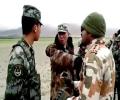
'During disengagement, you don't find violence.' 'And that, too, the killing of a commanding officer.' 'This indicates that this is more serious than previous incidents.'

'The BJP has done the Uri surgical strikes, handled the Dokalam crisis and the Balakot strikes.' 'So if there is a de-escalation only at the diplomatic level and not resolving this issue of a colonel being killed, then it translates into public anger.'

China's South China Sea build-up and 'territorial sea' construct potentially affects 55 percent of Indian trade passing through the region. Hence, coordinating with the US and Japan could provide dividends to India in the longer run,' says Srikanth Kondapalli.

'The focus on countering terrorism brings to the issue Beijing's non-serious approach in this regard. India's permanent representative at the UN has raised in vain the issue of funding and the release of 26/11 suspect Zaki-ur Rehman Lakhvi. But China has blocked these objections since December 2014 at the UN even after 'highest levels' in India intervened,' notes Srikanth Kondapalli, reviewing the India-China military exercises in Kunming.

'China refuses to talk to India on nuclear or ballistic missile issues and conclude any de-targeting agreement as Beijing did with Russia or a non-targeting agreement with the US.'
 © 2026 Rediff.com - Investor Information - Advertise with us - Disclaimer - Privacy Policy - Sitemap - Feedback - About us - Terms of use - Grievances