
The government had set the direct tax collection target of Rs 3.70 lakh crore (Rs 3.7 trillion) in the budget for 2009-10, which was later revised upwards to Rs 3.87 lakh crore (Rs 3.87 trillion).

Direct Taxes Code will make politically difficult changes feasible


The new Direct Taxes Code has been put in the public domain and will most likely be up for debate in the monsoon session of Parliament.

Tax practitioners said that the move will help salaried individuals meet the cost of some of the surgeries since the present limit was low and was mostly used up by consultation fees and cost of medicines.
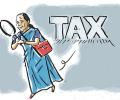
The income-tax (I-T) department has started scrutinising cases for the assessment year (AY) 2018-19 to determine which of them need to be reopened, a process that might result in a raft of tax notices. This follows this year's Union Budget move to reduce the time limit for tax reassessment from 10 years to five in cases of escaped income. The new provision becomes effective on September 1 and will make past assessments for AY 2018-19 time-barred.

Indirect tax collections saw only a meagre 3.5 per cent growth, as mop-up from Customs fell sharply on account of a drop in imports.

The government hopes to implement direct tax code from April 2011.

The government expects to collect this much tax from the cricketing event and has already mopped up Rs 110 crore (Rs 1.1 billion) in the first 15 days as tax deducted at source.

The government on Monday tabled the much-awaited Direct Taxes Code Bill in the Lok Sabha which proposed to raise the exemption limit on income tax from the current Rs 1,60,000 to Rs 200,000.

Amid slowing economy, the gross direct tax collection has risen only by 13.18 per cent to Rs 3.68 lakh crore during the April-November period of 2013-14 fiscal.

As much as Rs 3.64 lakh crore has been collected as advance tax, which is 14.5 per cent higher than the advance tax collections during the same period last year.
While presenting the Union Budget for 2009-10, finance minister Pranab Mukherjee had said that in order to bring in tax reforms in the country the government will bring the new DTC within 45 days. The code will replace the existing Income Tax Act, which was enacted in 1961 and would subsume the direct tax legislations.

The Congress had moved the poll panel claiming a mismatch in actual and declared assets in the affidavit filed by Chandrasekhar, who is in the fray against former UN diplomat Shashi Tharoor.

'We have now drastically simplified it, primarily to two rates in long-term capital gains: 20% and the applicable rates. Similarly, in short-term capital gains.' 'For listed shares, there is a slight increase, but for unlisted shares, where indexation benefits are removed, there is a reduction in rates, benefiting unlisted companies, venture capital firms, etc.' 'Similarly, in real estate, wherever returns are higher, the new structure is beneficial. In very few cases, returns are lower, and those are more of an exception.'

Highlights of the Union Budget 2024-25 presented by Finance Minister Nirmala Sitharaman in Lok Sabha on Tuesday.

The Income Tax department on Friday said it has notified I-T return forms 2, 3 and 5 for filing tax returns for assessment year 2024-25. The ITR-1, which is filed by individuals having a total income of up to Rs 50 lakh, and ITR-6 for companies were notified earlier in December 2023, and January 2024, respectively.
Direct Tax collections surged by 25.4 per cent at Rs 78,243 crore (Rs 782.43 billion) till March 15, mainly due to impressive growth in corporate earnings in the country.

Finance minister Pranab Mukherjee said he was confident of the DTC being recommended by the standing committee in the coming (winter) Parliament session.

'Earlier there was no provision for considering TCS collected from the taxpayer for overall tax computation.' 'Now, credit will be given by the employer for TCS already collected to consider net tax to be deductible.'

As per the data released by the Central Board of Direct Taxes today, the growth in corporate income tax logged in a healthy 21 per cent growth to Rs 51,627 crore (Rs 516.27 billion) as against Rs 42,685 crore (Rs 426.85 billion) in year-ago period.
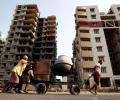
The government's move to tweak the long-term capital gains (LTCG) tax regime proposed in the Finance Bill 2024 and re-introduce the indexation benefit is likely to boost the investments and spur housing sales in the country, industry executives believe. "By enabling taxpayers to choose the lower tax burden between the new and old schemes, the amendment is poised to drive investment and enhance sales across housing segments," said Niranjan Hiranandani, chairman of the Hiranandani Group. In Budget 2024, Union Finance Minister Nirmala Sitharaman proposed an overhaul in the capital gains tax regime, including lowering the LTCG tax to 12.5 per cent from 20 per cent.

A taxpayer who does not revise their return within the stipulated deadline would be stuck with the original return, including its errors.

Finance Minister Pranab Mukherjee has also said that the bill on DTC was likely to be tabled in the monsoon session of Parliament.

7 states account for over 80 per cent of the total direct tax collections by the Union government.

All eyes will be on whether Sitharaman provides the much-expected tax relief for the middle class, leaving more money in their hands, as there is tax buoyancy

Finance Minister Pranab Mukherjee on Wednesday said the proposed Direct Taxes Code would give an edge to the country while dealing with international taxation issues.

The Direct Taxes Code is likely to be implemented from 2011-12. Sources said the bill in this respect may be tabled in Parliament in the Budget session.
Corporate tax, one of the main components of direct taxes, stood at Rs 2.13 lakh crore (Rs 2.13 trillion), woefully short of the revised estimates of Rs 2.22 lakh crore (Rs 2.22 trillion), while personal income tax beat expectations by ringing in Rs 1.24 lakh crore (Rs 1.24 trillion) against the target of Rs 1.23 lakh crore (Rs 1.23 trillion).

A good tax system should minimise the cost of collection, compliance cost and the cost to the economy in terms of the distortions it creates while generating revenues.

The proposal to levy a minimum tax based on assets undoes most of the good that the code seeks to do and will discourage capital-intensive industries.
Tax payers got of Rs 17,600 crore (rs 176 billion), representing a 52.01 per cent growth over Rs 11,578 crore (Rs 115.78 billion) given in the first three months of last fiscal.

Finance Minister Nirmala Sitharaman on Thursday said there are no changes in tax rates for direct and indirect taxes, including import duties. She also said the number of tax filers has swollen 2.4 times and the direct tax collection has trebled since 2014.
During April-October, the direct tax collections grew by 29.52 per cent at Rs 1,66,905 crore (Rs 1,669.05 billion). It was at Rs 1,28,864 crore (Rs 1,288.64 billion) in the same period a year ago, according to a finance ministry statement. Corporate tax collections were up 33.49 per cent at Rs 1,05,174 crore (Rs 1,051.74 billion), while personal income tax rose by 23.14 per cent at Rs 61,433 crore (Rs 614.33 billion) during the period.

However, personal income tax collections were down 0.41 per cent at Rs 83,178 crore (Rs 831.78 billion) during the period compared to Rs 83,524 crore (Rs 835.24 billion) in the same period last fiscal.
The Centre's Direct Tax collection was up by 20.39 per cent at Rs 82,071 crore (Rs 820.71 billion) during 2002-03 compared to Rs 68,170 crore (Rs 681.7 billion) mopped up in 2001-02.

The government now ends its mandate with reaffirmation in the vote-on-account of the same goals, for which it claims to have a clear line of sight.
The long awaited direct tax code bill (DTC) proposes to simplify Indian taxation system. Here's how it will affect and benefit the salaried class.
 © 2026 Rediff.com - Advertise with us - Disclaimer - Privacy Policy - Sitemap - Feedback - About us - Terms of use - Grievances