
'Invest only in stocks of those companies that deliver on earnings and there is earnings visibility too for the next few quarters.'
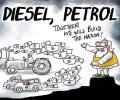
The government on Friday slapped an export tax on petrol, diesel and jet fuel (ATF) while also joining nations like the UK in imposing a windfall tax on crude oil produced locally. A Rs 6 per litre tax on export of petrol and ATF and Rs 13 per litre tax on export of diesel is effective from July 1, finance ministry notifications showed. Additionally, a Rs 23,250 per tonne tax was levied on crude oil produced domestically.
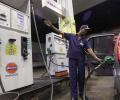
Petrol price on Sunday was hiked by 50 paise a litre and diesel by 55 paise, taking the total increase in rates since resumption of daily price revision less than a week back to Rs 3.70-3.75 per litre. Petrol in Delhi will now cost Rs 99.11 per litre as against Rs 98.61 previously while diesel rates have gone up from Rs 89.87 per litre to Rs 90.42, according to a price notification of state fuel retailers. Rates have been increased across the country and vary from state to state depending upon the incidence of local taxation.
Petrol and diesel prices are likely to be hiked this week as oil companies prepare to pare losses accumulated from keeping rates steady for over four months in the run-up to assembly elections in five states, including UP, despite international oil prices jumping to a 13-year high of $140 per barrel. West Texas Intermediate crude futures, the US oil benchmark, rose to $130.50 per barrel on Sunday evening, its highest since July 2008, before retreating. The international benchmark, Brent crude, hit a high of $139.13 at one point overnight, also its highest since July 2008.
Petrol price on Tuesday was increased by 15 paise per litre and diesel by 18 paise as State-owned fuel retailers started passing on the increase in international oil prices to consumers after an 18-day hiatus.
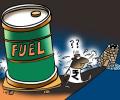
The Centre earned nearly Rs 8.02 lakh crore from taxes on petrol and diesel during the last three fiscal years, of which more than Rs 3.71 lakh crore was collected in FY21 alone, Finance Minister Nirmala Sitharaman informed Parliament on Tuesday. The minister was responding to queries on the hike in excise duty on petrol and diesel during last three years and the details of the revenue earned through various taxes on these fuels. The excise duty on petrol rose from Rs 19.48 per litre as on October 5, 2018 to Rs 27.90 a litre as on November 4, 2021.

Petrol and diesel prices on Wednesday were hiked by 80 paise a litre each for the second day in a row since the ending of an over four-and-half month hiatus in rate revision. Petrol in Delhi will now cost Rs 97.01 per litre as against Rs 96.21 previously while diesel rate has gone up from Rs 87.47 per litre to Rs 88.27, according to a price notification of state fuel retailers.

Mark your calendar! On August 7, Tata Motors is unveiling a revolutionary vehicle -- the Curvv, billed as India's first SUV coupe.

No change in retail prices as oil marketing firms to absorb increase
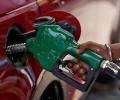
While consumers feel that petrol pinches directly, diesel hurts indirectly, as it is an input in almost all the goods and services we use.
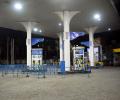
In one of the steepest increases since daily price revision was started, petrol price on Thursday was hiked by 25 paise per litre and diesel by 30 paise as oil companies raised rates for the third straight day to pass on to consumers the increase in international oil prices.
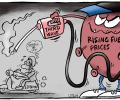
A surge in international oil prices may translate into an increase in the retail selling price of petrol and diesel in India as oil companies face extreme margin squeeze, sources said. Petrol and diesel prices have remained unchanged for 12 days but now the international rate surge is exerting pressure. Current prices of petrol and diesel in the international market are higher by around $4-6 per barrel as compared to average prices during August. However, no increase in retail prices has been affected by oil companies so far, sources said.
The GST Council might on Friday consider taxing petrol, diesel and other petroleum products under the single national GST regime, a move that may require huge compromises by both central and state governments on the revenues they collect from taxing these products. The Council, which comprises central and state finance ministers, in its meeting scheduled in Lucknow on Friday, is also likely to consider extending the time for duty relief on COVID-19 essentials, according to sources in the know of the development. GST is being thought to be a solution for the problem of near-record high petrol and diesel rates in the country, as it would end the cascading effect of tax on tax (state VAT being levied not just on the cost of production but also on the excise duty charged by the Centre on such output).
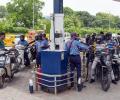
Petrol and diesel price hikes are likely to resume after state elections get over next week to bridge the Rs 9 a litre gap created by international oil prices soaring past $100 a barrel. International crude oil prices shot above $110 a barrel for the first time since mid-2014 on fears that oil and gas supplies from energy giant Russia could be disrupted, either by the conflict in Ukraine or retaliatory western sanctions. The basket of crude oil India buys rose above $102 per barrel on March 1, the highest since August 2014, according to information from the Petroleum Planning and Analysis Cell (PPAC) of the oil ministry.
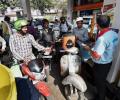
In 13 hikes, petrol price has gone up by Rs 7.11 per litre and diesel by Rs 7.67 a litre.

Global supermajor BP Plc's exclusivity with Reliance Industries Ltd has ended but the energy giant will continue to pursue oil and gas as well as mobility ventures in India with the Mukesh Ambani firm owing to an unwritten strategic partnership, BP's outgoing India head Sashi Mukundan said. BP in 2011 spent $7.2 billion to acquire 30 per cent interest in 23 oil and gas blocks of Reliance. Eastern offshore KG-D6 block was the cornerstone of the deal that also provided for a 10-year exclusivity period which meant that BP would take up energy projects or investments in India only in partnership with Reliance.
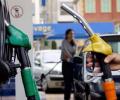
Petrol and diesel prices were on Thursday hiked by 80 paise a litre each, taking the total increase in rates in the last 10 days to Rs 6.40 per litre. Petrol in Delhi will now cost Rs 101.81 per litre as against Rs 101.01 previously while diesel rates have gone up from Rs 92.27 per litre to Rs 93.07, according to a price notification of state fuel retailers.

Petrol and diesel prices were on Thursday cut for the second straight day as international oil prices cooled fell on prospects of speedy recovery in consumption getting clouded by second wave of COVID-19 cases. Petrol price was cut by 21 paise per litre and diesel by 20 paise, according to a price notification of state-owned fuel retailers. Petrol now costs Rs 90.78 per litre in Delhi and a litre of diesel comes for Rs 81.10.
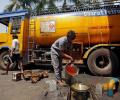
Investors shunned shares of oil marketing companies (OMCs) on Friday as they feared that the government's decision to cut retail prices of petrol and diesel could hurt the companies' profit margins in the near term. On Thursday, the government announced that OMCs will reduce pump prices of petrol and diesel after a record 22 months, making them cheaper by Rs 2 per litre in the national capital. The changes were effective from Friday.

Several BJP-backed state governments have unveiled schemes targeting the poor, women, farmers and students, following the party's setback in the Lok Sabha polls.
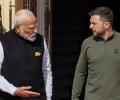
Prime Minister Narendra Modi on Friday invited President Volodymyr Zelenskyy to visit India and the Ukrainian leader said he would be happy to travel to the 'great' country.
Diesel price on Monday was hiked by 25 paise per litre -- the third increase since last week -- and more rate hikes for both diesel and petrol are in the offing in the coming days as international oil prices have soared to a three-year high. The price of diesel was hiked to Rs 89.32 per litre in Delhi and to Rs 96.94 in Mumbai, according to a price notification of state-owned fuel retailers. This is the second straight day of increase in diesel prices and the third since September 24 when the state-owned oil firms ended a three-week hiatus in rates.

The company has the largest car park in EVs in India, estimated to be around 170,000 units. As a pilot, it has already started work with used online car marketplace Spinny.
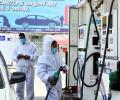
Petrol and diesel prices on Tuesday were cut for the third time within a week on the back of softening international oil prices. Petrol price was cut by 22 paise per litre and diesel by 23 paise per litre, according to a price notification of state-owned fuel retailers. Petrol now costs Rs 90.56 per litre in Delhi and a litre of diesel comes for Rs 80.87. Rates have been reduced across the country and vary from state to state depending on the local incidence of taxation (VAT). In Mumbai, the petrol price was cut to Rs 96.98 a litre on Tuesday from Rs 97.19, while diesel rates were reduced to Rs 87.96 from Rs 88.20, the price notification showed.
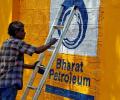
BPCL is a high revenue-earning public-sector undertaking (PSU) and plans to privatise it are completely off the table, Petroleum and Natural Gas Minister Hardeep Singh Puri said on Tuesday after assuming charge of the ministry for the second time. "Why would we divest ourselves of highly successful Maharatnas like BPCL," Puri said, arguing the Centre was not in favour of divesting its stake in oil PSUs.

Cement manufacturers have hiked prices after a challenging Q1FY25, and Q2FY25 (so far) when general elections and seasonal factors cut down on construction activity. The August prices are currently around 3-6 per cent above July 2024 but may not be sustainable in the face of weak demand. H2FY25 may see realisation growth which, if it happens, would drive average operating profit/tonne improvements in H2FY25 over a muted H1FY25.
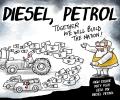
Petrol and diesel price soared to an all-time high across the country on Friday after rates were hiked again by 25 paise and 30 paise a litre, respectively. The price of petrol in Delhi rose it its highest ever level of Rs 101.89 a litre and to Rs 107.95 in Mumbai, according to a price notification of state-owned fuel retailers. Diesel rates too touched a record high of Rs 90.17 in Delhi and Rs 97.84 in Mumbai.

Petrol price on Thursday was cut by 16 paise per litre and diesel by 14 paise -- the fourth minor reduction in rates in three weeks that followed six months of relentless price increases. Petrol now costs Rs 90.40 per litre in Delhi, down from Rs 90.56, according to a price notification of state-owned fuel retailers. A litre of diesel comes for Rs 80.73 per litre as against Rs 80.87 previously.
This is the second straight increase in ATF price this month. Rates were hiked by a record 56.5 per cent (Rs 12,126.75 per kl) on June 1. Simultaneously, petrol and diesel prices were hiked for the 10th day in a row.

Rajesh Karkera/Rediff.com takes the latest offering from the Mahindra stable for a spin.
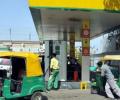
After Delhi, CNG price in Mumbai has been hiked by Rs 1.50 per kg and the rate of cooking gas piped to houses by Re 1 due to rise in input costs. Mahanagar Gas Ltd, which retails CNG to automobiles and piped natural gas to households for cooking purposes in Mumbai and surrounding cities, said the increased prices will come into effect from the intervening night of July 8 and 9.

Amid record-high fuel prices, Finance Minister Nirmala Sitharaman on Monday said there is no proposal as of now to bring crude oil, petrol, diesel, jet fuel (ATF) and natural gas under the Goods and Services Tax (GST). When the GST was introduced on July 1, 2017, amalgamating over a dozen central and state levies, five commodities - crude oil, natural gas, petrol, diesel, and aviation turbine fuel (ATF) - were kept out of its purview given the revenue dependence of the central and state governments on this sector. This meant that the central government continued to levy excise duty on them while state governments charged VAT. These taxes, with excise duty, in particular, have been raised periodically.
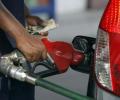
Petrol and diesel prices, which have been on a freeze for the past four months in view of assembly elections in states like Uttar Pradesh, need to be increased by over Rs 12 per litre by March 16 for fuel retailers to break even. International crude oil prices shot above $120 a barrel for the first time in nine years on Thursday before retreating a little to $111 on Friday, but the gulf between cost and retail rates has only widened. With international oil prices - on which domestic fuel retails are directly benchmarked - spiking in the last two months, state-owned fuel retailers "need a massive price hike of Rs 12.1 per litre on or before March 16, 2022, just to breakeven and a price hike of Rs 15.1 is required" after including margins for oil firms, ICICI Securities said in a report.

As Kolkata marches towards modernity, it is hard to imagine its streets without these cabs, notes Air Commodore Nitin Sathe (retd).
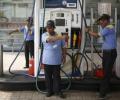
State-owned fuel retailers are losing close to Rs 3 per litre on selling diesel while the profit on petrol has trimmed due to recent firming up in international oil prices, industry officials said detailing reasons for continuing to hold retail prices. Indian Oil Corporation (IOC), Bharat Petroleum Corporation Ltd (BPCL) and Hindustan Petroleum Corporation Ltd (HPCL), who control roughly 90 per cent of India's fuel market, 'voluntarily' have not changed petrol, diesel and cooking gas (LPG) prices for almost two years now, resulting in losses when input cost was higher and profits when raw material prices were lower.
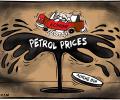
Petrol and diesel prices were raised for the second day in a row on Wednesday as state-owned fuel retailers resumed daily rate revision after a more than two-week long hiatus during assembly elections in states like West Bengal. Petrol price was increase ford by 19 paise per litre and diesel by 21 paise a litre, according to a price notification of state-owned fuel retailers. Petrol in the national capital now costs Rs 90.74 a litre and diesel comes for Rs 81.12 per litre.
As the world's third-largest oil importer and consumer, India is running out of options as the relentless surge in international oil prices make it imperative to pass them on to consumers, officials said on Monday. India imports 85 per cent of its crude oil needs and about half of its natural gas requirement. While the imported crude oil is turned into fuels such as petrol and diesel, gas is used as CNG in automobiles and fuel in factories.

The Mahindra Thar undergoes yet another iteration. With 5 doors, longer dimensions, a more refined engine... and a new name. The Mahindra Thar Roxx, debuting on August 15, promises all that you have wanted in the head-turning SUV, says Rajesh Karkera/Rediff.com.
Petrol and diesel prices were on Tuesday hiked by 80 paise a litre while domestic cooking gas prices were increased by Rs 50 per cylinder, ending an over four-and-half month election-related hiatus in rate revision, sources said. Petrol in Delhi will now cost Rs 96.21 per litre as against Rs 95.41 previously while diesel has gone up from Rs 86.67 per litre to Rs 87.47. Simultaneously, the price of a non-subsidised LPG cylinder has been increased to Rs 949.50 for each 14.2-kg bottle in the national capital.
Finance Minister Nirmala Sitharaman on Monday ruled out a cut in excise duty on petrol and diesel to ease prices, which have touched an all-time high, saying payments in lieu of past subsidised fuel pose limitations. Petrol and diesel as well as cooking gas and kerosene were sold at subsidised rates during the previous Congress-led UPA government. Instead of paying for the subsidy to bring parity between the artificially suppressed retail selling price and the cost that had soared because of international rates crossing $100 per barrel, the then government issued oil bonds totalling Rs 1.34 lakh crore to the state-fuel retailers. These oil bonds and the interest thereon are being paid now.
 © 2026 Rediff.com - Investor Information - Advertise with us - Disclaimer - Privacy Policy - Sitemap - Feedback - About us - Terms of use - Grievances