
India is deploying cutting-edge technology to defeat a simple insurgent weapon that J&K militants and Naxals are using to lethal effect: the Improvised Explosive Device, or IED. Swedish company Saab has offered to partner India's Defence Research and Development Organisation in fitting Saab's CARABAS radar on India's Dhruv Advanced Light Helicopter (ALH), which would allow the scanning of wide swathes of territory to detect IEDs well before they can be exploded.
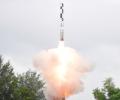
India has already deployed a sizeable number of the original BrahMos missiles and other key assets in several strategic locations along the de-facto border with China in Ladakh and Arunachal Pradesh.
India has signed its biggest defence deal with the United States to procure ten C-17 heavy-lift aircraft for $4.1 billion under which American defence major Boeing will set up test facilities for hi-tech aeronautics engines for the Defence Research and Development Organisation. The project to procure the ten strategic heavy-lift aircraft was cleared by the Cabinet Committee on Security last week through the Foreign Military Sales route.
India's long-criticised Akash anti-aircraft missile is now blazing towards success. After years of rejection from the military, the Akash is being accepted as a world-class missile.
India's indigenous Light Combat Aircraft Tejas has successfully completed air-to-air close combat missile firing tests, ahead of its clearance for induction into the Indian Air Force.

India on Monday successfully test-fired its nuclear-capable Agni-II missile intermediate range ballistic missile, with a range of 2000 kms, from the Wheelers Island off Orissa coast.
K Santhanam, former Defence Research and Development Organisation scientist, who has rubbished the nuclear test at Pokhran in 1998 told journalists that he believed India neede to conduct two more tests to perfect the thermo-nuclear technology required to make a Hydrogen bomb. Santhanam maintained that simulations or computer-based tests were not enough to perfect thermo-nuclear technology. His statements are an antithesis of the Indian governments' position on this issue.

New Arjuns will fire anti-tank missiles; have extra armour protection
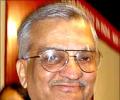
Dismissing a top nuclear scientist's contention that Pokharan II was not a complete success, Atomic Energy Commission chief Anil Kakodkar on Friday said the tests in 1998 achieved '100 per cent desired results'.Speaking at a function organised by the Raja Ramanna Centre for Advanced Technology in Indore, Kakodkar said, "Pokhran II tests were a complete success and they achieved 100 per cent desired results."
It has been developing missiles and other state-of-the-art equipment for the armed forces, but the Defence Research and Development Organisation is now ready to take on the oldest human enemy -- mosquitoes -- that are vectors of diseases like malaria, and dengue with a new insect repellent cream.
The indigenously developed ballistic missile defence system will be test fired in August this year, a top defence official said on Thursday.
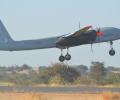
Rustom 2 is being developed on the lines of predator drones of the United States to carry out surveillance and reconnaissance roles for the armed forces with an endurance of 24 hours, officials said.
IAF feels DRDO fronting for French engine, citing 'joint development'.
In the midst of the controversy over the success of the 1998 thermonuclear test, nuclear scientist P K Iyengar has said the views of former Defence Research and Development Organisation scientist K Santhanam on the issue are the 'clincher'. There is a "strong reason to believe that the thermonuclear device had not fully burnt and, therefore, further testing was called for," Iyengar, a former Atomic Energy Commission chairman, said.

The defence ministry on Thursday rejected senior Defence Research and Development Organisation scientist K Santhanam's assertion that the 1998 Pokhran II nuclear tests were not fully successful, adding that India has a meaningful number of nuclear weapons and an effective delivery system to go with it.
The first round of tests was conducted on Thursday.
K Santhanam, a retired Defence Research and Development Organisation scientist, on Monday accused former Atomic Energy Commission chief Anil Kakodkar of 'ignoring facts' about the yield of the nuclear tests done at Pokhran in May 1998, calling him 'a liar' motivated by institutional loyalties.
DRL, Tezpur is harnessing all this spice into military applications, such as high-effectiveness tear gas. Meanwhile, the World Wildlife Fund asked DRL to explore the possibility of using Naga chilli to keep wild elephants away from villages and fields.
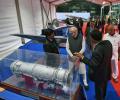
Defence Minister Rajnath Singh on Tuesday unveiled a new version of the procurement manual of the premier military research institute Defence Research and Development Organisation featuring simplified procedures for the involvement of the private sector in various research and development projects.
In an effort to protect India's vast coastline and ports from various threats, sea bed arrays and unmanned underwater vehicles will be used for ocean surveillance.
"We will be embarking on UCAV, which will be an unmanned aerial vehicle with weapons. This will not only do surveillance but fire on identified targets," Dr V K Saraswat, Scientific Advisor to Defence Minister and DRDO Director General, told media-persons in Bengaluru.
The unguided rocket system is meant to neutralise bigger geographical area with rapid salvo of rockets. With a range of 40 km, 'Pinaka' can fire salvo of 12 rockets in 44 seconds. One salvo each (12 rockets) from the battery of six launchers can neutralise at a time a target area of 3.9 sq km.

'Each lab is working on a key advanced technology of importance to the development of futuristic defence.'

Santhanam also sought to counter claims by Narayanan and others in the establishment that he was not privy to the test measurements and information on Pokhran-II tests.
Former Defence Research and Development Organisation scientist K Santhanam, who had questioned the success of the thermonuclear device during the Pokhran-II tests, has favoured an inquiry to determine the results of the 1998 experiments, saying creation of nuclear power could not be based on myths.
The DRDO and European defence consortium EADS have successfully developed an advanced missile warning system and will start its serial production soon. Announcing this during the ongoing Berlin Air Show, the Netherlands-based EADS said it looked at India as a manufacturing hub from where the technology could be exported to other interested countries.
The indigenous Kaveri aircraft engine, soon to make its debut flight, lacks the muscle needed by India's Tejas light combat aircraft, which the engine was designed to power. In its present form, the Kaveri will never power a modern fighter. The Indian Navy is snapping up the Kaveri for powering its growing fleet of warships.
India does not need to carry any more nuclear tests, Atomic Energy commission chief Anil Kakodkar said on Wednesday in the backdrop of the controversy over whether the 1998 Pokhran thermo-nuclear explosion was a fizzle.
'There is a change in the administration in the United States of America. They are bound to further pressurise India to sign the CTBT. In such an event it was necessary to make such a statement or speak the truth on the issue so that India does not rush into signing the CTBT.'

India on Monday successfully flight-tested its indigenously developed SMART torpedo system, which DRDO said will be a "game changer" in anti-submarine warfare, marking yet another milestone in strengthening the country's maritime strategic capabilities, defence sources said.
India on Sunday test-fired the 290-km range BrahMos cruise missile from the Integrated Test Range at Chandipur off the Orissa coast. "It was a user's trial by the defence forces," said a Defence Research and Development Organisation official. "User's trial of BrahMos conducted by the Indian Army was successful," ITR Director S P Dash said after the missile blasted off from a mobile launcher at nearly 11.35 am from the launch complex-3 of the test range.
"Non Resident Indians having relevant qualification and experience in Engineering or basic sciences are being inducted into the Defence Research and Development Organisation under a talent hunt scheme," Defence Minister A K Antony informed Rajya Sabha on Wednesday. The talent hunt is being conducted through video-conferencing on adhoc basis and the posts subsequently advertised for regular inductions, he said.

The walk through enclosure is designed for personnel decontamination, one person at a time. It is a portable system equipped with sanitiser and soap dispenser, officials said.
India has decided to buy sophisticated equipment worth Rs 2000 crore to counter nuclear, biological, and chemical terrorism and covert attacks.
Barely a month after carrying out successful tests of Interceptor missiles, India is in talks with a leading American aerospace firm to apparently seek collaboration to develop a robust ballistic missile defence (BMD) system.
If DRDO can appreciate that a technologically advanced and vibrant defence industry is equally critical for India's security and its global aspirations, we will not replicate this mistake. In other words, it should be made to realise that it solely exists to support the armed forces and not vice versa. Therefore, New Delhi should force ruthless accountability within DRDO and ensure fruitful collaboration with the private sector.
After failing to hit its target in the previous test, a new version of the 290 km-range supersonic BrahMos cruise missile was on Wednesday successfully test launched at a firing range in Pokhran in Rajasthan.

Santhanam recently stirred a controversy claiming that the nuclear tests done in 1998 were not successful as projected at that time.

"This is the picture of ground zero where the thermo-nuclear device was detonated in May 1998 in Pokharan. No crater was found at all! This picture tells the story that we have to do more homework. Indeed, we have to do more honest homework." said K Santhanam, former Defence Research and Development Organisation scientist dramatically holding the picture in his hand in the press conference held in New Delhi.
France is ready to transfer the technology of its surface-to-air missile to the Defence Research and Development Organisation of India so that this country can build its own version, French Minister of State for Defence Jean-Marie Bockel said on Wednesday. He evaded a direct reply when asked if France would stop sales of weapons to Pakistan in the wake of the Mumbai terror attacks.
 © 2026 Rediff.com - Investor Information - Advertise with us - Disclaimer - Privacy Policy - Sitemap - Feedback - About us - Terms of use - Grievances