
Planning Commission on Monday welcomed Reserve Bank of India's decision to hike cash reserve ratio by 0.5 per cent to 5 per cent saying it is the right step to suck out excess liquidity
The Reserve Bank of India has raised the cash reserve ratio of banks by 0.5 per cent to 5 per cent of their net demand and time liabilities (NDTL), in two stages beginning fortnight September 18.

The RBI, had, earlier in the day, hiked CRR by 0.75 per cent in two tranches, a move, it said, would help flush-out Rs 36,000 crore (Rs 360 billion) from the system.
This cut was welcome not just for its well-planned timing, but also for its relative size; the RBI has, too often, moved with baby steps when strides are called for.

Cash reserve ratio is the amount of funds banks need to park with the apex bank in cash.
Since the burden of 'reserve' tax has fallen primarily on SMEs as they depend on bank finance, a further hike in its Cash Reserve Ratio will definitely hit the SMEs and small savers.
The MSS limit has been raised from Rs 1,50,000 crore (Rs 1,500 billion) in the current financial year. This is the fourth time the government has raised the limit.

The Reserve Bank of India's (RBI's) decision to withdraw the incremental cash reserve ratio (I-CRR) is expected to benefit banks during the festival season. They are likely to increase deposit rates by up to 25 basis points (bps) in select maturity buckets. The rise in demand for funds to cover tax payments and meet quarter-end business targets could influence rate decisions by banks, according to bankers and money market executives.

State Bank Chairman Pratip Chaudhuri's call last week for abolishing the mandatory cash reserve ratio had attracted a sharp reaction from RBI Deputy Governor K C Chakrabarty. CRR is the amount of deposits that banks park with the RBI as a prudential measure without earning interest on it.

High inflation continues to be an obstacle in lowering policy rates as of now.

RBI on Monday conducted an unprecedented level of liquidity infusion to the tune of Rs 3.3 lakh crore, in which banks bid for as much as Rs 4.5 lakh crore. The central bank said it would conduct a liquidity infusion auction of Rs 1 lakh crore on Tuesday as well, to help banks tide over the liquidity crisis.

The banking system neared Rs 1.47 trillion of liquidity deficit on Monday, the highest since January 29, 2020, when the banking system liquidity deficit went up to Rs 3 trillion. The Reserve Bank of India (RBI) injected Rs 1.47 trillion on Monday and Rs 1.46 trillion on Tuesday. Market participants say that the disbursement of Rs 25,000 crore as the second tranche of incremental cash reserve ratio (I-CRR) will not be enough, and the liquidity might tighten further to Rs 2 trillion in short term due to tax outflows and arrival of the festival season.
The Reserve Bank has kept the key policy rates unchanged, while the Cash reserve Ratio (CRR) has been cut by 25 bps to 4.25%.

RBI expected to draw comfort from stable core inflation.
The primary focus of monetary policy remains the containment of inflation and anchoring of inflation expectations.

The Reserve Bank on Friday upped the cash reserve ratio from 5 per cent to 5.75 per cent, a move expected to flush-out Rs 36,000-crore (Rs 360-billion) from the system.

The central bank had nudged banks to cut lending rates.

RBI has held its short-term lending (repo) rates unchanged at eight per cent since April 2012.
The banking system liquidity bounced back to surplus mode after three weeks, the Reserve Bank of India (RBI) data showed. This was due to government spending, according to dealers. The liquidity situation could further ease with the disbursement of the last tranche of incremental cash reserve ratio (I-CRR) worth Rs 50,000 crore on Saturday.
The Reserve Bank of India on Tuesday hiked the cash reserve ratio by 25 basis points.
The Reserve Bank of India on Thursday hiked the cash reserve ratio (CRR), the amount of depositors' money that banks need to park with it, by half a per cent to tighten money supply, as part of concerted efforts with the government to ease inflation.The hike, which would take CRR to 8 per cent, will come into effect in two tranches of 0.25 per cent on April 26 and May 10.
The central bank kept the short term lending and borrowing rates unchanged.
Though the Reserve Bank would want to keep excess liquidity under check to contain inflation, it may still go for a CRR cut to enable banks lower interest rates in order to spur growth through increased credit offtake.
The Reserve Bank of India on Tuesday cut the bank rate by 0.25 per cent to 6 per cent with effect from close of business hours.

The global brokerage firm believes that CRR cut is likely to help cut lending rates and revive growth sentiments.

Reserve Bank of India (RBI) is unlikely to cut the benchmark interest rate at its upcoming monetary policy review meeting, taking place soon after the announcement of the Lok Sabha election results, amid inflation challenges, said experts. The Monetary Policy Committee (MPC) may also refrain from rate cut as economic growth is picking up, notwithstanding the elevated interest rate of 6.5 per cent (repo) prevailing since February 2023. The meeting of the Reserve Bank Governor Shaktikanta Das headed MPC is scheduled for June 5 to 7.
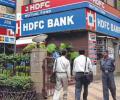
The Reserve Bank of India is likely to take a call on the relaxations sought by HDFC Bank in relation to the merger, as the date of merger draws closer, sources said. The HDFC twins, which announced their decision to merge in April last year, received National Company Law Tribunal's (NCLT's) approval recently - a key milestone to close the deal in due time. The management of both the entities had said that it will take 15-18 months for the merger.

The RBI is likely to raise CRR, the portion of funds that banks have to keep with the regulator, by 50 basis points in its forthcoming monetary review next week and signal tight monetary measures, says Moody's.

'Our unsecured loan is not exactly unsecured. It is backed by cash flow of customers.'

In a mixed bag for HDFC Bank ahead of the parent HDFC's merger with itself, the Reserve Bank of India has declined to make exceptions on certain aspects, and has offered some leeway on others. The country's largest private sector lender, which is aiming to conclude the merger with the home finance major by July, had written to the central bank seeking certain forbearances after announcing the $40-billion merger in April last year. In an exchange filing this evening, HDFC Bank said it received a response from RBI on Thursday and also said that there are a few pending issues.

From the Sensex pack, NTPC, Tata Motors, Larsen & Toubro, Bajaj Finserv, Bharti Airtel, HDFC Bank, Reliance Industries, Titan, Power Grid and State Bank of India were the major gainers. ITC, UltraTech Cement, Tech Mahindra, Tata Steel, Wipro, Tata Consultancy Services and JSW Steel were among the laggards.
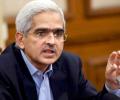
Reserve Bank of India (RBI) Governor Shaktikanta Das had stumped the market in the previous two policies - in August and in October - first with action and then with words. In August, it was the introduction of an incremental cash reserve ratio (I-CRR) to take out excess liquidity, which took the markets by surprise. In October, there was no action. Rather, what is known as "open mouth operation", Das' comment that the central bank might conduct open market operations (OMOs) by selling bonds tempered the euphoria in the bond markets after JP Morgan's inclusion of India in its Emerging Market Bond Index.

Concerned over inflationary pressures in the economy, the Reserve Bank of India (RBI) is bringing down surplus liquidity in the system rapidly. It has fallen to pre-Covid levels and almost 2 per cent of banks' net demand and time liabilities (NDTL). NDTL shows the difference between the sum of demand and time liabilities (deposits) of a bank (with the public or the other bank) and the deposits in the form of assets held by the other bank.

'There are occasions when the prices of individual items like food raise inflation; then supply-side measures must be taken.' 'But if there is continued inflation, it means liquidity is aggravating the situation.'

SBI Research has projected the Indian economy to grow at 7.5 per cent in 2022-23, an upward revision of 20 basis points from its earlier estimate. As per official data, the economy grew by 8.7 per cent in FY22, net adding Rs 11.8 lakh crore in the year to Rs 147 lakh crore, the report said, adding this was however only 1.5 per cent higher than the pre-pandemic year of FY20. "Given the high inflation and the subsequent upcoming rate hikes, we believe that real GDP will incrementally increase by Rs 11.1 lakh crore in FY23. "This still translates into a real GDP growth of 7.5 per cent for FY23, up by 20 basis points over our previous forecast," SBI chief economist Soumyakanti Ghosh said in a note on Thursday.

From the Sensex pack, IndusInd Bank, NTPC, Asian Paints, Hindustan Unilever, JSW Steel, Tech Mahindra, Bajaj Finance, Infosys, Wipro, ICICI Bank, Bajaj Finserv, HDFC Bank and Tata Motors were among the major laggards. HCL Technologies, Power Grid, Titan, Reliance Industries, UltraTech Cement, Tata Steel, State Bank of India and Mahindra & Mahindra were the gainers.

The Monetary Policy Committee (MPC) is expected to maintain the status quo on policy rates for the fourth consecutive time in its October 4-6 review meeting. The incremental information available since its last meeting in August suggests that growth and inflation prints for the second quarter (Q2) of financial year 2023-24 (FY24) will exceed the committee's projections. However, the Consumer Price Index (CPI)-based inflation is expected to moderate in the second half (H2) of FY24.

Bond markets, global as well as domestic, are likely headed towards hard times over the next three to six months, as higher vegetable prices, rising fuel costs, and improved wages may keep inflation hot, believe analysts, who expect the yields to hit 7.5 per cent in the near-term from the current 7.234 per cent. In this backdrop, they suggest investors can put in money in funds/instruments with residual maturity of 4 to 6 years, while longer-term investors can allocate cautiously to the longer end in the range beyond 7 years.
The Reserve Bank is expected to go for another rate hike of 0.40 per cent at the scheduled review of the monetary policy next week, a foreign brokerage said on Friday. The central bank's rate setting panel will follow it up with a 0.35 per cent hike in rates at the next review in August, or make it into a 0.50 per cent hike next week and a 0.25 per cent increase in August, to make the total quantum of rate hikes at 0.75 per cent, the report by Bofa Securities said. On May 4, the Reserve Bank of India (RBI) hiked rates by 0.40 per cent, and Governor Shaktikanta Das has already called a rate hike at the forthcoming review as a "no brainer" given the pressure to maintain its core mandate of inflation in the targeted band of under 6 per cent.

UCO Bank mulls AT1 offering to raise Rs 1,000 cr.
 © 2026 Rediff.com - Advertise with us - Disclaimer - Privacy Policy - Sitemap - Feedback - About us - Terms of use - Grievances