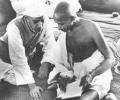
On the 83rd anniversary of the Quit India movement, Utkarsh Mishra recalls the conditions under which the Congress, led by Mahatma Gandhi, launched the final struggle for independence.
'Modi will do himself a favour if he starts studying about Mahatma Gandhi.' 'I feel pity that we have a PM who has no idea of our own history.'

As Ae Watan Mere Watan and Swatantra Veer Savarkar release this week, Utkarsh Mishra takes us down history and reminds us about India's freedom struggle.

Some rare photographs of the Father of the Nation on his birth anniversary

Budweiser World Cup campaign curbed, not crashed, by Qatar beer ban

'It was Maulana Azad's foresight which created the IITs, UGC, science academies across the country.'

Tata Motors went back to the planning room, and the news that emanates from the factories is the Twist, a new Nano avatar that looks fresh
Tata Motors went back to the planning room, and the news that emanates from the factories is the Twist, a new Nano avatar that looks fresh
Tax problems that may occur after death run the gamut.

Prime Minister Narendra Modi is set to meet top Australian business leaders, including BHP Billiton CEO Andrew Mackenzie and HSBC Bank Australia CEO Tony Cripps, at a roundtable in Melbourne next week.

Some major events that occurred from 1885, when the Indian National Congress was formed, till August 15, 1947, when India achieved Independence.

Attlee said Great Britain had concluded that the Indian element of the army was no longer reliable and that Netaji's Indian National Army had demonstrated that. That had shaken the foundation on which Britain's Indian empire rested, argues Lieutenant General Ashok Joshi (retd).

It is time the current leaders who swear by 'cultural nationalism', that is religion neutral, assert that Bharatiyata is at the core of our nationalism and India was never a 'Hindu Rashtra', argues Colonel Anil A Athale (retd).
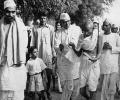
'It was a battle that took many forms, ranging from non-violent mass satyagrahas, mammoth public meetings, huge protest rallies in cities and towns to underground organisation of sabotage of communication and transport networks, an underground radio, illegal patrikas (newsletters) and the formation of parallel governments in Ballia, Midnapore and Satara.'
'Rightly or wrongly, 1962 got ascribed to Krishna Menon and him alone. That's unfair.' 'Certainly, he was one of the guilty men, but he was not the only guilty man. Mistakes were made all around.'

As India celebrates its 70th Independence day, Rediff.com pays homage to millions who laid their lives for the country's freedom.
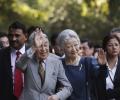
In the media frenzy over inconsequential issues, the visit of the Emperor of Japan to India has been pushed to the margins of public discourse. Colonel (retd) Anil Athale explains the great historical and political significance of the visit.
 © 2026 Rediff.com - Investor Information - Advertise with us - Disclaimer - Privacy Policy - Sitemap - Feedback - About us - Terms of use - Grievances