
Global index provider MSCI has announced the addition of four Indian companies-including Fortis Healthcare and Paytm - to its Global Standard indices. According to Nuvama Alternative & Quantitative Research, each of these companies is expected to see passive inflows exceeding $400 million. Shares of Paytm rose 4.3 per cent on Thursday, while Fortis Healthcare dipped 1.1 per cent.
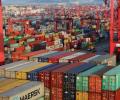
Concerned over the fallout of the Red Sea crisis and severe shortage of containers against the backdrop of a steep decline in merchandise exports in August, the Union government is pulling out all the stops to find a solution. To begin with, the government has devised a strategy aimed at boosting container supply and supporting exporters.

'Those betting against PSUs will likely be punished in this upswing.'

The central government's Great Nicobar development project, proposed around an unprecedented transhipment port, will be executed to keep environmental impact minimal, and is essential as it is of national importance, the government has said amid calls to abort the controversial project due to ecological concerns, the Centre said in an official statement.

The strong message from the prime minister is of continuity of policies he considers right with strong emphasis on execution, points out T N C Rajagopalan.

Notwithstanding the recent sharp decline in the stocks of public sector companies, analysts at Jefferies remain bullish on this segment. State Bank of India, Coal India, and NTPC are their top picks in this space, they said in a recent note. The public sector undertaking (PSU) or state-owned enterprise (SOE) index, with a 70-percentage-point outperformance versus the National Stock Exchange Nifty50 over the past 12 months, comes after a decade of underperformance before 2020.

Israeli Prime Minister Benjamin Netanyahu termed it the 'largest cooperation project in our history', one that would 'change the face of the Middle East, Israel, and impact the entire world'.

With general elections on the horizon, the government's privatisation bandwagon has almost but stalled as a government wary of being accused of selling family silver opts for minority stake sales on stock exchanges over outright privatisation. The result -- the divestment target for current fiscal year is again likely to be missed. Big ticket privatisation plans such as that of Bharat Petroleum Corporation Ltd (BPCL), Shipping Corporation of India (SCI) and CONCOR are already on the backburner and analysts feel meaningful privatisation can happen only after April/May general elections.

Wall Street-correlated stock markets are facing the risk of correction, as Christopher Wood, the global head of equity strategy at Jefferies, conveys to investors in his latest edition of GREED & fear. Rising crude oil prices, which are nearing $100 a barrel (Brent), pose a threat to the global central bank's battle against inflation and have led to a re-evaluation of its exposure to Indian stocks. "The potential for more US Federal Reserve (Fed) rate hikes, combined with the risk that monetary tightening finally bites as regards the economy, remains a risk for Wall Street-correlated world stock markets. "There is also the oil factor. This is why GREED & fear continues to believe the pain trade is down. "Areas in Asia, such as Indian midcaps, which have already done very well, are at obvious risk of some profit-taking," writes Wood.

Earlier, proceeds from disinvestment were shown separately as part of the miscellaneous receipts in the Capital Receipts Budget.

Container Corporation of India (Concor) has been the worst performer among major logistics & port stocks registering returns of about 4 per cent over the past three months as compared to 10-12 per cent for peers Gateway Distriparks and Adani Ports and SEZ. Uncertain outlook on the export-import (EXIM) trade front, market share loss, lack of progress on divestment, and weak June quarter results weighed on the stock. Volume and margin movement will be key triggers for the stock going ahead. As was the case in the previous quarter, margin performance was muted even in the June quarter. Operating profit in the quarter was down 17 per cent at Rs 391 crore missing estimates by over 15 per cent. Operating profit margins at 20.4 per cent, too, were down sharply by 350 basis points over the year-ago quarter.

Christopher Wood, global head of equity strategy at Jefferies has rejigged his equity portfolios. In his Asia ex-Japan long-only portfolio, he has added Axis Bank (5 per cent weightage) and increased holding in Larsen & Toubro (L&T) by one percentage point. This, Wood said, will be paid for by removing the investment in ICICI Lombard General Insurance and reducing the investments in HDFC Bank and Reliance Industries (RIL) by one percentage point each.

'Inter-ministerial coordination, information on the proposed PSUs, and due diligence are taking longer than expected to conclude the process.'
Ahead of the Budget, the government has achieved almost half the divestment target of Rs 65,000 crore. FY23 divestment receipts are unlikely to be anywhere close to the budgeted target.

The government is not in a "crazy rush" to sell everything and it will continue to have a presence in four strategic sectors, including telecom, Finance Minister Nirmala Sitharaman said on Saturday. In strategic sectors, a bare minimum presence of the existing public sector commercial enterprises at the holding company level will be retained under government control. The remaining enterprises in a strategic sector will be considered for privatisation or merger with another PSE or for closure.

Re-rating of Bharat Petroleum Corporation, Container Corporation, Shipping Corporation, SAIL, and Hindustan Copper, for which the government has already shown intent to divest its stake, possible now, say analysts.

Coming Wednesday, Finance Minister (FM) Nirmala Sitharaman will present the 2023 Union Budget - the last full Budget ahead of the 2024 Lok Sabha elections. While India exited 2022 as a relatively bright spot in the global economy, the FM will endeavour to present a Budget that insulates India's economy against global headwinds and recession in advanced economies, while sticking to the path of fiscal consolidation. In this, she is being helped by her core team of trusted advisors.

Work on building a pilgrimage facilitation centre and other utilities in Ayodhya's Ram temple complex has started, with 'darshan' of Ram Lalla expected to open in December 2023, according to a senior official of the construction committee.
The target of mopping up Rs 1.75 lakh crore from divestments of some of the public sector companies, including LIC and BPCL during the current fiscal, is on track and groundwork is being prepared for the goal, Chief Economic Advisor Krishnamurthy Subramanian said on Monday. On the COVID-19 pandemic, Subramanian said the impact of the second wave is lesser than that of the first one. In an interactive session, organised by Federation of Telangana Chambers of Commerce and Industry, the CEA said robust GST collections, over Rs one lakh crore per month for eight months in a row shows that consumption is picking up indicating positive signal for growth.

Skills and democracy are the main drivers of sustainable growth, ace investor Rakesh Jhunjhunwala said on Friday, adding that he is bullish on the Indian market. "If you examine history, democracy creates chaos and forces people to think and act. "Therefore, skills and democracy are the main drivers of sustainable growth...It is most needed..," Jhunjhunwala said at the 'India Today Conclave 2021'. On markets, he said he is inherently bullish and India is coming to a phase economically that it has never seen before.
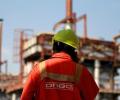
Senior bureaucrats Avinash Joshi and Niraj Verma are among the 10 candidates who are in the race to become chairman and managing director of India's largest oil and gas producer, ONGC. Mangalore Refinery and Petrochemicals Ltd (MRPL) director-finance Pomila Jaspal and ONGC director for technology and field services Om Prakash Singh are the other prominent names in fray for the top job, according to a candidate shortlist by the Public Enterprise Selection Board (PESB). PESB - the government headhunter - will hold interviews to select the new head of Oil and Natural Gas Corporation (ONGC) this week. Both the bureaucrats are from the 1994 batch of IAS officers belonging to the Assam-Meghalaya cadre.

After a hiatus of nearly two decades, the government's programme to privatise state-owned firms restarted with the handing over of debt-laden national carrier Air India to the Tata Group. With the new owner shelling out Rs 18,000 crore for the buyout of the 'Maharaja', this would be the highest-ever amount garnered through privatisation, and is even more than the cumulative sum mopped up through strategic sales from 1999-00 to 2003-04. The government had in October last year inked the share purchase agreement with the Tata Group for sale of national carrier Air India for Rs 18,000 crore. Tatas would pay Rs 2,700 crore cash and take over Rs 15,300 crore of the airline's debt.

The government has tweaked the income tax laws to make it easier for the new owners of loss-making public sector undertakings (PSUs) to carry forward the accumulated losses and set them off against future profits. This will result in significant tax savings for the new owners if they are able to turnaround operations of the ailing PSU within a few years. This will, in turn, boost the post-tax earnings and returns for the new owners.

With the new owner shelling out Rs 18,000 crore for the buyout of 'Maharaja' this would be the highest ever amount garnered through privatisation or even the cumulative sum garnered through strategic sale in 1999-00 to 2003-04. The government had garnered roughly over Rs 5,000 crore during that five-year period by privatising 10 CPSEs.

An official said the government is preparing the financial statements and getting the data room ready for the sales, suggesting that such aspects take time.
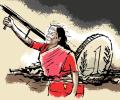
Finance Minister Nirmala Sitharaman will present the much-awaited 2022-23 Union Budget on February 1. While there has been strong recovery in some sectors, touch services like hospitality, tourism and leisure continue to suffer after two Covid-19 waves. Household savings have been hit due to increased spending on health care. Consumption has still not reached pre-pandemic levels.
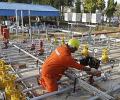
Government headhunter PESB on Friday did not find anyone suitable from nine candidates, including two serving IAS officers, to head India's largest oil and gas producer, ONGC. The Public Enterprise Selection Board (PESB) interviewed 9 out of the 10 candidates who had applied for the post of chairman and managing director of Oil and Natural Gas Corporation (ONGC). "Keeping in view the strategic importance and vision for the company and its future, the Board did not recommend any candidate and decided to constitute a Search Committee," PESB said in a notice after interviews. Those interviewed included senior bureaucrats Avinash Joshi and Niraj Verma.

The Centre is likely to privatise profit-making enterprises, reversing its previous position of first closing or merging loss-making state-run units. The NITI Aayog, which is in the process of selecting public sector units for privatisation, is likely to put out its first list, focusing on companies in non-strategic sectors, along with those that have got Cabinet approval for stake sale, or are in final stage of due diligence. "The shortlisted firms will be put out in three-four tranches, with the first list comprising non-strategic ones, followed by strategic sectors with a focus on privatisation and not divestment," said a senior government official privy to the plan. He said the first report was expected in early April. The think tank approach is in sync with the government's new strategies on privatisation and asset monetisation.

The government has merged the Department of Public Enterprises (DPE) with the finance ministry to give it a better control over state-owned firms and facilitate its ambitious privatisation programme. Finance ministry will now have six departments while DPE's hereto parent ministry, the ministry of heavy industries and public enterprises will now be called the ministry of heavy industries. Previously, the disinvestment ministry - created under the Atal Bihari Vajpayee government - was merged with the finance ministry and is now a department under it. Also, Foreign Investment Promotion Board (FIPB) was abolished and administration of foreign investments was given to the finance ministry (FinMin).

As many as 20 central public sector enterprises and their units are at various stages of strategic disinvestment, while six are being considered for closure or are under litigation, Minister of State for Finance Anurag Singh Thakur said on Monday.
The government on Monday budgeted Rs 1.75 lakh crore from stake sale in public sector companies and financial institutions, including 2 PSU banks and one general insurance company, in the next fiscal year beginning April 1. The amount is lower than the record Rs 2.10 lakh crore which was budgeted to be raised from CPSE disinvestment in the current fiscal year. However, the COVID-19 pandemic impacted the government's CPSE stake sale programme, and the target has been lowered to Rs 32,000 crore in the Revised Estimates.
With the disruption caused by the second wave of Covid-19 pandemic, the 'fear of unknown' is looming over the government's privatisation drive. Although there is a lot of uncertainty and unpredictability on how things will unfold, the government is hopeful of completing the transactions listed in the Budget with a delay of one to two months, said a top government official. However, "there are many unknown factors now, and we do not know whether there could be a third wave. But we are trying to carry on with our work", the official said." Since there is a lot of uncertainty, the estimates will have to be revised as rating agencies are revising their outlook for growth.

The divestment process, however, will not be an easy affair as there are multiple stakeholders, including the employee unions, whose concerns will have to be addressed.

Revenue from divestment has fetched Rs 40,000-50,000 crore against target of Rs 2.10 trillion.

Ajit Mishra, vice president, Research, Religare Broking, answers your queries.

Stocks of government probables for divestment or stake sale such as Steel Authority of India (SAIL), Mahanagar Telephone Nigam (MTNL), National Aluminium Company (Nalco) and Container Corporation (Concor) have outperformed the markets in the past one year.

Prime Minister Narendra Modi on Wednesday said the government has no business to be in business and his administration is committed to privatising all PSUs barring the bare minimum in four strategic sectors. "It is government's duty to support enterprises and businesses. But it is not essential that it should own and run enterprises," he said. Modi also said the Centre's policy is to either monetise or modernise public sector enterprises, with the intent that the government has "no business to be in business".

In a bid to resurrect Air India privatisation, the government is planning to give flexibility to potential investors to decide on the humongous debt with the national carrier, a top official has said. The flexibility to potential investors on the quantum of the Rs 60,074 crore debt that they want to absorb will replace the current condition of the buyer taking over more than a third of the debt and transferring the rest to a special purpose vehicle, Department of Investment and Public Asset Management (DIPAM) secretary Tuhin Kanta Pandey said.

"This is a big scam. The country is being looted. Please allow us to speak," Congress leader in Lok Sabha Adhir Ranjan Chowdhury said.

In the year to date, 61 PSUs have lost an average of 22 per cent, with five companies losing more than half their share value. The BSE PSU index is down 10.6 per cent.
 © 2026 Rediff.com - Investor Information - Advertise with us - Disclaimer - Privacy Policy - Sitemap - Feedback - About us - Terms of use - Grievances