Sentiment has improved but no progress on GST & ending 'tax terrorism' disappoints.

If the REER is to be restored to its 2004-05 level, the rupee has to depreciate a lot, says V K

When oil prices collapse from $110 to $45, economic agents in India experience a large income windfall.
Markets surged on hopes that the exit polls would show that the BJP winning majority in the general elections.

It is important to note that slowdown in activity is really confined to a selected few regions within China.
The market players are expected to react to the better than expected factory output data for the month of August, which revealed that the industrial production grew by 6.4%.

Debt returns are always negative for investors in India, unless they are willing to take huge risk

The finance ministry and RBI must get less conservative and improve co-ordination.

It is high time to manoeuvre the rupee more effectively and predictably, even as it has to be recognised that such tweaking of the rupee needs to be accompanied by reforms to the real sector and factor markets.
Sensex gained 38.18 points or 0.15% at 25,918.95 and Nifty ended higher by 12.50 points or 0.16% at 7,739.55.

Emerging markets could be affected by a combination of lower liquidity and higher dollar interest rates caused by a hike in the US Fed funds rate.

Five per cent growth is disappointing but only after having reached nine per cent. However, it is still not all that bad, says Andrew Michael Spence.

New Reserve Bank of India chief makes his first monetary policy statement on Friday with expectations he may scale back some of the emergency measures that have helped the rupee bounce from a record low.

Tirole's insights show how real-world incentives are complicated, and contracts can be difficult to write and enforce.

Fund managers weren't too worried in 2014, as it was a year of positive surprises.
As investors try to second-guess the US Fed, corporate and election results could have a bearing on market direction

IMF attributes the slower growth rate to supply-side bottlenecks.

The panel was set up to suggest ways to reform India's monetary policy.

The market could be influenced by events elsewhere in the world and regardless of what happens to India's economy
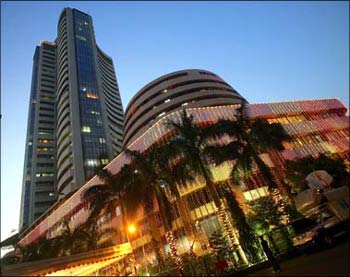
It will be difficult for the Indian equity to outperform overall growth to the extent bullish observers expect.

A comprehensive technical framework needed, from which a more convincing policy could be demonstrated

Depending on your liquidity requirement, invest in the right debt instruments.

Rupee volatility could be dampened if it is steadily manoeuvered to levels consistent with inflation differentials, say Jaimini Bhagwati and Abheek Barua
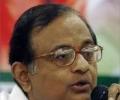
Addressing bankers and economists at Bancon 2013, a flagship event of the Indian Banks' Association, Chidambaram told the lenders to deal firmly with wilful defaulters, but handhold those who are reeling under the impact of the economic slowdown.

Many things could play spoilsport for the Indian economy.

It is pegged at 6.8-8% by various economists, as compared to 6.7%.

Given the relative rates of gross domestic product growth, the differential will increase.

Many exemptions make little sense, such as a monthly exemption of Rs 100 for college education and Rs 300 for hostel fees.

He has had a productive first year at the RBI -- one which saw, also, India's economic imbalances improve and the unexpectedly strong general election outcome.

There is little scope for significant monetary easing even in the next fiscal year.

The cost of food has constantly been on the rise.

ISB professor Krishnamurthy Subramanian tells Shobha Warrier/Rediff.com that Modi government's continuation of tax terrorism is driving away investors.

Although the current long-term bullish trend is intact, markets are awaiting clarity on the taper and the Assembly election results.

There was hope in some quarters that the interim Budget would boost sentiment and lay the groundwork for kick-starting the investment cycle, while staying on a path of fiscal consolidation.
The Urjit Patel committee on monetary policy framework has proposed setting up of a monetary policy committee (MPC) that will be headed by the Reserve Bank of India (RBI) governor and accountable for achieving inflation target set by it.

Its time the RBI, govt pushes reforms to boost global investment

The government is somehow convinced that selective low-rate lending will stimulate demand and accelerate economic growth that plunged to a four-year low of 4.4 per cent in the first three months of 2013-14.

The longer it takes for RBI and the government to stabilise monetary conditions in the economy, the more severe and long lasting will be the damage caused to various sectors of the economy, especially to the informal sector, says Rajeswari Sengupta. Rajeswari Sengupta discusses the impact of this move on money supply, output and prices, in the short- and medium-term.

Sahil Kapoor of Edelweiss Retail Capital Market Research says that setting up a monetary policy committee should have been the first step. And the central bank could have moved towards a formal inflation targeting mechanism after the processes and data sets are in place.

'The Reserve Bank's independence has remained a work in progress, an enduring challenge that the nation has been grappling with on an ongoing basis,' says RBI Deputy Governor Dr Viral Acharya.
 © 2026 Rediff.com - Investor Information - Advertise with us - Disclaimer - Privacy Policy - Sitemap - Feedback - About us - Terms of use - Grievances