
The Reserve Bank of India (RBI), in its Financial Stability Report (FSR), cautioned that stress tests indicate two scheduled commercial banks (SCBs) may have to dip into their capital conservation buffers (CCBs), unless stakeholders infuse capital, under a scenario involving a gradual slowdown in domestic GDP growth and a moderate rise in inflation, with limited policy easing space available to the central bank.

The Indian banking sector could be due for a rise in profitability after several quarters of net interest margin (NIM) compression. The Q2FY26 results suggest NIMs have bottomed out.
Axis Bank reported a sharp drop in net profit in the second quarter of financial year 2026 (Q2FY26) on higher provisions and weak operating profit growth while revenue growth was moderate. But loan growth and deposit growth improved to double-digits year-on-year (Y-o-Y) and asset quality also improved with the gross non-performing loan or NPL ratio moving down.
Country's largest lender State Bank of India (SBI) is looking to be among 10 top global banks in market capitalisation terms in the next five years, chairman CS Setty said on Wednesday. "The scope for value creation for the stakeholders is potentially very high. So the larger ambition is if the market supports whether we can be part of the top 10 global banks in terms of the market capitalisation (five years)," he said after listing of shares issued under Qualified Institutional Placement (QIP) at NSE.

Infrastructure bonds, which were relied upon the most in 2024-25 (FY25) by commercial banks to raise funds through the domestic debt capital market amid lagging deposit growth, seem to have lost their sheen in FY26. So far in FY26, no bank has tapped the domestic debt capital market to raise funds via infra bonds, and the expectation is that the amount raised through this route will be significantly lower than that last year, unless credit demand picks up.
State Bank of India, HDFC Bank and ICICI Bank have again been named as Domestic Systemically Important Banks (D-SIBs) by the Reserve Bank of India. The Reserve Bank on Wednesday came out with the list of D-SIBs.

'We have seen something do very well when the times are good but maybe not as well when the times are bad.'

A Rs 525-crore contingency provision during the July-September period led to a 19 per cent fall in IndusInd Bank's share price on Friday (October 25). Contingency provisions are generally made when a lender expects more bad loans in the coming quarters. Shares of the bank on Tuesday (October 29) declined 1.53 per cent to settle at Rs 1,038.2 apiece on the BSE.
Global rating agency Fitch said on Monday that bank credit growth in excess of 13 per cent year on year in FY23 could put pressure on core equity tier ratios (CET1) of banks, especially public sector lenders. It may limit the buffers of Indian banks to absorb potential future losses. Bank credit expanded by 11.5 per cent in FY22. Full-year loan growth for FY23 will represent a modest slowdown from the 17 per cent YoY pace in H1FY23.

'We are committed to achieving the targets we had outlined.'

'As these segments are growing at 25 per cent for the last three years, credit quality has been extremely good.'
ICICI Bank on Saturday said its March quarter consolidated net profit grew 18.5 per cent to Rs 11,672 crore, helped by lower provisions. On a standalone basis, the second largest private sector lender showed a 17.4 per cent growth in its profit after tax at Rs 10,708 crore for the reporting quarter against Rs 9,122 crore in the year-ago period. For fiscal 2023-24, its standalone net profit grew to Rs 40,888 crore from Rs 31,896 crore a year ago.

The stock of State Bank of India (SBI) may re-rate soon, believe analysts, if the lender manages to safeguard its net interest margin (NIM) going ahead. This, along with controlled credit costs, should aid the outlook of the stock which has been underperforming the markets for some time now. "We believe delivery of growth on guided lines, sustenance of NIMs near current levels, and controlled asset quality parameters aiding controlled credit costs should lead to strong profitability and drive re-rating of the stock," said analysts at JM Financial.

The RBI on Monday said state-owned SBI, along with private sector lenders ICICI Bank and HDFC Bank continue to be Domestic Systemically Important Banks (D-SIBs) or institutions which are 'too big to fail'. SIBs are perceived as banks that are 'too big to fail (TBTF)'. This perception of TBTF creates an expectation of government support for these lenders in times of distress.
India's largest PSU bank, State Bank of India, delivered excellent results, once the impact of a big jump in employee expenses was adjusted for. The net interest income (NII) beat the Street due to a better net interest margin (NIM) and good loan growth. The credit growth at 5.2 per cent quarter-on-quarter (Q-o-Q) (15 per cent year on year) was excellent for a large bank.
Despite a largely stable December quarter, investors booked profit in shares of IndusInd Bank (IIB) as an increase in slippages took them by surprise. Analysts, on their part, believe investors may, now, wait for actual delivery on slippage decline, potentially limiting near-term upside. "The management has indicated that corporate slippages (from legacy stressed book) have ended and inch up in consumer finance slippages was more one-off, and should meaningfully improve Q4FY24 onwards.

'Citibank customers will migrate to the Axis Bank platform over 18 months.'

The Reserve Bank of India's (RBI's) latest order on unsecured loans is set to hit the banking sector's growth in the near-term, cautioned analysts, as they see banks slowing down on aggressive retail lending. Besides, cost of funds for non-banking finance companies (NBFC) is expected to inch up as banks will pass on higher capital charge to NBFCs. "We believe the fallout of the RBI action will be mainly on growth, given the rising dependence on unsecured retail loans and lending to NBFCs for growth.
The RBI on Tuesday said state-owned SBI, along with private sector lenders ICICI Bank and HDFC Bank continue to be Domestic Systemically Important Banks (D-SIBs) or institutions which are 'too big to fail'. SIBs are perceived as banks that are 'too big to fail (TBTF)'. This perception of TBTF creates an expectation of government support for these banks in times of distress. Due to this perception, these lenders enjoy certain advantages in the funding markets.
Given the uncertain macroeconomic conditions, most brokerages have turned slightly cautious on the pace of growth in State Bank of India's (SBI's) earnings going ahead. While they don't see any significant risk arising for now, its sheer balance sheet size and systematic importance has nudged them to cut earnings estimates for fiscal year 2023-24 (FY24) and 2024-25 (FY25) up to 5 per cent. India's largest state-owned bank, on Thursday, reported standalone net profit of Rs 16,694.51 crore for Q4FY23.

Bank of Baroda Q4 results: Key brokerages have raised their target prices on Bank of Baroda after the state-owned lender posted better-than-expected March quarter (Q4FY23) results. Analysts now see up to 29 per cent upside in the stock from a one-year perspective as they believe BoB is well-placed among the large public banks with nearly all key business metrics moving closer to the top-tier banks. Valuations, too, remain attractive despite steady strong quarterly performances.
Axis Bank's acquisition of Citibank's consumer finance business for Rs 12,325 crore - the second biggest deal in the Indian banking sector - is seen as a good deal at a good price. The acquisition enables Axis Bank to close the gap with competition in some key segments such as credit cards. At the same time, there are some key issues that are crucial for the deal's success, apart from the fact that it will take some time for Axis to reap the full harvest of its investment.

Vijaya Bank assured employees that the service conditions 'will remain unaffected and staff benefits retained'

In yet another move to close the regulatory gap between banks and shadow banks, the Reserve Bank of India (RBI) has mandated exposure limits to the non-banking finance companies, in line with commercial banks. In the large exposure framework released on Tuesday, the regulator capped aggregrate exposure of NBFCs which are in the upper layer toward one entity at 20 per cent of capital base. The limit can only be extended by another 5% with board's approval. For a particular borrower group, the cap is at 25 per cent, with additional 10 per cent if exposure is towards infrastructure.

Systemically important banks are subjected to higher levels of supervision to prevent disruption to financial services in the event of any failure.
Gross bad loans of banks may rise from 6.9 per cent in September 2021 to 8.1-9.5 per cent by September 2022 if the Omicron variant strikes the economy hard, as per the financial stability report of the Reserve Bank released on Wednesday. The report also said that the rising stress level in the retail loan portfolio of banks -- the mainstay of bank credit for many years now -- was led by home loans, which grew in double-digits so far this fiscal. While asset quality improved, with gross non-performing assets (GNPA) and net NPA (NNPA) ratios declining to 6.9 and 2.3 per cent, respectively, in September 2021, the slippage ratio inched up during the same period as private sector banks showed a higher rate of deterioration in asset quality, as per the report.

Transiting from "survival mode", which took most of the management time in FY21, the bank has been able to take a long-term view in terms of growth and preparing technology in the past 12 months.

Though most experts remain bullish on the banking space, they suggest investors buy only those banks whose NPAs are at a manageable level of 3% to 4% and there is credit growth or earnings visibility.

'While we note the very strong cyclical recovery in the economy, we believe there is still uncertainty over medium-term prospects.'

Corporation Bank is the biggest beneficiary of this round of capital infusion with Rs 9,086 crore of funding, followed by Allahabad Bank with Rs 6,896 crore.

In a filing to stock exchanges, BoI said Reserve Bank of India has placed it under Prompt Corrective Action Framework, consequent to the onsite inspection under the risk based supervision model carried out for the year ended March 2017.

This is part of an 'aggressive and decisive set of action' to shore up the company.

"Fitch Ratings has placed Punjab National Bank's (PNB) Viability Rating of 'bb' on Rating Watch Negative (RWN), following the large fraud reported by PNB," the US-based agency said in a statement.

The operating environment is unpredictable, but if the bank can't give a clear picture of what's in store, calling the bottoming out of its asset quality stress is nearly impossible.

Proceeds of the crime had been siphoned off and laundered or concealed, or layered and integrated into the main financial system through the acquisition of properties. His wife Bindu Kapoor has been charged with being aware of the source of monies that were being routed through these companies.
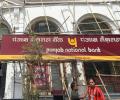
"The downgrade of the bank's BCA and ratings reflects the negative impact of the discovery of a number of fraudulent transactions on the bank's standalone profile, particularly its capital position," the rating agency said in a report.

YES Bank, Bank of Baroda, SBI, IndusInd Bank, and RBL Bank are amongst the banks, Jefferies says, are most prune to "high risk" emanating from ADAG, Cox & Kings, CG Power, DHFL and Essar Shipping.

For banks, the package will limit the burden of provisioning for stressed loans. Besides, the proposed restructuring package for MSMEs with a credit of up to Rs 25 crore is expected to provide a breather to units from this sector.
Enjoying the backing of the regulator, Gill has identified the core problems, ring-fenced the banks from "influencers" and is in the process of building a new team. Now, he needs to play a Vikram Pandit for YES Bank, says Tamal Bandyopadhyay.
 © 2026 Rediff.com - Investor Information - Advertise with us - Disclaimer - Privacy Policy - Sitemap - Feedback - About us - Terms of use - Grievances