
In the letter, Somani said the samples of four made-in-India cough syrups linked to the deaths of 66 children in Gambia which were tested in government laboratory here were found to be complying with specifications and not to have been contaminated with DEG or EG according to the test reports.

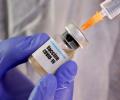
COVAXIN, developed by Hyderabad-based Bharat Biotech in collaboration with Indian Council of Medical Research and National Institute of Virology, has got the nod for human clinical trials from the Drug Controller General of India
The Subject Expert Committee on COVID-19 of the CDSCO on October 12 after deliberating Bharat Biotech's EUA application had recommended granting emergency use approval to Covaxin for use in the 12-18 years age group with certain conditions.
The transition of Class A and Class B medical device makers to the licensing regime by October 1 seems to be an uphill task with several small and medium manufacturers saying they are still awaiting the audit from the government authorities. If the licenses don't come through, either due to lack of audits or MSME units not clearing the audits, then a few thousand small-scale medical device units will face the issue of business continuity in three weeks. Class A medical devices are those with low to moderate risk to the patient or user (surgical dressings for example), while Class B medical devices refer to devices with moderate risks that require special controls (catheters for example).
Ahmedabad-based Zydus Cadila, Bharat Biotech's intra-nasal candidate are among the candidates who got approval from the expert panel to conduct clinical trials, Sohini Das reports.
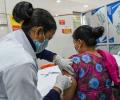
Covaxin is being developed by Bharat Biotech jointly with the Indian Council of Medical Research (ICMR)- National Institute of Virology (NIV). The Phase III human clinical trials of Covaxin began mid-November, targeted to be done in 26,000 volunteers and it is the country's first and only Phase III efficacy study for a COVID-19 vaccine, a press release from the vaccine maker said on Saturday night.
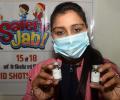
The company had in December said that the CDSCO had approved a 12-month shelf life for Covaxin, which was nine months earlier, Sohini Das reports.
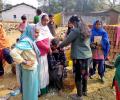
Bharat Biotech is targeting to manufacture one billion doses of its intra-nasal vaccine in 2022 which is under clinical trials now.
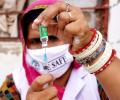
If things go according to plan, the vaccine would be available in the market by the end of this year.
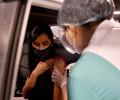
Hyderabad-based vaccine manufacturer Bharat Biotech, which is carrying out its phase 3 trial will publish the data in July following that the company will be applying for the full licensure of Covaxin.
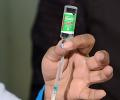
If the DCGI grants regular marketing authorisation, Covishied will be the second vaccine in the world to receive such approval.
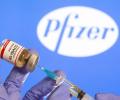
An expert panel of the country's drugs regulatory authority had recommended against granting such approval to the firm at this stage just two days ago, officials said.
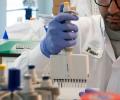
The vaccine candidate -- 'Covaxin' -- is being indigenously developed by the Bharat Biotech in collaboration with the Indian Council of Medical Research (ICMR).

Bharat Biotech applied to the Drugs Controller General of India (DCGI) seeking permission for conducting phase 1 and phase 2 clinical trials of the intranasal vaccine following which the subject expert committee of the CDSCO on Tuesday deliberated on the application and recommended granting permission for phase 1 trial.
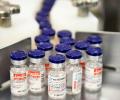
According to the recommendations of the Subject Expert Committee (SEC) meeting held on July 30, which have been approved by the Drugs Controller General of India (DCGI), Sputnik-Light is the same as the component-1 of Sputnik V and as its safety and immunogenicity data in the Indian population has already been generated in a trial here, there seems to be inadequate data and justification for conducting a separate, similar trial.

The Indian Medical Association on Monday expressed shock over the 'blatant lie of World Health Organisation certification' for Patanjali's Coronil tablet, which the company claims is an evidence-based medicine to fight COVID-19, and demanded an explanation from Union Health Minister Harsh Vardhan in whose presence the medicine was launched.
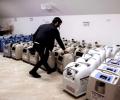
The government has capped the trade margin on oxygen concentrators at 70 per cent in order to keep in check the price of the much in demand critical life saving component amid the second wave of the coronavirus pandemic. The trade margin has been capped at 70 per cent on price to distributor level on oxygen concentrators. In an official release, the chemicals and fertilisers ministry said the decision has been taken in view of the extraordinary circumstances arising due to the pandemic which has resulted in volatility in Maximum Retail Prices (MRP) of oxygen concentrators.

In a tweet, Patanjali Ayurved said, "Moment of pride!! Efforts of scientists at Patanjali to make corona medicine have been successful today. We are pleased to announce the First evidence based medicine for Covid-19 by Patanjali."

Zydus plans to initiate the clinical trials of ZyCoV-D in July 2020 across multiple sites in India. In animal studies the vaccine was found to elicit a strong immune response in multiple animal species like mice, rats, guinea pigs and rabbits.
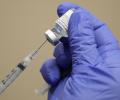
Once the UK drug regulator gives its approval to the Oxford vaccine, the expert committee on COVID-19 at the Central Drugs Standard Control Organisation (CDSCO) will hold its meeting and thoroughly review the safety and immunogenicity data from the clinical evaluations conducted abroad and in India before granting any emergency authorisation for the vaccine here, official sources said.

An expert committee of the Central Drugs Standard Control Organisation (CDSCO) on Wednesday sought additional safety and efficacy data for COVID-19 vaccine candidates of Serum Institute and Bharat Biotech, after deliberating upon their applications seeking emergency use authorisation for the shots, official sources said.

This is apart from the requirement to stock hydroxychloroquine (200 mg) and Azithromycin (500 mg) tablets for patients requiring ICU management, asymptomatic healthcare workers and asymptomatic household contacts of positive cases.

The phase 3 clinical trial will cover around 28,500 subjects, aged 18 years and above, and it will be conducted in 21 sites across ten states, including Delhi, Mumbai, Patna and Lucknow.
The new regime aims to bring in ease of doing business, as the NITI Aayog has proposed to do away with the need to have manufacturing licences to register medical devices or to get a certificate of compliance.
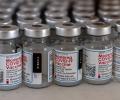
India's drug regulator Drugs Controller General of India has granted permission to Mumbai-based pharmaceutical company Cipla to import Moderna's COVID-19 vaccine for restricted emergency use in the country, official sources said on Tuesday.

The Central Drugs Standard Control Organisation has granted restricted emergency use authorisation to two new vaccines and a drug for COVID-19, taking the number of preventives and treatments available in India to 12.
The central drug regulator has issued show cause notices to these two importers and asked to stop the import of rapid test kits based on the observation by the apex health research body Indian Council of Medical Research (ICMR).

The Serum Institute of India, Bharat Biotech and Pfizer have applied to the DCGI seeking emergency use authorisation for their COVID-19 vaccine candidates and are awaiting approval.
The company has developed detailed logistical plans and tools to support effective vaccine transport, storage, and temperature monitoring. Sohini Das and Ruchika Chitravanshi report.
The DCGI arrived at the conclusion on Wednesday based on the recommendations of an independent expert committee which has also opined that compensation should not be paid to the volunteer, they said.

The case was earlier heard by a different vacation bench which had on June 10 asked Sharma to substantiate his 'unfounded allegations' that the Indian pharma major was allegedly manufacturing and selling adulterated medicines.
If the pandemic persists, at least a portion of the blame should go to greed and nationalism that got in the way of the world acting together, notes Prosenjit Datta.
As India launches the world's most ambitious and biggest vaccination drive against COVID-19, the country will encounter the formidable challenge of rapidly scaling up distribution of the vaccines to secure immunity for its entire population, two prominent Indian scientists at World Health Organisation have said.

Currently, phase 2 and 3 clinical trials of the Oxford vaccine candidate is going on in the United Kingdom, phase 3 clinical trial in Brazil and phase 1 and 2 clinical trials in South Africa.
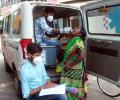
The highly transmissible Delta variant of SARS-CoV-2 has mutated further to form the 'Delta plus' or 'AY.1' variant but there is no immediate cause for concern in India as its incidence in the country is still low, scientists in New Delhi said.

It said clinical trials of the drug 2-deoxy-D-glucose (2-DG) showed that it helps in faster recovery of hospitalised patients and reduces supplemental oxygen dependence.
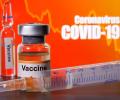
The institute expects to complete both, phase-2 and 3 trials in India by the end of this year.

The announcement comes a day after the Subject Expert Committee (SEC) on COVID-19 of the CDSCO recommended granting emergency use authorisation (EUA) to the COVID-19 vaccines Covovax and Corbevax with certain conditions.

'Almost 70 per cent production time of a vaccine is dedicated to quality control, which is done through several hundred tests.'
 © 2026 Rediff.com - Investor Information - Advertise with us - Disclaimer - Privacy Policy - Sitemap - Feedback - About us - Terms of use - Grievances