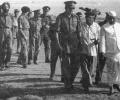
In what was perhaps the most critical meeting before full-scale war broke out, Shastri defined India's immediate war objectives to his defence minister, army, and air force chiefs: 'To defend against Pakistan's attempts to grab Kashmir by force and to make it abundantly clear that Pakistan would never be allowed to wrest Kashmir from India; To destroy the offensive power of Pakistan's armed forces...' A fascinating excerpt from Shiv Kunal Verma's must-read 1965: A Western Sunrise India's War With Pakistan.

December 3, 2021 marks 50 years since the beginning of the 1971 War which ended in a decisive military victory for India and the liberation of Bangladesh. Most analysts of the 1971 War agree that the IV Corps dash across the mighty Meghna river led by the brilliant General Sagat Singh was the turning point in the war, recalls military historian Colonel Anil A Athale (retd).
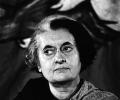
'According to me, her finest hour was in 1983-1984 when she neutralised a combined US-Pakistan-British conspiracy to Balkanise India by creating an independent Sikh State of Khalistan,' says Colonel Anil A Athale (retd). A special assessment of Indira Gandhi on her centenary.

'Pakistan's recent utterances and tendency to use pinpricks to try our patience appear reminiscent of 1965. We are a strong nation, emerging stronger,' says Lieutenant General Syed Ata Hasnain (retd).
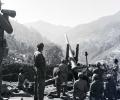
Fifty years ago, India and Pakistan fought a short but bloody war. The author finds out how Sainik Samachar, the defence ministry's journal, reported it.

On October 24, the United Nations turns 70. 'The credibility of the UN has been eroded by the fact that the Security Council does not represent the political realities of the world today,' says Ambassador T P Sreenivasan, listing the 10 things the UN needs to do to become more relevant and effective.

'It would be too sweeping to say that the elites and the middle-class don't care about liberty.' 'It is just that they are always calculating the trade-offs: What's in it for me, what could it cost me?' 'To that extent, we haven't changed in 40 years,' says Shekhar Gupta.

'Since India has to live next to Pakistan, it can't remain under permanent blackmail.' 'A predictable consequence of these fundamental shifts is the fraying of the principle of strategic restraint.' 'It hasn't been junked. But the threshold has been shifted to provide India much greater room for retaliatory action,' says Shekhar Gupta.
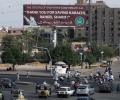
'New Delhi feels that given the internal dynamics in Pakistan and the overwhelming powers wielded by the army, one will have to wait for better times to see any meaningful progress in the India-Pakistan relationship,' says Ambassador G Parthasarthy.

'India was in no position to wage another war in 1965, having suffered a morale-shattering defeat in 1962. The three services were in the middle of a modernisation and expansion phase and therefore not fully trained or battle-ready.'

'He was believed to finish his own work in an hour and spend the remainder of the time walking from one office to another, sitting down with the harried junior staff and helping them sort out the problems they were working on.'
 © 2026 Rediff.com - Investor Information - Advertise with us - Disclaimer - Privacy Policy - Sitemap - Feedback - About us - Terms of use - Grievances