
Gross value added in agriculture and allied activities clocked a healthy growth rate of 4.5 per cent at constant prices in the second quarter of FY22, up from 3 per cent during the same period last fiscal year and 3.5 per cent in Q2 of 2019-20. In the first quarter of FY22, gross value added in the sector was also 4.5 per cent. Growth in current prices was also a healthy 7.9 per cent in July-September 2021-22, up from 7.3 per cent in the same quarter last fiscal year. It was slightly less than the 8.7 per cent of the second quarter of 2019-20.

At risk of entrenched rough times are sectors like hospitality and those with discretionary spends.

Sale of dollars directly by the RBI can help but only temporarily for a day or two before it will be back to a volatile market.

Superseding the boards of two non-banking financial companies (NBFCs) in the Srei group will neither create liquidity challenges for sound entities, nor build systemic crises because the markets have factored in the problems with the Kolkata-based firms. Such regulatory steps will help in making the NBFC space more robust, bankers and market experts said. The action should have begun earlier because the Reserve Bank of India (RBI) had done a special audit last financial year and asked the group to make provisions for assets considered stressed, analysts said.
Debt-ridden Reliance Capital ready to cede control in home finance - Blackstone, Carlyle, Brookfield, and Piramal group are in talks to buy a large stake in Reliance Home Finance.

If the fiscal deficit for the year can be maintained at Rs 7.04 trillion, the deficit as a percentage of GDP will slip to 3.44 per cent

The mood at the Hotel Investment Conference South Asia (HICSA), the annual hospitality industry conference was rather upbeat. But hotel brand operators and owners remain cautiously optimistic of the outlook and are living on a hope that a third wave of the pandemic doesn't become a reality. Having just survived the unprecedented zero revenue situation, the two day confrence organised by consulting firm Hotelivate, was dotted with anecdotes and best practices adopted by the hotels of all hues.

As India begins vaccinating the younger population, the most vulnerable remain largely unvaccinated.

The spreads between state development loans and equivalent-maturity government papers have started widening, and market participants don't expect them to contract anytime soon. The rise in spreads is a direct measure of market displeasure than a rise in yields.

The most visible and immediate impact of COVID-19 is seen in the hotel and tourism sector in all its geographical segments - inbound, outbound and domestic.
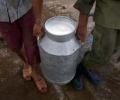
With the gradual opening up of shops, hotels, restaurants and catering services with limited number of participants, milk consumption has improved by 5-10 per cent from the lowest level.

Maharashtra's "radical" lockdown move will have an economic impact of Rs 40,000 crore, with the trade, hotels and transport sector to bear the biggest dent, Care Ratings said on Monday. The rating agency said the loss of economic activity will have a 0.32 per cent impact on the gross value added (GVA) growth at the national level. It revised down its national GDP growth estimate to 10.7 - 10.9 per cent from the 11 - 11.2 per cent given a week ago. Maharashtra has been contributing nearly 60 per cent to the daily COVID-19 infections nationally and had over 57,000 new cases on Sunday.

The Reserve Bank will go for a "dovish pause" at Wednesday's policy review announcement amid developments such as a rise in inflation, government maintaining the inflation target band and a likely impact on growth due to local lockdowns on rising COVID-19 infections, analysts said on Monday. Economists at American brokerage Bofa Securities said price stability, growth and financial stability will become the prime focus areas for the central bank going forward. "The RBI MPC (Monetary Policy Committee) should deliver another dovish pause on Wednesday," it said. The policy announcement, the first for the fiscal, will come days after the government maintained the RBI's target to ensure inflation to be within 2-6 per cent band for five more years.

Monsoon in August was almost 24 per cent below normal, which was the sixth driest August since 1901. It came on the back of a 7-per cent monsoon shortfall in July.

Meanwhile, with China switching its trading partners due to geo-political issues, increased trade with South Africa for bauxite and with the US for coal is also auguring well for vessels with tonne miles going up.

The Nifty Bank index has come off 15 per cent from its peak in February, underperforming the benchmark Nifty which is down 6%.

The government clarified that the majority of industrial establishments had reported nil production, and cautioned that the numbers should not be compared with those of previous months. "It is not appropriate to compare the IIP of April 2020 with that of earlier months, and users may like to observe the changes in the IIP in the following months," said the ministry of statistics & programme implementation.
According to Ajai Sahai, director-general and CEO of Federation of Indian Export Organisations, rising cases are a cause for concern as it adds to the uncertainty and may impact exports.

If the current restrictions remain in place until the end of May, we estimate that the cumulative loss of activity could amount to around $10.5 billion, or around 0.34 percentage point (pp) of annual nominal gross domestic product, say Barclays economists.

Without disclosing reasons, ICRA informed the stock exchanges on Thursday, 'The board, after due consideration and taking into account the best interests of the company and its various stakeholders, has decided to terminate the employment of Takkar with immediate effect.'

Direct economic stimulus measures such as tax cuts for individuals and industry would have helped to prop up the Indian economy which was hit hard by the lockdowns across several states in India, say economists and corporate leaders. While the measures announced on Monday are focussed more on the supply side, these steps would take a lot of time to move the needle for the economy.

The two troubled subsidiaries of Reliance Capital have over Rs 20,000 crore debt of both the companies. Reliance Home Finance has a debt of Rs 11,500 crore and Reliance Commercial Finance owes Rs 9,000 crore to lenders.

The sudden stop in economic activity led to a sharp decline in employment-intensive sectors like construction, manufacturing and trade, hotels, transport etc.

About 50 respondents from across banks, financial institutions and intermediaries including brokerage firms, corporate bodies, consulting firms, research institutes and industry bodies participated in the survey

Blackstone, KKR, and Bain Capital, among others, are in the race for its general insurance arm, and Bandhan Bank, Bain, and Dabur Investments have shown interest for RCap's 51 per cent stake in the life insurance business.

More than 40% of the companies surveyed showed job contraction in FY18, says a report by CARE Ratings

CARE Ratings, in a report, said it foresees an increase in the retail prices of petrol and diesel in the coming few days, depending on how the oil markets react in the reduction in supply from the cartel.
After the government sought Parliament's nod for a second batch of supplementary demand for grants that will cause a hit of Rs 2.99 trillion to the exchequer, doubts suddenly arose about the government's ability to meet the Budget projections of reining in its fiscal deficit at 6.8 per cent of gross domestic product (GDP), or Rs 15.06 trillion, for the current financial year. Till now, many were of the opinion that the government would succeed in checking the deficit at a much lower figure than what was given in the Budget Estimates (BE). The government had sought Parliament's approval to spend Rs 3.74 trillion extra, but Rs 74,517.01 crore will be matched by equal savings on other heads.

However, the hike in salary for government officials may take some time as the Centre had earlier this year decided to put a freeze on any hike in the DA of its employees till July, 2021, owing to the Covid-19 pandemic.

Build up inflation rate in the financial year so far was 2 per cent compared to a build up rate of 4.56 per cent in the corresponding period of the previous year. Inflation in food articles as a group rose to 11.08 per cent during the month as against 9.80 per cent in the previous month, mainly driven by exorbitantly high onion prices, the rates of which spiked by over 172 per cent from a year-ago. The annual rate of inflation, based on monthly wholesale price index was at 0.16 per cent in October.

However, the growth, driven largely by a bumper rabi harvest and facilitated by relaxation in lockdown, may not have resulted in a big rise in income for a section of farmers.
Completed projects saw an improvement of 29.2 per cent over the June quarter, which is valued at Rs 0.31 trillion.

Revenue from divestment has fetched Rs 40,000-50,000 crore against target of Rs 2.10 trillion.

Gitanjali Gems and Firestar Diamonds together account for 5.8 per cent of the diamond and jewellery trade in India.

Banking sources said the debt recast is actually 'Plan B' to help the nation's largest retailer stay afloat.

If raters get away by moving from AAA to D overnight after companies default, as happened with DHFL, YES Bank, RCom, and IL&FS, it shows a complete breakdown in the rating system. It calls for exemplary punishment, not kid glove treatment, says Debashis Basu.

Aided by the new initiatives of the government, there has been a huge drop in imports

The rating was downgraded despite 25 per cent held by stronger partner Indian Hotels, which operates the company's seven properties in India.
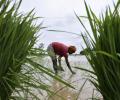
As the growth figures relate to pre-Covid lockdown period it does not reflect the real picture of distress which unfolded from April onwards in the sector, when acute supply disruption led to sharp drop in prices of many commodities largely perishables impacting farmers.

Portfolio returns, say analysts at Morgan Stanley, are more likely to be driven by bottom-up stock-picking rather than top-down macro forces.
