
Fiscal pressure for the Indian economy is gradually rising, suggested analysts at Jefferies in a recent note, as oil prices (Brent) - which are close to the $100 a barrel mark - continue to climb ahead of a busy election calendar. They added that the sharp rally in the equity markets during the last few months has made valuations costly. As a result, Jefferies expects the Indian markets to remain choppy in the near term.

Market participants attribute the stability to the Reserve Bank of India's timely intervention in the foreign exchange market, both in terms of selling and buying dollars.

The President said that because of the policies of the government foreign investment has increased from $36 billion to $60 billion during the period.

India's macroeconomic fundamentals are strong to deal with global challenges and the central government is committed to sticking to the fiscal deficit target of 6.4 per cent of the GDP for the current fiscal, official sources said on Monday. The government is taking steps to deal with the spiralling crude oil prices in the international market, the sources said. India meets nearly 85 per cent of its oil demand through imports and a weaker rupee makes imports costlier.

RBI's projection of retail inflation at 6.8 per cent in the current fiscal is neither too high to deter private consumption, nor so low as to weaken inducement to invest, the Economic Survey said on Tuesday. However, entrenched inflation may prolong the tightening cycle and therefore, borrowing costs may stay 'higher for longer', it said. The Economic Survey 2022-23 was tabled in Parliament by Finance Minister Nirmala Sitharaman.

The CAD is a critical indicator of the macroeconomic health and represents the gap between the overall foreign exchange expended and received in the economy.

India's gold imports, which have a bearing on the country's current account deficit (CAD), rose by 33.34 per cent to $46.14 billion during the 2021-22 fiscal on account of higher demand, according to official data. Gold imports were worth $34.62 billion in 2020-21. The surge in gold imports during the last financial year contributed to the widening of the trade deficit to $192.41 billion, against $102.62 billion in 2020-21.
With trade deficit falling 24% in Apr-Dec and stable capital flows, FY14 may end with a balance-of-payments surplus.
.jpg)
Banks, real estate and metal scrips among the top losers.

The sharp rally in the markets thus far in fiscal 2023-24 (FY24) has left analysts struggling to find investment-worthy themes. The S&P BSE Sensex has surged nearly 7 per cent thus far in FY24 and hit a fresh 52-week high of 63,601.71 levels on June 22, mostly led by foreign institutional (FII) flows. "The Indian market has seen a broad rally in the past few months but headline indices have seen more modest performance. "We are not very clear about the reasons for the rally and the divergent performance and struggle to find ideas in the consumption, investment and outsourcing sectors after the sharp run-up in several of our favored sectors and stocks in the past two months," wrote Sanjeev Prasad, co-head, Kotak Institutional Equities, in a recent co-authored note with Anindya Bhowmik and Sunita Baldawa.

'I went to a school in Baroda, where if the boys harassed us, the teachers pulled the girls aside and said, "Oh, your skirts are too short".' 'They made us feel ashamed of having any sexual feelings or having bodies that were growing up to be a young women.'
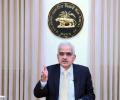
The challenge for the RBI in 2024 is likely to be less about containing elevated inflation and more about curbing excessive financial market exuberance and a 'problem of plenty', notes Sajjid Chinoy, Chief India Economist JP Morgan.

India imports a staggering 1,000 tonnes of gold every year, draining out foreign exchange and putting pressure on the fiscal deficit.

The country's exports rose by about 6 per cent to a "record" $447 billion during 2022-23 on account of healthy growth in the outbound shipments of sectors such as petroleum, pharma and chemicals and marine, Commerce and Industry Minister Piyush Goyal said on Thursday. The country's imports also grew by 16.5 per cent to $714 billion in 2022-23 as against $613 billion in 2021-22. He said that the exports of goods and services together scaled "new heights" and has increased by 14 per cent to $770 billion in 2022-23 as against 676 billion in 2021-22.
The government has hiked gold import duty to 15 per cent from 10.75 per cent to check the current account deficit (CAD) and rising import of the yellow metal. The duty changes came into effect on June 30. Earlier, the basic customs duty on gold was 7.5 per cent, now it will be 12.5 per cent.

The widening of the CAD on a year-on-year basis was primarily on account of a higher trade deficit at $50 billion

In absolute terms, the CAD stood at $4.6 billion in the current fourth quarter, compared with $13 billion in the year-ago quarter and $17.7 billion in the third quarter of fiscal year 2018-19.

The government has chosen the wrong way to control the current account deficit.
FMCG majors ITC and HUL along with RIL and ONGC weigh on the indices.

Increase in gold imports pushed the country's trade deficit to a five-month high of $ 15.33 billion in April.

India's GDP growth will slow down to 5.5 per cent in FY24 from the 6.9 per cent expected in the current fiscal 2022-23, a Swiss brokerage said on Wednesday. The slowdown was attributed to slowing global growth and tightening of monetary policies in the report by economists at UBS India. It said India will be among the "lesser affected economies" in the world, but made it clear that the world's fifth largest economy is not immune from global headwinds.

The decline in gold imports has helped in narrowing the country's trade deficit to $106.84 billion during the eight-month period under review as against $133.74 billion in the year-ago months.

Large trade deficit and rupee decline against the US dollar are putting pressure on the CAD, and these steps are likely to have a positive impact on the external sector.

The trade gap was $11.66 billion in December 2015 while in September 2015 it stood at $10.16 billion

Using snatches of a cult favourite or evergreen classic in its original form for action, comedy or romance can transform the entire vibe of a scene.

Balance of payment stood at a surplus of $30.1 billion during January-March

Every 10 per cent rise in crude oil price will shave off around 0.2 percentage point (pp) from India's GDP growth and widen the current account by 0.3 per cent, says Nomura.
High current account deficit is leading to the rupee weakening.

RBI had reduced the key policy rate, the repo, in consecutive policy meets, in January and in March, by 25 basis points each.

The Reserve Bank on Wednesday hiked key benchmark policy rate by 25 basis points to 6.5 per cent, citing sticky core inflation. This is the sixth time interest rate has been hiked by the Reserve Bank of India (RBI) since May last year, taking the total quantum of hike to 250 basis points. Announcing the bi-monthly monetary policy, RBI Governor Shaktikanta Das said the Monetary Policy Committee (MPC) by a majority decided to raise the policy repo rate by 25 basis points and keep a 'strong vigil' on inflation outlook.

The CAD occurs when a country's total imports of goods, services and transfers are more than total exports of goods, services and transfers.
A yellow glow is likely to stand out amid grey geopolitical clouds in 2023, with gold price projected to touch Rs 60,000 per 10 grams in the Indian market as more investors veer towards safe-haven assets. In a year where volatility was more a norm than an exception, gold prices in the international market oscillated from a peak of $2,070 per ounce in March to a low of $1,616 per ounce in November and is steadily recovering since then, according to market experts. At the beginning of 2022, gold prices were around $1,800 an ounce.

India needs to sustain a GDP growth rate of 8 per cent to become a five trillion dollar economy by 2025, the Economic Survey has stated.

The government hiked import duty on gold to 10 per cent and the RBI also imposed curbs on its imports by linking it with exports.

A depreciating rupee, which briefly hit 80 to the dollar on Tuesday, may boost India's exports but price-inelastic imports of crude oil and gold would mean limited relief on the trade deficit, which clocked a record $26.2 billion in June. Due to global risk aversion on the back of geo-political tensions and aggressive policy tightening by the Fed, the dollar has appreciated against most currencies, including the rupee. And, with other currencies depreciating, India's comparative advantage in this respect may be limited.
Despite a high current account deficit (CAD) and lower interest rates abroad, the Union government will not go for a sovereign bond issue to get more dollars.

On the rupee, it expects some appreciation pressure on in the near term from greater portfolio flows.

Gold imports, which have a bearing on the current account deficit (CAD), plunged 57 per cent to USD 6.8 billion (around Rs 50,658 crore) during the first half of this fiscal amid a slump in demand due to the Covid-19 pandemic, showed data by the commerce ministry.
The CAD was brought under control in 2013-14 after government imposed restrictions on import of gold. Following, this in 2014, certain restrictions were withdrawn.
.jpg)
India's current account deficit narrowed down to 3.6 per cent of GDP in the January-March quarter but totalled a record 4.8 per cent for the full 2012-13 fiscal.
