
The five companies which topped the list are Reliance Industries Ltd, Oil and Natural Gas Corporation, Indian Oil Corporation, NTPC Ltd and Bharat Petroleum Corporation
State-owned Indian Oil Corp (IOC) today said it is losing Rs 189 crore per day on selling auto and cooking fuel below cost as global crude oil prices shot up to USD 102 per barrel.

The multilateral lending agency holds 3.9 crore (Rs 39 million) shares in Petronet LNG, which at today's trading price of Rs 114.85 is worth Rs 448 crore (Rs 4.48 billion).

With the new Bharat Stage IV emission norms coming into effect from Thursday, oil companies are gearing up to meet the requirements of Mumbai, an official said on Friday.
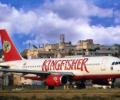
Vijay Mallya-promoted Kingfisher Airlines has turned second time lucky; the state-run Bharat Petroleum Corporation (BPCL) has granted it a three-month reprieve to pay jet fuel dues. KFA owes BPCL Rs 220 crore (after adjustment of interest) for fuel dues.

Bharat Petroleum Corporation (BPCL) on Tuesday hiked petrol prices by about Rs 2.96 a litre effective midnight tonight, and other state-owned oil companies IOC and HPCL will follow suit on Wednesday.

KFA owes BPCL Rs 220 crore or Rs 2.2 billion (after adjustment of interest).
Those in favour of a 15-day cycle for price adjustment argue that oil firms already have a mechanism of calculating the desired fuel prices on 1st and 16th of every month.
ONGC Videsh Managing Director R S Butola and Bharat Petroleum Director (Refineries) R K Singh are among the 17 candidates in the fray for the top job at Indian Oil Corp, the nation's largest oil firm.

Though the government had earlier this fiscal explicitly decided to compensate Indian Oil, Hindustan Petroleum and Bharat Petroleum for the losses they incur on selling domestic LPG and kerosene through PDS by way of oil bonds, the finance ministry has not issued any bonds for the three quarters.

State fuel retailers IOC, Bharat Petroleum and Hindustan Petroleum sell diesel, domestic LPG and kerosene at government dictated rates which are lower than cost of production.
Three fuel retailers -- Indian Oil Corporation, Bharat Petroleum Corporation Limited and Hindustan Petroleum Corporation Limited -- lost about Rs 26,618 crore (Rs 266.18 billion) in revenues on selling petrol, diesel, domestic LPG and kerosene below cost during the first half of the current fiscal, a ministry official said.
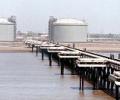
The Government may be keen on having a greater say in affairs of Petronet LNG as it is looking at appointing a bureaucrat as director on board of the nation's biggest liquefied natural gas importer.

He still owes hundreds of crores to OMCs.

State-owned oil firms on Tuesday cut jet fuel, or ATF, prices by 4 per cent, the first reduction in rates since July, on softening of international oil prices.
The price of petrol has risen by 83 paise per litre in the past nine days and diesel by 73 paise

The basket of crude oil India buys from overseas markets averaged $68.07 per barrel in September as against the August average of $71.98 a barrel.
The public sector oil companies -- Indian Oil Corporation, Bharat Petroleum and Hindustan Petroleum -- may suffer a Rs 25,000 crore revenue loss on fuel sales this fiscal, said S Behuria, chairman and managing director, IOC.IOC, BPCL and HPCL incurred a revenue loss of Rs 1.03 lakh crore on sale of petroleum fuel in 2008-09. The global rise in crude oil prices will increase the under-recoveries for PSUs on sale of fuel at controlled prices.

Petroleum Minister Murli Deora on Monday launched the service, which will be initially available in the national capital and would be extended to other metropolitan cities, state capitals and towns.
Over 100 chemical storage tanks built at the Pirpav jetty near Chembur have been operating without approvals from the ministry of environment and forests for over 18 years. Each of these tanks has an average capacity of 200,000 kilolitres of oil.
The Union oil ministry is considering a proposal to adopt differential pricing for diesel, under which industrial users like power utilities, will be charged market prices and retail consumers continue to be subsidised.
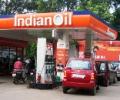
The Finance Ministry will give Rs 12,000 crore in cash to Indian Oil, Hindustan Petroleum and Bharat Petroleum to cover for less than half of the losses they incurred on selling LPG and kerosene this fiscal.
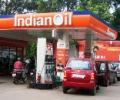
State-run oil marketing companies Indian Oil, Hindustan Petroleum and Bharat Petroleum are likely to lose Rs 45,478 crore (Rs 454.78 billion) this fiscal on selling fuel below cost, Petroleum Minister Murli Deora said.

The Petroleum Ministry on Wednesday sought over Rs 19,620 crore (Rs 196.20 billion) in compensation for state retailers Indian Oil, Bharat Petroleum and HPCL, which sold cooking fuels below cost in 2009-10 fiscal.

State-owned Indian Oil Corp, Bharat Petroleum and Hindustan Petroleum are collectively losing Rs 2.65 billion (Rs 265 crore) per day on selling fuel below cost and may end the fiscal with a Rs 874.4 billion (Rs 87,440 crore) revenue loss.
IOC, BPCL and HPCL currently sell petrol at a loss of Rs 6.12 per litre, Rs 4.60 a litre on diesel, Rs 18.42 per litre on PDS kerosene and Rs 265.27 per 14.2-kg LPG cylinder.
The bonds, which will come over and above Rs 61,800 crore (Rs 618 billion) already issued to the three companies, would help them bridge the revenue loss they incurred on sale of petrol, diesel, liquid petroleum gas and kerosene in 2008-09, a petroleum ministry official said.

According to industry figures, the pre-Covid demand for liquid medical oxygen (LMO) before the pandemic was 700 tonnes per day across the country. Now, with the second wave, the demand has gone up more than seven times, reports Jyoti Mukul.

Jet fuel will cost Rs 37,300 per kl in Mumbai, home to the nation's busiest airport, from Rs 38,246.60. The reduced rates will help cash-strapped airlines cut fuel cost, which constitutes roughly 40 per cent of their operational cost.
The ministry of petroleum has approached the finance ministry to seek permission to give additional bonds worth Rs 10,000 crore to the three public sector oil marketing companies --Indian Oil Corporation, Bharat Petroleum Corporation Ltd and Hindustan Petroleum Corporation Ltd--to help them close the last fiscal with a profit.

The country's biggest fuel retailer Indian Oil Corporation on Wednesday said it is losing Rs 107 crore (Rs 1.07 billion) a day on selling auto and cooking fuel below cost even as it awaits the government to announce clear compensation package.
In a step towards dual pricing of domestic cooking gas, the government has decided to allow oil-marketing companies to sell the fuel at market prices in distinct fibreglass cylinders. IOC, BPCL and HPCL will sell these cylinders in Bangalore, Mumbai and Pune, which have been identified as test beds for the pilot project. The companies could revise fuel prices for transparent cylinders as LPG for them will not be subsidised. Feasibility of this project is yet to be adjudged.
Besides IOC, Royal Dutch Shell is believed to have evinced interest in reviving the petrol pumps, industry sources said. Reliance, as part of a two part bid process, had sought expression of interest from IOC, Shell, Bharat Petroleum and Hindustan Petroleum by Friday for a possible partnership for reopening the petrol pumps.

According to industry experts, the consumption of petroleum products in the month of April was only 30-40 per cent of what it had been prior to the lockdown. Due to this, refineries were forced to bring down their capacity too.
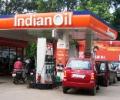
Indian Oil Corporation on Tuesday said it may lose over Rs 25,000 crore (Rs 250 billion) in revenues this fiscal on selling fuel below imported cost.
Full-service carrier Kingfisher Airlines has sought permission from the petroleum ministry to extend the date for paying dues to public sector oil companies for aviation turbine fuel.

If the fiscal deficit for the year can be maintained at Rs 7.04 trillion, the deficit as a percentage of GDP will slip to 3.44 per cent

After two months of price cuts, the state-run oil companies on Friday hiked aviation turbine fuel (ATF) price by a steep 6.5 per cent in step with hardening international rates.
After a year of sluggish growth in fuel retail outlets, the three state-run oil-marketing companies--Indian Oil Corporation, Bharat Petroleum Corporation and Hindustan Petroleum Corporation--have chalked out aggressive plans for expansion in the next financial year. They will be commissioning over 2,100 outlets in 2009-10--over three times what they added in the current year--at an investment of about Rs 1,200 crore.
The government's decision to raise fuel prices in June has scuttled the oil companies' plans to reduce their losses from retail fuel sales as consumers are buying less of premium fuels, which is more expensive than normal fuels.
