The government has cut the windfall profit tax on crude oil produced in the country while the levy on exports of diesel and ATF has been hiked, an official notification said. The tax, levied in the form of special additional excise duty or SAED, on domestically produced crude oil was reduced to Rs 6,700 per tonne from Rs 7,100 a tonne. SAED on the export of diesel was increased to Rs 6 per litre from Rs 5.50 a litre and on jet fuel or ATF to Rs 4 per litre from Rs 2, the notification said.
The government has cut windfall profit tax on export of diesel and ATF to their lowest while also reducing the levy on domestically-produced crude in line with softening international oil prices, according to an official order. The levy on crude oil produced by companies such as Oil and Natural Gas Corporation (ONGC) has been cut to Rs 4,350 per tonne from Rs 5,050 per tonne, the order dated February 15 said. Crude oil pumped out of the ground and from below the seabed is refined and converted into fuels like petrol, diesel and aviation turbine fuel (ATF).

The government has raised the windfall profit tax levied on domestically produced crude oil as well as on the export of diesel and ATF, in line with firming international oil prices, according to an official order. The levy on crude oil produced by companies such as Oil and Natural Gas Corporation (ONGC) has been increased to Rs 2,100 per tonne from Rs 1,700 per tonne, the order dated January 2, said. Crude oil pumped out of the ground and from below the seabed is refined and converted into fuel like petrol, diesel and aviation turbine fuel (ATF).

Rising crude oil prices and muted passenger traffic in the July-September quarter (second quarter, or Q2) of 2023-24 (FY24) have raised concerns about the profitability of listed aviation players. These two concerns have caused the stock of InterGlobe Aviation (IndiGo), the largest player in the sector, to slip by 11 per cent since its highs at the end of July. Nuvama Research expects yields to cool down in the near term due to seasonality, rising crude oil prices, and higher capacity.
The government has reduced the windfall profit tax levied on domestically-produced crude oil as well as on the export of diesel and ATF, in line with softening international oil prices, according to an official order. The levy on crude oil produced by companies such as Oil and Natural Gas Corporation (ONGC) has been cut to Rs 1,900 per tonne from Rs 2,100 per tonne, the order dated January 16, said. Crude oil pumped out of the ground and from below the seabed is refined and converted into fuel like petrol, diesel and aviation turbine fuel (ATF).
Jet fuel prices on Saturday were hiked by a marginal 0.2 per cent -- the eighth straight increase this year -- to an all-time high, reflecting a surge in global energy prices. The price of aviation turbine fuel (ATF) -- the fuel that helps aeroplanes fly -- was hiked by Rs 277.5 per kilolitre, or 0.2 per cent, to Rs 113,202.33 per kl (Rs 113.2 per litre) in the national capital, according to a price notification of state-owned fuel retailers. Meanwhile, petrol and diesel prices remained unchanged for the 10th straight day after rising by a record Rs 10 per litre each.
Jet fuel (ATF) price on Saturday was slashed by 4.5 per cent and that of commercial LPG used in hotels and restaurants by Rs 25.5 per 19-kg cylinder. The price of a 19-kg commercial LPG cylinder was cut to Rs 1,859.50 in the national capital from Rs 1,885, according to a price notification from state-owned fuel retailers. This is the sixth reduction in price of commercial LPG since June, in step with softening international energy prices.

The government on Monday scrapped 30-month old windfall profit tax on domestically-produced crude oil and on export of jet fuel (ATF), diesel and petrol following a decline in international oil prices. Minister of State for Finance Pankaj Chaudhary tabled a notification in Rajya Sabha scrapping the levy on crude oil produced by firms like state-owned Oil and Natural Gas Corporation (ONGC) and exports of fuels done by companies like Reliance Industries Ltd.

The GST Council on Saturday postponed a decision on cutting tax rate on life and health insurance premiums, officials said. The 55th meeting of the GST Council, chaired by Union Finance Minister Nirmala Sitharaman and comprising state counterparts, decided that some more technicalities needed to be ironed out and tasked the GoM for further deliberations.
Jet fuel (ATF) price on Tuesday was hiked by 4.2 per cent but that of commercial LPG used in non-residential establishments such as hotels and restaurants was cut by Rs 115.5 per 19-kg cylinder reflecting global energy trends. Aviation turbine fuel (ATF) price was hiked by Rs 4,842.37 per kilolitre, or 4.19 per cent, to Rs 120,362.64 per kl in the national capital, according to a price notification of state-owned fuel retailers. This reverses a 4.5 per cent cut in jet fuel prices affected last month.

Despite the increase, at Rs 64.32 per litre ATF costs less than petrol and diesel.

Wholesale price inflation dropped to 0.85 per cent in April as prices of food articles, manufactured products, and fuel eased, government data showed on Wednesday. WPI-based inflation was 2.05 per cent in March. It was 1.19 per cent in April last year.
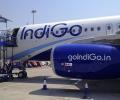
The price of aviation turbine fuel has increased by 50 per cent since January and the situation has adversely impacted IndiGo, its CEO Ronojoy Dutta said on Wednesday. He said the government should bring aviation turbine fuel (ATF) under the Goods and Services Tax (GST) and make flying affordable for consumers and viable for airlines. IndiGo is India's largest airline and with around 55 per cent share in the domestic passenger market.
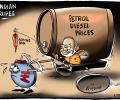
5 commodities namely crude oil, natural gas, petrol, diesel, and aviation turbine fuel (ATF) were kept out of GST's purview given the revenue dependence of state governments on these sectors.
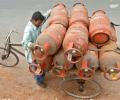
Since international oil prices have fallen, the government's subsidy payout will fall by almost Rs 50 per cylinder to Rs 240.

The GST Council, in its meeting on Saturday, is likely to decide on reducing tax rates on life and health insurance premiums, while hiking it on high-end wrist watches, shoes and apparels, besides considering a separate 35 per cent tax slab for sin goods. The 55th meeting of the GST Council, chaired by Union Finance Minister Nirmala Sitharaman and comprising state counterparts, is likely to discuss rate rejig in about 148 items, besides, it will also deliberate on bringing Aviation Turbine Fuel (ATF), a major component for airline industry's operation cost, in the Goods and Services Tax (GST) fold.

Air travel will now become a little expensive as the government has decided to increase the lower limit on airfares by five per cent amid rising aviation turbine fuel (ATF) prices, Civil Aviation Minister Hardeep Singh Puri on Friday. The upper limit on airfares will remain as it is for now. Just a month back, the Centre had increased the lower and upper limits on domestic airfares by 10-30 per cent due to rising ATF prices. While announcing resumption of scheduled domestic flights in May last year, the aviation ministry had placed limits on airfares through seven bands classified on the basis of flight duration.
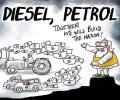
The government on Friday slapped an export tax on petrol, diesel and jet fuel (ATF) while also joining nations like the UK in imposing a windfall tax on crude oil produced locally. A Rs 6 per litre tax on export of petrol and ATF and Rs 13 per litre tax on export of diesel is effective from July 1, finance ministry notifications showed. Additionally, a Rs 23,250 per tonne tax was levied on crude oil produced domestically.

Faced with high Air Turbine Fuel (ATF) prices fuelled by rising international crude prices and a higher levy of sales tax, air-carriers are considering ATF imports as an alternative to purchases from domestic oil companies.

Demand for the Christmas period is expected to rise further in the coming days.
In a much-needed relief to cash-strapped airlines, this is the second straight monthly reduction in rates and the biggest single cut ever.
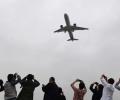
India has recorded the second-highest increase in domestic airfares in the Asia-Pacific (APAC) and West Asian regions, climbing by 43 per cent in the first half of 2024 compared to pre-pandemic levels in 2019, second only to Vietnam (63 per cent). India ranks third in fare increases during the same period in international skies, behind the United Arab Emirates (UAE) and Malaysia. The airfare study conducted by Airports Council International (ACI), which represents 617 airports in this region, was done in partnership with Flare Aviation Consulting.
Low-cost carriers SpiceJet and IndiGo were two of the main traders of aviation turbine fuel (ATF) at the Multi Commodity Exchange of India (MCX), which started trading of ATF futures on Monday, market sources said. Around Rs 34.8 crore worth of ATF was traded till five on Monday evening.

Jet fuel or ATF prices were on Thursday were cut by a steep 4.5 per cent, the first reduction in rates in six months.
Jet fuel (ATF) price was on Monday hiked by a steep 56.5 per cent and that of non-subsidised cooking gas LPG by Rs 11.5 per cylinder on the back of firming up of international oil rates, but petrol and diesel prices continued to remain on freeze for a record 78th day. Aviation turbine fuel (ATF) price was hiked by Rs 12,126.75 per kilolitre (kl), or 56.5 per cent, to Rs 33,575.37 per kl in the national capital, according to a price notification by State-owned oil marketing companies.
Jet fuel prices on Wednesday were cut by 1.3 per cent -- the first reduction after 10 rounds of price hikes -- on softening international crude oil rates. Simultaneously, prices of commercial LPG - used by business establishments such as hotels and restaurants - were reduced by Rs 135 per 19-kg cylinder. The price of aviation turbine fuel (ATF) -- the fuel that helps aeroplanes fly -- has been reduced by Rs 1,563.97 per kilolitre, or 1.27 per cent, to Rs 1,21,475.74 per kl (Rs 121 per litre) in the national capital, according to a price notification of state-owned fuel retailers.

In a major relief to cash-strapped airlines, jet fuel (ATF) prices were on Monday cut by a steep 4.3 per cent, the first reduction in rates in three-and-a-half months.

Flights from Delhi or Bengaluru, while they may still fly over Iran, depending on the route, have alternative paths that may take them through Central Asia or northern routes.

After two months of price cuts, the state-run oil companies on Friday hiked aviation turbine fuel (ATF) price by a steep 6.5 per cent in step with hardening international rates.
Former Petroleum Minister Ram Naik has flayed the UPA government lowering prices of aviation turbine fuel (ATF), saying India is the only country where ATF is cheaper than petrol.

Indian aviation has deep-rooted problems that need comprehensive and coordinated solutions, and high aviation turbine fuel pricing is certainly the most urgent.
Oil companies have slashed Aviation Turbine Fuel (ATF) prices by Rs 2,221 per kilo litre with effect from midnight on Wednesday.

ATF for domestic carriers has become 11.22 per cent cheaper since October and is expected to see more price cuts in the next three months.
Indian airlines on Wednesday filled aviation turbine fuel (ATF) into the tanks of their aircraft at Rs 68,000 a kilolitre. Around the same time, ATF sold at $1,037.8 (Rs 41,500) a kilolitre at the Singapore airport -- full 39 per cent below Indian prices.

Domestic air passenger traffic grew 5.1 per cent year-on-year to an estimated 138.9 million in May and was significantly higher by around 14 per cent than pre-Covid levels, credit ratings agency Icra said on Thursday. Icra also said the outlook on the Indian aviation industry is stable amid the continued recovery in domestic and international air passenger traffic with a relatively stable cost environment and expectations of the trend continuing in FY2025.

Perhaps for the first time, petrol in India costs more than the superior jet fuel (ATF) used in aeroplanes, as the government has levied a record excise duty on the fuel used in two-wheelers and cars.
It is the seventh reduction in jet fuel rates since August
After eight successive price cuts, state-run oil firms on Thursday raised jet fuel prices by 3.4 per cent reflecting increase in international oil prices.In Mumbai, the home for nation's busiest airport, ATF price will rise by Rs 1,068.87 to Rs 32,447.65 per kl.
The hike comes on back of over 12 per cent hike on June 15. ATF price on that day were raised by Rs 3,949 to Rs 36,252 per kilolitre in Delhi.
