
Scientists of the Indian Space and Research Organisation have proved their mettle once again with the successful launch of India's very own space observatory , Astrosat.

Just over 22 minutes into the flight, the rocket put Astrosat into orbit at an altitude of 650 km above the earth

In terms of success rate, the PSLV rocket has an enviable record of 57 successful missions out of 58 commercial ones.
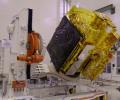
This mission will study astronomical phenomena, puts India in select group of nations

India's observatory will be the fourth in space, after the Hubble, Russia's Spektr R and Suzaku of Japan.

The ISRO is looking at Mangalyaan-2, a follow-on mission to Mars, and launching two satellites that would look at Venus and explore asteroids.

In a technology that can bring down costs significantly of launching satellites, India will test a reusable launch vehicle in September.

India will test a reusable launch vehicle next month, a technology that will bring down costs of launching satellites significantly, government said on Monday.

ISRO launched 12 Indian, 22 foreign satellites and successfully flight-tested India's first winged-body aerospace vehicle.
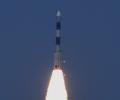
Prime Minister Narendra Modi lauded the scientists saying, "with this successful launch, we will determine our own paths powered by our technology".

It has already tasted success with the moon mission and Mangalyaan. Is man in space the next frontier for ISRO?
 © 2026 Rediff.com - Investor Information - Advertise with us - Disclaimer - Privacy Policy - Sitemap - Feedback - About us - Terms of use - Grievances