
Investors with a 6 to 12 month horizon may consider them. They should align their holding period with the fund's maturity profile and prefer schemes with a lower expense ratio.

'The day that the market realises that they've overspent (on AI) and there's a sudden collapse in the capex, then India can start outperforming again.'

The highlight in January, with no surprise, has been flows into gold and silver ETFs.

Finance Minister Nirmala Sitharaman on Sunday announced an increase in the Securities Transaction Tax (STT) on Futures and Options trade with a view to discouraging small investors from speculative trading in derivatives, which led to a sharp decline in the stock market.

'People become guided by emotions, fear of missing out, and greed. They tend to invest in booming sectors that may prove exceptionally expensive.' 'Typically, that represents the peak, and subsequently, they lose substantially.'

Major fund houses report a sharp rise in online transactions, driven by changing investor habits, distributor behaviour, and fast-growing fintech platforms.

ICICI Prudential Asset Management Company has set a price band of Rs 2,061- Rs 2,165 per share for its Rs 10,600-crore initial public offering (IPO) that will open on Friday. At the upper end of the band, the country's largest asset manager will command a valuation of Rs 1.07 trillion.

Largecap equity funds remain suitable for conservative and moderate risk-taking investors seeking relatively stable returns.

The Securities and Exchange Board of India (Sebi) on Wednesday overhauled the cost framework for the 80 trillion domestic mutual fund (MF) industry, introducing a simplified structure aimed at improving transparency for investors while balancing the impact on asset managers.

The continued MF buying has pushed the equity holding of MFs to over Rs 50 trillion for the first time.

'We operate in an economy that is structurally positioned for long-term growth. As market levels rise over time, our AUM grows in line.'

Investors seeking higher returns at relatively higher risk should consider allocation to smallcap equity funds.

Largecap equities are less volatile than mid- and smallcap stocks, making them suitable for risk-averse investors.

New investors or those with lower-than-planned exposure should add US-oriented funds through SIPs.

Trai has ordered BFSI firms to move service and transaction calls to the 1600 series from 2026 to reduce spam, financial fraud, and rising digital arrest scams.

'Earnings growth will be the main driver of India's market in 2026, with profits expected to rise 9% to 10% in H2 FY26 and accelerate to 12% to 15% in FY27.'

Several companies across sectors like finance, healthcare, wellness, retail technology, and asset management are bracing up to hit the D-street. With an unprecedented 1.7 lakh crore raised in 2025, the momentum is likely to sustain in 2026.

'Sebi's move to cap brokerage charges will help investors by lowering the overall cost of investments.'

Investors who constantly hop between 'top-performing' funds often end up earning far lower returns than the very funds they invest in -- simply because they enter late and exit early. Best investors don't chase returns, they chase discipline, says Ramalingam Kalirajan.

Passive funds appeal to investors seeking to avoid the risk of underperformance by the fund manager and minimise the need for frequent chopping and changing of funds.

'They are a poor fit for anyone with near-term goals, low volatility tolerance, or a need for steady income or liquidity.' 'First-time investors should typically avoid them.'

'Allocating 5 to 10 per cent of one's portfolio and staying disciplined through market cycles helps in having a positive investment experience.'

'Equities may not outperform every year, but if they do so seven times out of 10, it's an asset class worth relying on.'

Private sector ICICI Bank on Friday said its board has approved additional 2 per cent increase stake in its asset management arm ICICI Prudential Asset Management Company. The board of the bank on Friday approved purchase of up to 2 per cent additional shareholding in the ICICI Prudential Asset Management Company, ICICI Bank said in a regulatory filing.

The competitive intensity in the mutual fund (MF) industry is moving beyond scheme performance, cost structures, and distribution. In recent months, several fund houses have rationalised exit loads applicable on redemptions.

'The outlook for the next Samvat is more constructive, as many of the earlier drags are gradually becoming supports.'

Inflow in equity mutual funds dropped by 22 per cent to Rs 33,430 crore in August primarily due to a sharp fall in new fund offers (NFOs), data released by the Association of Mutual Funds in India (AMFI) showed on Wednesday. Also, the latest fund infusion by investors marks the 54th consecutive month of net inflows into the segment.

'Success isn't about a single brilliant idea; it's about the relentless execution, the ability to withstand the storms, and the unwavering belief in your mission, even when no one else sees it,' Madhu Lunawat, founder, The Wealth Company.

'Investing in these funds makes sense if their net yield over better-quality funds -- corporate bond funds or banking and PSU funds -- is meaningful.'

New investors should avoid short-term, tactical entries and instead go for staggered buying via ETFs to manage volatility.

'They are positioned as defensive products and can potentially give marginally higher returns than liquid funds.'

Market regulator Sebi on Thursday said that timelines for portfolio rebalancing in mutual fund schemes will now be applicable to all types of passive breaches across actively managed schemes, which was earlier limited to only asset allocation. A passive breach refers to unintended deviations from the mandated asset allocation or regulatory limits that do not arise from the direct actions or omissions of asset management companies (AMCs).
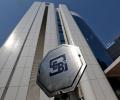
The Securities and Exchange Board of India (Sebi) has identified around Rs 77,800 crore as "difficult-to-recover" or DTR dues in its annual report for 2024-25 (FY26), marking a nearly 2 per cent increase from the previous year. These dues remain unrecovered despite exhaustive recovery efforts.

'A staggered investment approach (using SIP or STP) can help investors benefit from this opportunity while reducing timing risk.'

HDFC Asset Management Company (HDFC AMC) reported a healthy profit after tax (PAT) of Rs 430 crore for the July-September quarter (Q2) of financial year 2023-24 (FY24). It rose 20.2 per cent year-on-year (Y-o-Y) and decreased 8.4 per cent quarter-on-quarter (Q-o-Q). This was driven by good equity returns, leading to a sequential improvement in revenue yields.

The Securities and Exchange Board of India (Sebi) on Monday proposed relaxations for asset management companies (AMCs) to serve pooled non-broad-based funds, giving an opportunity to fund houses to expand their business.

'Reits are suitable for investors seeking regular income and real estate exposure without managing physical properties, especially NRIs and retirees.'

Net inflows into equity mutual fund (MF) schemes scaled a record high in July as the market correction and a raft of new fund offerings (NFOs) lifted lump-sum collections. Active equity schemes raked in a net Rs 42,702 crore in July, going past the previous high of Rs 41,156 crore in December 2024. Systematic investment plan (SIP) inflows continued to scale new highs, rising over 4 per cent month-on-month (M-o-M) to Rs 28,464 crore.
'First-time investors, busy professionals, NRIs and those with modest sums looking for curated strategies may find FoFs especially appealing.'
SOFs can be a diversification tool for investors seeking alternatives to conventional large, mid, or smallcap portfolios.
 © 2026 Rediff.com - Investor Information - Advertise with us - Disclaimer - Privacy Policy - Sitemap - Feedback - About us - Terms of use - Grievances