
A US Congressman has introduced a resolution urging the US government to recognise the 1971 atrocities committed against Bengali Hindus in Bangladesh by the Pakistani Army as a genocide, seeking justice and historical acknowledgement.


On December 10, Kissinger began to encourage the Chinese to take action against India: 'If the People's Republic were to consider the situation on the Indian subcontinent a threat to security, and if it took measures to protect its security, the US would oppose efforts of others to interfere with the People's Republic.' On the 50th anniversary of India's greatest military victory, Claude Arpi recalls how the US suggested that China intervene militarily on Pakistan's side.
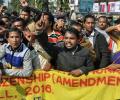
'To treat a Hindu fleeing persecution and certain death in Pakistan, Bangladesh or Afghanistan on par with a Muslim voluntarily sneaking into India for economic reasons or otherwise is callously cruel, blatantly perverse and grossly unjust.' 'The concept of equality cannot be invoked to perpetuate a historical wrong that needs to be righted,' argues Vivek Gumaste.

While the Indian Government was aware of it, it tried to play it down and instead referred to it as genocide against the Bengali community in Bangladesh so as to avoid an outcry from the leaders of the then Jan Sangh, the predecessor of the today's main opposition Bharatiya Janata Party, says Gary J Bass, author of the book The Blood Telegram: Nixon Kissinger and a Forgotten Genocide, which recently hit the book stores.

The external affairs ministry's files, as distinct from those of the ministry of defence or the agencies, at least from before 1974 should be declassified. And if select files that are more than 40 years old are not to be declassified, the ministry should follow explicit guidelines to justify taking such a view, says Jaimini Bhagwat.
 © 2026 Rediff.com - Advertise with us - Disclaimer - Privacy Policy - Sitemap - Feedback - About us - Terms of use - Grievances