
The government will start working on selling the ground-handling arm of erstwhile national carrier Air India and the Expression of Interest (EoI) is expected in the next fiscal, an official said. "We already have the Cabinet approval for selling the subsidiaries of Air India. "So we will come out with an EoI inviting bids for one of the ground-handling arms in the next fiscal," an official told PTI.
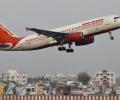
No other corporate house in India is in a better position than Tata group for the takeover of debt-laden airline Air India, former deputy chairman of erstwhile Planning Commission Montek Singh Ahluwalia said on Thursday. Tata Sons has emerged as the top bidder for the takeover of the state-run airline but the bid is yet to be approved by a group of ministers headed by Home Minister Amit Shah. "You can't have a better corporate, with a better position than the Tatas, we can hand it (state-run airline Air India) over," he said while replying to a question in a virtual event.

The EoI and the share purchase agreement would be issued in January itself for the bidders. While Air India's net loss in 2018-19 was around Rs 8,556 crore, its current total debt is around Rs 80,000 crore.

Ernst & Young LLP India has been appointed as transaction adviser for the strategic divestment process.

After more than two decades and three attempts, the government has finally sold its flagship national carrier Air India, and it is deja vu for Maharaja as it returned home to its founding father the Tata group. Jehangir Ratanji Dadabhoy (JRD) Tata founded the airline in 1932 and named it Tata Airlines. In 1946, the aviation division of Tata Sons was listed as Air India, and in 1948, the Air India International was launched with flights to Europe. The international service was among the first public-private partnerships in India, with the government holding 49 per cent, the Tatas keeping 25 per cent and the public owning the rest. In 1953, Air India was nationalised and for the next over four decades it remained the prized possession for India controlling the majority of the domestic airspace.

Tata Sons has emerged as the top bidder for the takeover of debt-laden State-run airline Air India but the bid is yet to be approved by a group of ministers headed by Home Minister Amit Shah, sources said.

To attract potential suitors, the government will ease asset valuation norms for Air India by allowing bidders to put in offers on an enterprise value basis, a source said on Monday. To begin with, the government is likely to further extend the deadline for putting in a preliminary expression of interest for the loss-making national carrier to December 15. The source said bids will be sought on an enterprise value basis - a popular valuation methodology for takeover deals.
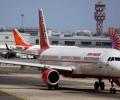
Air India has planned to monetise its unutilised and surplus immovable real estate assets over the next few years.

While Road Transport Minister Nitin Gadkari has been dropped, the panel now has four ministers - Shah, Finance Minister Nirmala Sitharaman, Commerce and Railway Minister Piyush Goyal and Civil Aviation Minister Hardeep Singh Puri.

Jaitley did not say if it will be an outright sale or partial divestment.

The government is planning to liberalise the terms and conditions for the sale of the national carrier. The Centre is still pursuing the option of selling the airline's subsidiaries before the airline itself, in order to deal with an outstanding debt of around Rs 27,000 crore.
Sources in the know said the government would initiate talks with businesses, including Tatas, shortly for divesting its stake in the national carrier.

In a bid to resurrect Air India privatisation, the government is planning to give flexibility to potential investors to decide on the humongous debt with the national carrier, a top official has said. The flexibility to potential investors on the quantum of the Rs 60,074 crore debt that they want to absorb will replace the current condition of the buyer taking over more than a third of the debt and transferring the rest to a special purpose vehicle, Department of Investment and Public Asset Management (DIPAM) secretary Tuhin Kanta Pandey said.
Probable reasons that led to failure of the sale process include 24 per cent government stake and corresponding rights, high debt, volatile crude oil prices, fluctuations in exchange rate, changes in macro environment, profitability track record of bidders and restriction on bidding by individuals.

Amid continuing uncertainty over the fate of the national carrier, an official said there is also need for funds to restart operations of 12 grounded narrow-body planes.

The international operations of Air India seem to be the main attraction for IndiGo, which has also flagged concerns about some foreign overseas airlines being allowed "disproportionate access" to the Indian market.
 © 2026 Rediff.com - Investor Information - Advertise with us - Disclaimer - Privacy Policy - Sitemap - Feedback - About us - Terms of use - Grievances