
Stop-losses are mandatory to prevent losses going out of control

'We suggest investors with suitable risk appetite to consider allocating 40-50 per cent in large-caps, 25-30 per cent of funds in quality mid and small-caps and the rest in debt and high yield products.'

The Nifty IT index, data shows, has outperformed the markets in each of the last four election years post the result. announcement.

10 non-bank and non-finance stocks from the BSE500 Index universe that offer an optimal blend of low valuation, reasonably robust revenue and earnings growth in recent quarters, a strong balance sheet, and most importantly, positive cash flow from their operations.

'This trend will continue as long as the bull run continues.'

Nasdaq-listed Cognizant Technology Solutions has signed a definitive agreement to acquire global engineering company Belcan for about $1.3 billion (Rs 10,853.7 crore) in cash and stock. The transaction is expected to close in the September quarter. The total consideration includes $1.19 billion (Rs 9,935.31 crore) in cash and 1.47 million Cognizant shares, valued at $97 million (Rs 809.53 crore) based on the information technology services provider's closing share price on June 7, 2024.

Stocks of Hindustan Petroleum Corporation Limited (HPCL), Bharat Petroleum Corporation Limited (BPCL) and Indian Oil Corporation Limited (IOCL) have more headroom left despite the sharp run in the last few weeks, suggests a recent report from Morgan Stanley. Stocks of these oil refining and marketing companies (OMCs), it believes, are seeing multiples re-rate as investors reassess long-term growth prospects. "IOCL trades at one year forward P/BV of 1.2x, 19 per cent below +1 standard deviation (SD); BPCL trades at one year forward P/BV of 1.5x, near historical averages; HPCL trades at one year forward P/BV of 1.5x, near +1SD," Morgan Stanley said.

When the bull run begins its march again, it will really be different!

Active largecap funds, which have the toughest job in terms of outperforming the benchmark, did better in 2023 as their bets in the mid and smallcap stocks paid off.
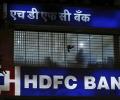
HDFC Bank Q4 review: HDFC Bank's January-March quarter (Q4) results, for financial year 2022-23 (FY23), brought no cheer to investors as elevated costs, and merger-related uncertainties continue to dent the sentiment. Moreover, analysts fear that merger-related costs may put pressure on margins and cost to income ratio in the near-term, while the return on equity could moderate owing to low leverage of the parent. Analysts, therefore, opine that the stock's re-rating may be some time away. "While the risk of a de-rating on a standalone basis appears to be quite low given that the business performance is holding up well, we believe a re-rating in the stock would happen as and when more clarity emerges on the smooth transition (merger)," said a report by Sharekhan.

Foreign investors have continued selling in the Indian market, pulling out a massive Rs 85,790 crore (around $10.2 billion) from equities this month due to Chinese stimulus measures, attractive stock valuations, and the elevated pricing of domestic equities. October is turning into the worst-ever month in terms of foreign fund outflows. In March 2020, FPIs withdrew Rs 61,973 crore from equities.

Nestle, State Bank of India, Power Grid, Tata Steel, Larsen & Toubro and Mahindra & Mahindra were the other major gainers. In contrast, Tech Mahindra, Axis Bank and Reliance Industries were the laggards.

Ola Electric share price strategy: The meteoric rise of Ola Electric share price has left analysts and investors bewildered. Yet, they suggest investors hold on to the stock as it remains a pure "momentum" play. Since its listing on August 9, the stock has surged 92 per cent (till August 19) over its issue price of Rs 76, taking its market capitalisation to a little over Rs 63,000 crore.

Global trends, trading activity of foreign investors and domestic macroeconomic data announcements would dictate terms in the equity market in a holiday-shortened week ahead, analysts said. Equity markets would remain closed on Wednesday for Gandhi Jayanti. "Looking ahead, it will be interesting to monitor Foreign Institutional Investors (FIIs) and their flow into India.

Automobile, apparel and electronics are among sectors that see a sales boost during the festival season, a time when investors expect gains in related stocks. This year could be different: Analysts have factored in all positives and do not expect such stocks to deliver lucrative returns. "Indian households spend across sectors like automobiles, consumer durables, and consumer staples during the festival season.

'The economy is clearly at a very soft spot, and earnings growth is disappointing every day.' 'After three great years, the Indian economy has hit a rough patch.'

'A lot of first-time users who have entered the markets after Covid are increasingly investing in mutual funds, exchange-traded funds, and stocks for their long-term goals.'

'Investors should look to incrementally allocate towards equity from a medium-to-long term horizon.'

'We are in a position to start due diligence and private data room access shortly.'

A palpable mix of emotions enveloped the capital, particularly around the areas surrounding the White House. Supporters, opponents and general visitors gathered at the iconic location, commenting on the outcome of a bitterly fought election.

Economic growth, which we are taking for granted, slows for a completely different set of local or global factors and the Modi premium vanishes, observes Debashis Basu.

More than 50 per cent of SIP accounts come from semi-urban and rural areas.

The RBI has changed the way it approached supervision in the past. Having seen a couple of collapses in the NBFC sector and the near-collapse of a few banks, it is focusing on regular drills to prevent a fire from breaking out, explains Tamal Bandyopadhyay.

'Investors with foreign currency-denominated goals, such as foreign education or foreign travel, should go for US equity funds.'

To curb speculative trading, markets regulator Sebi on Tuesday put in place a stricter framework for equity index derivatives by increasing the minimum contract size and mandating upfront collection of option premiums. Other measures announced by Sebi included intra-day monitoring of position limits, removal of calendar spread benefit on expiry day, rationalisation of weekly index derivatives and increased tail risk coverage.

Markets to track inflation data, global trends, FII trading this week: Analysts New Delhi, Dec 8 (PTI) Investors' sentiments will be guided by a host of domestic and global macroeconomic data announcements this week, along with the trading activity of foreign investors and trends in world stocks, analysts said. Besides, the rupee-dollar trend and movement of global oil benchmark Brent crude will also be crucial in dictating terms in the market, experts added. "The domestic stock market is likely to be shaped by a mix of global cues, domestic economic indicators, and the flow of investments from foreign and domestic institutional investors. Key factors like the rupee's exchange rate and crude oil prices will play a critical role in determining market trends. "Globally, geopolitical tensions, particularly the ongoing Russia-Ukraine conflict, continue to pose challenges. However, recent declines in the dollar index and US bond yields have created a more favourable environment for emerging markets like India," Pravesh Gour, Senior Technical Analyst, Swastika Investmart Ltd, said. On the economic front, significant macroeconomic releases, including retail inflation and industrial production data from India as well as US core CPI, are expected to influence overall market sentiment, Gour added. Last week, the BSE benchmark jumped 1,906.33 points or 2.38 per cent, and the NSE Nifty climbed 546.7 points or 2.26 per cent. "FIIs turning buyers in early December, in a total reversal of their sustained selling strategy during the last two months, has altered the market sentiments. The change in FII (Foreign Institutional Investors) strategy is getting reflected in stock price movements, particularly in large-cap banking stocks in which FIIs have been sellers," VK Vijayakumar, Chief Investment Strategist, Geojit Financial Services, said. The release of US CPI inflation data will give some insights into the Fed's December meeting, an expert said. "The markets' attention is expected to turn towards macroeconomic indicators like IIP and CPI inflation. Additionally, the trend of FII inflows, following their recent buying spree, will remain a key focal point for market participants," Ajit Mishra - SVP, Research, Religare Broking Ltd, said. Siddhartha Khemka, Head - Research, Wealth Management, Motilal Oswal Financial Services Ltd, said this week will see significant economic data releases, including GDP numbers from Japan and the UK, along with China's CPI and India's CPI.

Implications for capital gains, wealth taxes, and investment strategies require careful consideration, notes Anil Rego, founder and CEO, RightHorizons.

IPOs inherently carry more risks than stocks that have been listed on the exchanges for some time.

The pre-sales volume of Godrej Properties (GPL) for third quarter of the financial year 2025 (Q3FY25) declined 6 per cent year-on-year (Y-o-Y) -- down 21 per cent quarter-on-quarter (Q-o-Q) -- to 4.1 million square feet (msf), resulting in a pre-sales value of Rs 5,450 crore, down 5 per cent each Y-o-Y and Q-o-Q. About 77 per cent came from newly launched projects. For 9MFY25, pre-sales were up 48 per cent Y-o-Y to Rs 19,300 crore.

Capital markets regulator Sebi has rejected a proposal by the National Stock Exchange (NSE) to extend the trading hours in the equity derivatives segment citing a lack of feedback from the stock brokers community. "Currently, there is no plan to extend the timings as Sebi has returned our application as the stock brokers have not given the feedback that Sebi wanted. "So, as of now, the extended time frame (plan) is shelved," NSE MD and CEO Ashishkumar Chauhan said in a post-earnings analysts call.

Young investors speak about their experience in the recent market crash. They, it seems, remain undaunted and want to put more money into stocks going ahead.
Given its risky profile, the realty sector could collapse if the bull run fails to take off

The share of equity and investment funds in the total financial wealth of households increased by more than 50% between 2011-2012 and 2022-2023.
Near the bottom of bear markets, broad buy signals are generated by several rules-of-thumb. Those check out positive. The first buy signal is that the earnings yield is higher than the yield from risk-free instruments.
From January 8, the BSE Sensex topped the all-time high of 21,078 points in intra-day trade (it finally closed at 20,873 points), the market has slipped by a frightening 23 per cent, wiping out thousands of billions of rupees of notional investor wealth. However, there is some good news -- at least, if you believe some stock market experts. According to them the current valuations are compelling, and investors should start buying quality stocks at every fall.

After Sita Raman, this is a Dulquer Salmaan film that has won Divya Nair's heart.

From the Sensex pack, Bajaj Finance, Tata Motors, Asian Paints, Power Grid, NTPC, Infosys, Nestle, Reliance Industries and UltraTech Cement were the biggest laggards. Larsen & Toubro, Tata Steel, HDFC, Bharti Airtel, HDFC Bank and Mahindra & Mahindra were among the major gainers.

Here's how to own your dream home without paying excessive interest on your EMIs.

Business cycle funds aim to optimise returns by aligning their portfolios with different phases of the economic cycle. First-time investors, those who prefer stable sector allocations, and those averse to volatility should steer clear of them.

Investors keen on mid and smallcap stocks but wary of volatility should consider multicap equity schemes over standalone midcap or smallcap schemes.
 © 2026 Rediff.com - Investor Information - Advertise with us - Disclaimer - Privacy Policy - Sitemap - Feedback - About us - Terms of use - Grievances