
Major credit issuers, including the largest - HDFC Bank - have integrated their systems with the Bharat Bill Payment Systems (BBPS) for receiving credit card repayments via third-party applications.
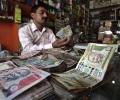
For the convenience of people to pay school fees and municipal taxes and utility bills through an integrated platform, the Reserve Bank on Thursday proposed setting up an "anytime anywhere" bill payment system.

UPI has catapulted India into the forefront on the global digital payments landscape. Working hand in hand, the AePS payments system is making life easy for rural folks, notes Tamal Bandyopadhyay.
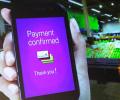
BBPS allows you to pay electricity, telephone, water supply, gas and DTH bills. Its scope will be expanded to include other payments like school and university fees, government taxes, insurance premiums, mutual fund investments, even credit card bills.

The Reserve Bank is planning to extend wholesale Central Bank Digital Currency (CBDC) for transactions for interbank borrowing or call money market, sources said on Tuesday. The pilot in the wholesale segment, known as the Digital Rupee -Wholesale (e-W), was launched on November 1, 2022, with the use case being limited to the settlement of secondary market transactions in government securities. "RBI is now planning to go into the interbank borrowing market.
Unified Payments Interface (UPI), the flagship payments platform of the National Payments Corporation of India (NPCI), touched a record high both in terms of volume and value of transactions in June after a slump in April and May. The platform recorded 2.8 billion transactions worth Rs 5.47 trillion in June, up 10.6 per cent in volume terms and 11.56 per cent in value terms over May. This is in sync with the opening up of the economy as Covid cases gradually came down from its peak in mid-May and lockdowns were eased in various places.
With vehicular activity picking pace in May, toll collection also saw a huge uptick. Fastags posted an impressive jump of more above 400 per cent in transaction count at 55.17 million, and an over-300 per cent jump in value at Rs 1,142 crore.

Reserve Bank of India governor Shaktikanta Das on Monday said payments through UPI (unified payment interface) have grown exponentially in the past 12 months with daily transactions crossing 36 crore, which is up 50 per cent from 24 crore in February 2022. In value terms, these transactions are worth Rs 6.27 lakh crore, registering a growth of 17 per cent from Rs 5.36 lakh crore in February 2022, the governor told reporters while launching the Digital Payments Awareness Week at the RBI headquarters in Mumbai this afternoon. He also said the overall monthly digital payment transactions crossed over Rs 1,000-crore-mark each month during the past three months.
The race to get a New Umbrella Entity (NUE) licence for digital payments may get crowded. As many as six consortiums are said to be in the fray to apply for an NUE licence, which would create a for-profit National Payments Corporation of India (NPCI)-like body for retail payments. A consortium led by Financial Software and Systems (FSS), a leading provider of payment products and payment processor, is in talks and may file an application to the RBI for an NUE license, said sources aware of the development. The other constituents of this group include Indian Bank, Central Bank of India, India Post Payments Bank, National Bank for Agriculture and Rural Development (Nabard), and a few small finance banks.

PhonePe via Bharat Bill Payment System (BBPS) plans to get into a number of new verticals, including fee payments in schools and colleges, payments at hospitals and other services

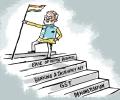
The temptation to get into businesses that are hot is perhaps too great for any politician, no matter what his public slogans are. Nehru plunged into hot sectors of his time -- engineering and iron and steel. Modi has plunged into digital payments -- the hot sector of his time, notes Debashis Basu.

Surge in UPI transactions is because of an increased consumer interest in making bill payments and recharging mobile phones online, and purchase of non-essential goods on e-commerce platforms.
 © 2026 Rediff.com - Investor Information - Advertise with us - Disclaimer - Privacy Policy - Sitemap - Feedback - About us - Terms of use - Grievances