
Indian benchmark indices, Sensex and Nifty, experienced a sharp decline at the close of trade, with the Sensex dropping 539 points and the Nifty falling below 24,100, primarily due to selling pressure in HDFC Bank and ongoing geopolitical uncertainties.

Shabnam Sinha is set to take over as the Chairperson of Airtel Payments Bank for a three-year term starting October 1, 2026, succeeding Sunil Mittal, who concludes his tenure as non-executive Chairman.

Two men, including alleged mastermind Adeeb Khan, have been arrested in Delhi for cheating a person of Rs 15 lakh by posing as Direct Selling Agents (DSAs) of private banks and offering low-interest loans. Police recovered Rs 6.95 lakh in cash, and efforts are underway to apprehend a third absconding associate and trace the full money trail.

'It's not about individuals operating the mule accounts being more or less skilled. Instead, 'lower-level' refers to the role the individual account plays in the broader mule network.'

A sophisticated cross-bank syndicate is systematically defrauding non-resident Indians (NRIs) and elderly citizens by exploiting their fixed deposits through forged documents and fictitious loans, often involving colluding bank employees and real estate deals.

The Rajya Sabha has passed The Bankers' Books Evidence Bill, 2026, which aims to replace a British-era law and allow digital and virtual records to be admissible as evidence in courts. This legislation aligns with contemporary digital banking practices and extends a uniform evidential framework to various financial entities, including NBFCs and fintech companies. Finance Minister Nirmala Sitharaman highlighted the bill's role in strengthening public confidence and safeguarding customer privacy. The bill's passage, however, saw an Opposition walkout over unrelated issues.

Private banks in India are aggressively mobilising Foreign Currency Non-Resident (Bank), or FCNR(B), deposits by raising interest rates and using website countdowns, as the Reserve Bank of India's swap window is set to close on August 31, earlier than initially planned.
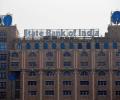
State Bank of India (SBI) anticipates that the newly introduced Merchant Discount Rate (MDR) on person-to-merchant (P2M) UPI transactions above 2,000, effective October 15, will enable it to recover the costs incurred in processing and facilitating these transactions, potentially even generating a small surplus.

Sources clarify that the NCLT's approval of a repayment plan for Essel Group founder Subhash Chandra does not signify a 99.97 per cent write-off of Rs 22,000 crore in bank loans, as the figure represents claims against him as a personal guarantor, not debt personally borrowed.

The Reserve Bank of India (RBI) net purchased a record $18.65 billion in July, driven by inflows from its concessional swap facility, leading to a significant increase in India's foreign exchange reserves.

The Supreme Court has issued a directive for the Shri Banke Bihari Temple in Vrindavan, mandating that all donations must be deposited into official donation boxes or the online temple treasury. This comes amidst serious allegations of sevayats siphoning off funds and obstructing online donation methods, highlighting the need for a transparent mechanism in temple management.

State Bank of India (SBI) is extensively using artificial intelligence to underwrite nearly Rs 1 lakh crore in MSME loans and automate the processing of cheques up to Rs 10,000. This AI adoption aims to enhance efficiency, free up employee bandwidth, and improve customer service across various banking functions.

India's private sector capital expenditure is projected to reach approximately 3.2 trillion in the financial year 2026-27, up from 2.6 trillion in FY26, according to a Reserve Bank of India bulletin report, indicating sustained confidence despite global uncertainties.

RBI Deputy Governor Rohit Jain highlighted that banks are well-positioned to deploy $133 billion mobilised through FCNR(B) deposits, especially with strong credit demand ahead of the festival season, while also stressing the importance of robust technology governance and cyber defences in the financial sector.

Indian benchmark indices Sensex and Nifty experienced a significant downturn in early trade, with the Sensex tanking 730 points, driven by surging crude oil prices, escalating geopolitical uncertainties, and a weak trend observed across Asian markets.

Union Finance Minister Nirmala Sitharaman announced the government's plan to establish a high-powered committee to examine reforms for the banking sector, aligning it with the vision of a 'Viksit Bharat' (Developed India) and India's next phase of growth.

India's deposit growth has reached a 15-year high of 17.8 per cent, primarily driven by a surge in foreign currency non-resident (bank), or FCNR(B), deposits. This influx of funds is expected to lead to a softening of corporate loan rates as banks seek to deploy their excess liquidity.

Your credit card may have security controls you rarely use. Here are seven settings that can help prevent unwanted or fraudulent transactions.

Delhi Police have arrested Shantaram Barku Shelke, the alleged mastermind behind a Rs 40 lakh visa fraud conspiracy that duped 41 individuals seeking overseas jobs in Russia and Israel. Shelke, proprietor of M/s SS Overseas Travels Agency, issued fake documents and evaded authorities before being apprehended in Nalasopara, Maharashtra.

The Allahabad High Court has ruled that investigating agencies cannot impose a blanket debit freeze on a person's bank account during cybercrime investigations. The court stated that restraint must be proportionate to the suspected proceeds of crime, directing banks to de-freeze accounts beyond the disputed amount. This ruling aims to protect innocent account holders from complete financial deprivation due to minor disputed transactions.

Indian benchmark stock indices, Sensex and Nifty, rebounded on Friday, driven by value buying in banking, oil & gas, and auto shares following recent sharp losses. The Sensex climbed 315.20 points to settle at 73,895.74, while the Nifty rose 77.40 points to 23,140.50.

The Reserve Bank of India (RBI) has proposed a standard operating procedure (SOP) for banks to implement temporary debit holds on accounts or transactions suspected of being involved in money-mule activity and cyber-enabled financial fraud, with a maximum duration of 60 days.

Equitas Small Finance Bank (SFB) Managing Director and CEO P N Vasudevan stated, "We may end up applying within a year" for a universal banking licence, while also targeting a nearly threefold increase in advances to Rs 1.2 trillion over the next five years.

The incident involved compromise of an employee's email account, resulting in unauthorised access to certain data.
Finance Minister Nirmala Sitharaman has strongly refuted Opposition allegations that the decision to levy a 0.4 per cent Merchant Discount Rate (MDR) on specific UPI transactions above Rs 2,000 was influenced by external pressure. She clarified that the decision was a professional one made by the payment ecosystem, not a government imposition or a tax on consumers, with collected funds distributed among banks and UPI entities to ensure a sustainable digital payments framework.

Indian benchmark indices, Sensex and Nifty, experienced a significant drop in early trade, with the Sensex falling over 600 points, primarily due to crude oil prices surging past the USD 100 per barrel mark and weak global market trends. Track Sensex, Nifty on September 24.

A new report by FICCI, BCG, and IBA outlines that India's banking sector must grow significantly faster than nominal GDP to support a USD 30 trillion economy by 2047, requiring banking assets of USD 45 trillion. The report highlights the sector's current strength, challenges in digitisation, and the need to enhance resilience against fraud and cyber threats, proposing a 13-point agenda for stakeholders.

A nearly 70,000-page chargesheet filed by the Supreme Court-mandated SIT details the diversion of donations from the Ram temple in Ayodhya, revealing a network of eight accused who allegedly removed, concealed, and distributed pilfered funds during cash-counting, supported by 105 CCTV instances and thousands of text messages.
Indian benchmark indices, Sensex and Nifty, experienced a sharp decline, with the Sensex tumbling 1,247.71 points and the Nifty settling below 23,100, primarily driven by a significant spike in crude oil prices and weak global market trends.

Tata Trusts, the majority shareholders of Tata Sons, have proposed merging two operating companies, Tata Electronics Systems Solutions Pvt Ltd (TESS) and Tata Consulting Engineers (TCE), with Tata Sons. This restructuring aims to shed Tata Sons' classification as a non-banking financial company (NBFC) and a core investment company (CIC), thereby allowing it to retain its status as an unlisted private company and resolve ongoing disputes regarding its future ownership.

The Jammu and Kashmir High Court has rejected a petition by the Enforcement Directorate to add charges of receiving and concealing stolen property in the alleged Jammu and Kashmir Cricket Association fund scam. While the court upheld the ED's right to file such an application, it found insufficient merit in the current material to invoke sections 411 and 424 of the Ranbir Penal Code, stating that the alleged acts were part of the principal transaction of conspiracy and breach of trust.
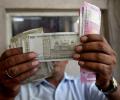
Government sources clarify that the 0.4% merchant discount rate (MDR) on UPI transactions above Rs 2,000, effective October 15, will not be passed on to consumers. The charge, paid by merchants, aims to create a sustainable revenue framework for the digital payments ecosystem, with funds shared among banks and UPI entities. Small merchants using QR codes for up to Rs 1 lakh monthly are exempt.

India's economy is projected to lose momentum in the second half of fiscal 2026-27, with tighter financial conditions, elevated energy prices, and broadening inflation pressures posing significant risks, according to DBS Bank economist Radhika Rao.
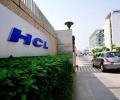
HCL Technologies' software division, HCLSoftware, is set to acquire Croatia-based enterprise RPA provider Robotiq.ai for 9 million euro. This strategic acquisition aims to enhance HCLSoftware's AI-driven workflow capabilities and automate tasks in complex business environments, with the deal expected to close by November 2026.
Finance Minister Nirmala Sitharaman clarified that the proposed Merchant Discount Rate (MDR) on select high-value UPI transactions is not a tax or cess, and its collections will not go to the government. She explained that MDR is a charge within the digital payments ecosystem, shared among participants to maintain infrastructure, and will not be passed on to consumers. The NPCI's new framework, effective October 15, applies a 0.4% MDR on person-to-merchant UPI transactions above Rs 2,000, with most transactions remaining free and small merchants exempt.
Indian benchmark indices Sensex and Nifty experienced volatile trading, influenced by elevated crude oil prices, high US bond yields, and selling pressure in IT stocks, despite an early rebound.

India's foreign exchange reserves experienced a substantial decline of USD 14.881 billion, reaching USD 765.901 billion for the week ending September 18, primarily due to a fall in foreign currency assets, as per recent RBI data.

The Allahabad High Court has ordered the State Bank of India (SBI) to refund Rs 19.90 lakh debited from a widow's fixed deposit to recover her deceased husband's personal loan. The court deemed the bank's action an "abominable" breach of banking practice and also directed SBI to pay Rs 1 lakh in compensation to the woman.

The Karnataka CID is investigating alleged irregularities in the KPSC veterinary officer recruitment exam, questioning 40 candidates and arresting suspended IAS officer Gyanendra Kumar Gangwar. The probe has revealed financial links, with significant deposits traced to accounts connected to candidates and middlemen, and has frozen substantial amounts. The High Court has ordered a fresh probe by an SIT.

75% of India's 60 million digital-payment merchants have never recorded a transaction above 2,000.
