
The Securities and Exchange Board of India (Sebi) has confirmed its interim directions against Rajesh Exports and its chairman, Rajesh Mehta, due to unresolved concerns regarding financial disclosures, consolidation of overseas subsidiaries, and alleged fund routing through related parties.

Rajesh Mehta, Chairman of Rajesh Exports, has distanced his firm from LIC's investment decisions, stating, "We don't even know where LIC's office is. We have no contact, no connection. This decision of buying shares through the secondary market is their own decision in a prudent commercial manner."
The company said Valcambi was the engine driving the group's business, but Valcambi's audited accounts showed revenues that were only a fraction of what the group reported. That raised a major red flag.

Rajesh Exports has vehemently denied allegations of inflated revenues and preferential share placement to LIC, labelling them 'speculative inferences' and affirming its commitment to addressing concerns raised by Sebi.
Rajesh Exports has refuted allegations of financial irregularities, stating that its reported revenues are accurate and attributing the Securities and Exchange Board of India's (Sebi) interim action to a 'communication gap' between the regulator and the company.

The National Financial Reporting Authority (NFRA) has commenced an investigation into Rajesh Exports concerning a 15.15 trillion financial misstatement, following a referral from market regulator Sebi.

The National Financial Reporting Authority (NFRA) has initiated a probe into Rajesh Exports following capital markets regulator Sebi's findings of Rs 15.5 lakh crore in revenue misstatements. NFRA chairperson Nitin Gupta also emphasised the critical need for genuine board independence in promoter-driven companies and human oversight in financial reporting, especially with the increasing integration of AI.
The National Financial Reporting Authority (NFRA) has initiated a probe into Rajesh Exports following capital markets regulator Sebi's findings of Rs 15.5 lakh crore in revenue misstatements. NFRA chairperson Nitin Gupta also emphasised the critical need for genuine board independence in promoter-driven companies and human oversight in financial reporting, especially with the increasing integration of AI.
Shares of gems and jewellery firm Rajesh Exports Ltd dropped 5 per cent to hit the lower circuit limit after capital markets regulator Sebi barred its promoter and CEO Rajesh Mehta from dealing in the company's securities, alleging large-scale misrepresentation of financial statements and diversion of funds.

India's merchandise exports achieved a new record of $49.47 billion in October, marking a nearly 45 per cent year-on-year increase, with petroleum products and electronic goods being key growth drivers.

An American shrimp producer's complaint against an Indian exporter over alleged forced labour could threaten 35% of India's marine exports to the US.

India's exports saw a significant 23 per cent increase, reaching USD 44.4 billion in September, while the trade deficit narrowed to USD 30.21 billion, according to recent government data.

BrahMos is a benchmark for India's emerging export story with exports to cross $600 million, defence secretary Rajesh Kumar Singh has said and noted that there are contracts or agreements to sell the high-end strategic system to three Southeast Asian countries including Indonesia and Vietnam.
Commerce Secretary Rajesh Agarwal highlighted the critical need for India to diversify its services exports beyond the dominant IT/ITeS and professional services sectors. Speaking at the Global Fintech Fest 2026, he emphasised the vast potential in the global financial services market, where India currently holds a small share, and stressed how fintech solutions, like UPI, can drive growth, reduce remittance costs, and support MSME trade finance, ultimately leading to sustainable economic expansion.

India's domestic passenger vehicle dispatches surged by 12.4 per cent year-on-year in October, reaching a record 5.19 lakh units, while two-wheeler sales also saw a significant 16.1 per cent increase, driven by festive season preparations and improved demand.

India's passenger vehicle (PV) exports saw a 17 per cent year-on-year decline in August, contrasting sharply with a 36.5 per cent surge in domestic dispatches, which reached a record high for the month as automakers prepared for the festive season.
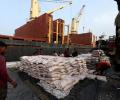
India's exports saw a significant increase of 26.12 per cent to USD 43.81 billion in August, leading to a narrowed trade deficit of USD 26.86 billion, driven by strong demand from key global markets and diverse sectors.

The 200-DMA is a closely watched indicator of a stock's long-term trend and can serve as an early warning of trouble.

'The political leadership is very clear that we have to move towards the integration of the three services into theatre commands.'

Sivakasi, India's fireworks capital, is eyeing global markets as green crackers, rising demand and interest from overseas buyers offer a chance to challenge China's dominance.
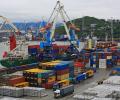
India's merchandise exports increased by 19.63 per cent to USD 44.24 billion in July, primarily driven by petroleum products, while a significant rise in imports pushed the trade deficit to a six-month high of USD 31.98 billion.

Indian jewellers reported robust demand for gold and silver on Dhanteras, with gold sales by value estimated to increase by 15-20 per cent to approximately Rs 60,000 crore, driven by a recent drop in prices. However, volumes are expected to remain flat compared to last year due to overall higher price levels.

Indian Oil Corp is ranked highest at 161st in the Fortune 500 list.

India's exports increased by 15.5 per cent to USD 40.41 billion in June, but the trade deficit significantly widened to a record USD 30.43 billion due to a 31 per cent surge in imports.

The RBI can slow the rupee's fall, but lasting stability depends on tackling the root causes of depreciation and attracting foreign investment.

Citron, a brand under Stellantis, anticipates that three-fourths of its sales in India will originate from Tier-II, Tier-III, and smaller cities within the next five years, a significant increase from its current 55 per cent, as it expands its retail network beyond major urban centres.

Tata Motors Passenger Vehicles (TMPV) is strategically expanding its international footprint by launching the Nexon, rebranded as Osprey, in South Africa, a move set to significantly boost its export volumes and solidify India's position as a major automotive export hub.

Suzuki Motor Corporation is set to revolutionise its operations by halving vehicle development times and significantly boosting efficiency by 2030, while committing to a diverse multi-powertrain strategy that includes BEVs, hybrids, and carbon-neutral fuels.

India-EU FTA opens a bigger European market for Indian carmakers while giving European brands greater access to India.
India's exports reached a six-month high, growing by 18 per cent to USD 45.2 billion in May, driven by electronic goods, petroleum products, engineering items, and pharmaceuticals. However, the trade deficit widened to USD 28.21 billion due to a 10 per cent rise in imports, particularly petroleum products and gold, amidst surging crude oil prices.

Volkswagen, a long-standing but minor player in India's fiercely competitive automotive sector, is now exploring a strategic partnership with the JSW group, aiming to revitalise its market presence, enhance profitability, and potentially establish India as a key export hub for electric vehicles.
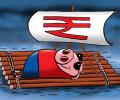
India is actively integrating payment system harmonisation into its Free Trade Agreement (FTA) negotiations, especially with countries hosting a large Indian diaspora. This strategy aims to leverage India's growing fintech ecosystem, facilitate cross-border financial services, and position India as a global hub for financial services exports, particularly through platforms like GIFT City.

koda Auto Volkswagen India is actively exploring various approaches to penetrate India's burgeoning electric vehicle (EV) market, including importing global models, local assembly, and developing highly localised products, as EV penetration is expected to reach 17-18% by the end of the decade.

India's milk supply is struggling to keep pace with rising demand as heat, fodder shortages and low animal productivity threaten dairy production.

With passenger vehicles (PVs), two-wheelers and three-wheelers registering double-digit growth, manufacturers raise production as the industry enters the festival season.

Hyundai Motor India is set to outpace the broader passenger vehicle market, projecting an 8-10 per cent domestic sales growth in H2FY27, fueled by strategic launches of a new mid-size SUV and a dedicated electric vehicle, alongside increased production capacity.
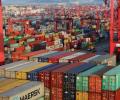
India's exports recorded a 13.78 per cent increase to USD 43.56 billion in April, marking the highest monthly outbound shipments in over four years, primarily driven by petroleum products. However, the trade deficit widened to a three-month high of USD 28.38 billion due to a 10 per cent rise in imports.

India is set to import 1 million tonnes of raw sugar at zero duty after domestic stocks fell sharply and prices surged ahead of the festival season.

The gems and jewellery industry anticipates challenging times following the government's decision to increase gold import duty to 15 per cent, a move that exporters warn could fuel the grey market and heighten smuggling risks.

'If you listen to a rowdy in a class, he will keep on bullying you.' 'India can say do whatever you want. We will not compromise on anything.'
