
Indian benchmark indices, Sensex and Nifty, rallied significantly following a sharp decline in crude oil prices. This decline was triggered by US President Donald Trump's announcement of progress in negotiations with Iran towards a peace agreement, which led to renewed optimism in global markets.
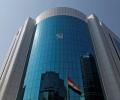
Intellius Recode Ltd has filed preliminary papers with SEBI for an IPO comprising a fresh issue of equity shares and an offer for sale by existing shareholders. The funds will be used to develop digital workers and for general corporate purposes.

Direct plans of mutual fund schemes added nearly 21 million individual investor folios in FY26 (as of February), surpassing regular plans' 15 million net additions, marking only the second time direct plans have outpaced regular plans in annual folio growth, despite turbulent equity markets.

Indian benchmark indices Sensex and Nifty closed lower in a volatile session due to profit-taking in banking and financial shares, despite earlier gains driven by easing geopolitical tensions. Analysts suggest investors remain cautious and are not aggressively chasing the recent rally.

Sensex plunges over 1,400 points and Nifty slips near 22,250 amid Trump's Iran threat, rising crude oil prices, and FII selling. Here are the key reasons behind today's market crash.

'... with the rest split between mid and smallcaps, as valuations are becoming more attractive across segments.'
Indian equities on Dalal Street saw volatility as global market trends and fresh tariff concerns linked to Donald Trump impacted investor sentiment. Track Sensex, Nifty50 movement and key market drivers for April 2, 2026.

Indian markets on Dalal Street rallied sharply as easing tensions in the US-Iran conflict and stable oil prices boosted sentiment. Track Nifty 50 and BSE Sensex performance and key global triggers.

Indian stock markets are poised for volatility this week, driven primarily by the outcomes of five state assembly elections, ongoing high crude oil prices amid West Asia tensions, and the release of Q4 corporate earnings, according to market analysts.

The Indian rupee weakened against the US dollar due to sustained foreign fund outflows and uncertainties in West Asia, although lower crude oil prices and a positive opening in domestic equity markets limited the losses.

The Indian rupee saw a significant appreciation against the US dollar following President Trump's suspension of military strikes against Iran and the Reserve Bank of India's decision to maintain its key interest rate. Market sentiment was further buoyed by positive comments from the RBI regarding the health of the banking sector.
Indian benchmark indices Sensex and Nifty rallied nearly 1 per cent, driven by optimism over easing geopolitical tensions in the Middle East and fresh foreign fund inflows, with the Sensex gaining over 500 points.

Foreign investors have withdrawn over Rs 88,000 crore from Indian equities this month, driven by geopolitical tensions, a weak rupee, and concerns about rising crude oil prices.

Indian stock markets are set to be influenced by ongoing developments in the US-Iran conflict, fluctuations in crude oil prices, and the latest quarterly earnings reports from major corporates, with foreign investor activity also playing a crucial role.

Indian companies are increasingly turning to share buybacks as a preferred payout strategy, driven by recent tax framework changes that make them more tax-efficient for non-promoter shareholders and a fall in stock prices.
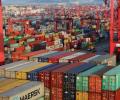
India's first maritime lender, state-owned Sagarmala Finance Corporation Ltd (SMFCL) hit the ground running with a Rs 4,300 crore disbursement announcement last Tuesday, within months of being registered as a non-banking financial company (NBFC) in June 2025.

Mahindra & Mahindra (M&M) is largely bullish among analysts following its Q4FY26 results, driven by strong SUV demand, a robust product pipeline, and improving growth visibility across segments, despite near-term margin pressures from rising commodity costs and potential weakness in the tractor cycle.

Indian markets on Dalal Street rallied sharply as easing tensions in the US-Iran conflict and stable oil prices boosted sentiment. Track Nifty 50 and BSE Sensex performance and key global triggers.

IT services giant Wipro's board has given the green light to a massive Rs 15,000 crore share repurchase programme, aiming to buy back over 5 per cent of its equity, or up to 60 crore shares, from shareholders at Rs 250 per share, reflecting an 18 per cent premium.
Indian benchmark indices Sensex and Nifty rebounded sharply on Monday, driven by a correction in crude oil prices due to ceasefire efforts in West Asia and strong buying in bank stocks.

Indian markets on Dalal Street rallied sharply as easing tensions in the US-Iran conflict and stable oil prices boosted sentiment. Track Nifty 50 and BSE Sensex performance and key global triggers.

'22 students are fighting over 35,000 seats. In that situation, when someone tells a desperate parent there is a shortcut, and the shortcut costs Rs 3 to Rs 5 lakh versus Rs 1.5 crore -- the maths is seductive.'

Only 2.5 per cent of the equity in Jio Platforms will be offloaded through the OFS route -- meant for secondary share sale.

Equity benchmark indices Sensex and Nifty tumbled in early trade on Monday, with the 30-share BSE Sensex falling 1,613.09 points and the 50-share NSE Nifty plunging 495 points, as the failure of US-Iran negotiations heightened concerns of a prolonged conflict driving crude oil prices sharply higher. Track Sensex, Nifty50 movement and key market drivers for April 13, 2026.

The Indian rupee depreciated by 32 paise to close at 92.83 against the US dollar, influenced by escalating global tensions, particularly the US-Iran conflict, and the deadline for the RBI's instructions to banks to curb overnight positions.

The Indian rupee rebounded against the US dollar after the Reserve Bank of India (RBI) restricted banks' net open positions in dollars. This move prompted banks to sell dollars, providing temporary support for the rupee amidst ongoing geopolitical tensions and rising oil prices.

'The outlook for the next Samvat is more constructive, as many of the earlier drags are gradually becoming supports.'

Godrej Properties Limited (GPL) reported its highest-ever quarterly profit of 649.5 crore in Q4 FY26, a 70.13 per cent year-on-year increase, driven by record revenues and bookings. The company aims for over 39,000 crore in residential bookings for FY27 and plans to raise up to 3,000 crore through debt securities.
Indian stock markets experienced a significant rally following the announcement of a US-Iran ceasefire, coupled with a drop in crude oil prices. The Sensex and Nifty both closed nearly 4 per cent higher, mirroring gains in global markets.

Indian stock markets tumbled sharply with the Sensex falling 800 points and nearly 4 lakh crore wiped out in a single session. Here are the 6 key factors, including rupee weakness and global cues, behind the crash.

Retiring at 50 is not unrealistic. It simply requires: Discipline + Long-Term Vision + Compounding

One consortium is led by Manipal Hospitals' Dr Ranjan Pai along with US private equity firm KKR and Singapore investment major Temasek. The other is a combine of Swedish private equity firm EQT and Premji Invest, the investment office backed by Wipro founder Azim Premji.

Researchers have developed an AI-enabled framework to help retailers understand and respond to changing consumer sustainability preferences. The framework uses machine learning to identify consumer segments in real time and translate analytics into business strategies.

Delhi Police have dismantled a cyber fraud operation that used a fake online investment platform to deceive victims, leading to the arrest of three individuals involved in the scheme.

The Indian rupee weakened to a record intra-day low against the US dollar due to a strengthening greenback, continuous foreign capital outflows, and elevated global crude oil prices amidst the West Asia conflict.

Indian stock market indices Sensex and Nifty experienced a decline in early trade due to surging crude oil prices and ongoing geopolitical uncertainty in West Asia. Foreign fund outflows further contributed to the negative sentiment.
Indian equities on Dalal Street saw volatility as global market trends and fresh tariff concerns linked to Donald Trump impacted investor sentiment. Track Sensex, Nifty50 movement and key market drivers for April 9, 2026.

Supreme Court judge Justice B V Nagarathna stated that judicial independence in the modern era includes freedom from algorithmic influence, emphasising that AI should only assist judges, who must ultimately decide based on constitutional values and human judgment.

The Indian government has refuted claims of an impending Rs 25-28 per litre hike in petrol and diesel prices post-assembly elections, stating no such proposal is under consideration by the Ministry of Petroleum and Natural Gas.

Despite geopolitical tensions and FII outflows, Indian small and midcap stocks have not only recovered losses but are also outperforming largecap indices, driven by attractive valuations, domestic institutional support, and a rebound in earnings.
