
Mutual funds (MFs) scooped up smallcap shares across sectors such as healthcare, banking and financial services in March 2024 amid a near 4.5 per cent fall in key smallcap indices. Aster DM Healthcare, NLC India, and Aavas Financiers topped the list of most-bought stocks in the Rs 10,000-40,000 crore market capitalisation (mcap) bracket, according to a study by Nuvama Alternative & Quantitative Research. Aster and Aavas had corrected by 13 per cent and 10 per cent in March, respectively, while NLC India ended the month with a 2.5 per cent gain.

The ongoing fourth quarter earnings season, global factors and macroeconomic data would guide the trends in the equity markets this week, analysts said. Markets would also take cues from trading activity of foreign investors, rupee-dollar trend and movement of global oil benchmark Brent crude. "Domestically, the next batch of Q4 earnings reports will drive stock-specific movements, Hero MotoCorp, Larsen & Toubro, BPCL, State Bank of India, Eicher Motors and Tata Motors are some of the big names in the list and the next phase of voting," said Pravesh Gour, senior technical analyst, Swastika Investmart Ltd.
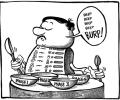
Indian food services sector is expected to grow at a CAGR (compounded annual growth rate) of 8.1 per cent between 2024 and 2028 on the back of rapid urbanisation, robust GDP growth, a rising younger population, and greater exposure among consumers, said a new report. The India Food Services Report-2024, brought out by the National Restaurants Association of India (NRAI), states that the sector contributes 1.9 per cent to India's GDP and is projected to grow to Rs 7.76 trillion by 2028 from Rs 5.69 trillion currently.

It is advisable to file your ITR right away and not rely on potential extensions.

So far this year, bankers have earned Rs 1,226 crore for handling 45 IPOs, which together mobilised Rs 48,363 crore.

A group comprising top tech startups and unicorns has raised several "serious concerns" over a platform-based gig workers Bill proposed by the Karnataka government, saying it would hurt the ease of doing business. They told the state government the Bill in its current form would hamper operations and increase regulatory and compliance burden on the nascent gig and startup economy, according to sources.

The spring/summer end-of-season sales have been advanced by a week with brands having high inventories due to weak demand in May because consumers avoided shopping in the hot month.

'IPOs have performed exceptionally well, with a notable increase in average ticket size from Rs 800 crore in the last financial year to around Rs 1,300 crore in this financial year.'

Despite steady loan growth, the banking sector is expected to report subdued margins in the quarter ending June 2024 (Q1FY25), driven by high demand for deposits amidst tight liquidity conditions. However, according to Bloomberg analysts, listed banks are forecasted to see a 14.5 per cent year-on-year (Y-o-Y) increase in net profit. Estimates showed that banks' net interest income (NII), and revenues from interest minus interest expenses might grow 11.9 per cent Y-o-Y.

A taxpayer who does not revise their return within the stipulated deadline would be stuck with the original return, including its errors.

The fallout from the Justice K Hema Committee report on harassment and abuse in the Malayalam film industry intensified on Monday as a case was filed against well-known filmmaker Ranjith, and several female actors stepped forward with disturbing accounts of the mistreatment they faced at the hands of their various male counterparts.

While other backward classes had a share of 9 per cent, there were no scheduled tribe billionaires.

The Reserve Bank on Wednesday approved a Rs 2.11 lakh crore dividend payout to the central government for 2023-24, more than double the amount it paid for the previous 2022-23 financial year. The decision was taken at the 608th meeting of the Central Board of Directors of the Reserve Bank of India held under the chairmanship of Governor Shaktikanta Das.

In her Budget speech, Finance Minister Nirmala Sitharaman on Tuesday underlined the need for collaboration between the Centre and states to take up the next-generation reforms covering land, labour, capital and entrepreneurship. As far as revenue share goes, the government has projected to give about 32.5 per cent of central taxes to states during FY25, against the 15th Finance Commission's recommendation of 41 per cent, according to the Union Budget estimate.

'Asset allocation should be driven much more by long-term factors rather than the market scenario at any particular point in time.'
Fund managers are keeping cash in hand amid strong inflows and elevated valuations in the small and midcap space. Stress data shows that nearly half of the schemes in the smallcap space are holding cash of 5 per cent or more at the end of February 2024. By comparison, only 20 per cent of the midcap schemes had over 5 per cent cash in their portfolio during the same period.

Commercial banks have turned cautious in lending to smaller microfinance institutions (MFIs), which has compelled the latter to borrow from non-banking financial companies (NBFCs) at much higher rates. Recently Reserve Bank of India (RBI) Deputy Governor M Rajeshwar Rao slammed micro lenders for increasing their margins "disproportionately" and said these lenders were quick to pass on the increased cost to the borrowers but reluctant to pass on the benefits under the new regime, where margins are not capped.

Younger people, who usually have a longer investment horizon which allows them to handle the interim volatility, may go for them.

'Every report I filed for Rediff.com on the professor's incarceration, would leave me wondering for days, at the depth of the State's malevolence towards this disabled professor, and his equally deep capacity to tolerate it,' recalls Jyoti Punwani.' 'No country in the world would do what our country was doing to someone so helpless.'

Indian real estate market remained buoyant in January-June this year, with housing sales hitting an 11-year high at 1.73 lakh units and office demand at a record 34.7 million square feet across eight major cities, according to Knight Frank. On an annual basis, housing sales rose 11 per cent to 173,241 units while leasing of office space grew 33 per cent to 34.7 million square feet during January-June this year across eight major cities. Shishir Baijal, chairman and managing director, Knight Frank India, said, "India's real estate market has been buoyant in the last few quarters owing to the strong economic fundamentals and stable socio-political conditions."
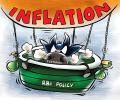
The Reserve Bank of India on Friday retained its projection for retail inflation at 4.5 per cent for the current fiscal assuming a normal monsoon, while emphasising that uncertainties related to food price outlook warrant a close monitoring. Consumer Price Index (CPI)-based retail inflation has been projected at 4.5 per cent with quarter-wise projections at 4.9 per cent in Q1 (April-June), 3.8 per cent in Q2, 4.6 per cent in Q3, and 4.5 per cent in Q4.
Amid a debate on the basis of a monetary policy stance, one may be curious enough to know how non-food retail inflation has behaved over the years in India. Let the eager souls catch a glimpse of facts. In the past 10 years, non-food inflation came down below 4 per cent on two occasions - pre-Covid period of 2019-20 and now in the first four months of the current financial year (FY25).

'PPF carries minimal risk.' 'Its fixed-income nature allows investors to diversify their portfolios.'

Domestic macroeconomic data announcements, global trends and trading activity of foreign investors would guide market sentiments this week, analysts said. After a record rally, markets may face volatile trends this week amid elevated valuations and investors would also keep a track of global oil benchmark Brent crude and rupee-dollar movement for further cues. "Potential volatility in the stock market is anticipated this week. Elevated valuations remain a concern, with investors now focusing on monsoon progress and its impact on the rural economy.

'The youth is stressed and students are depressed.'

"The Union government has authorised the release of tax devolution of Re 72,961.21 crore to state governments for the month of November 2023, on 7th November instead of the usual date 10th November," the Union finance ministry said in a statement.

Submitting a late return helps you stay compliant with tax regulations and avoid legal issues.

Sebi has barred Ravindra Bharti Education Institute, co-founded by finfluencer and YouTuber Ravindra Balu Bharti, from the securities market and directed to deposit Rs 12 crore "unlawful gain" earned from the alleged unregistered investment advisory business. It has been directed to deposit the amount to an interest-bearing escrow account created specifically for the purpose in a nationalised bank. Additionally, the regulator has barred Ravindra Balu Bharti, his wife Shubhangi Ravindra Bharti and directors -- Rahul Ananta Gosavi and Dhanashri Chandrakant Gosavi -- from the securities market.

Despite the rally in equities over the last few years, India, according to Christopher Wood, global head of equity strategy at Jefferies, is still in early stages of an equity cult. Any changes to the capital gains tax for equities - both long-term and short-term - in Budget 2024 scheduled to be announced on July 23, he believes, can trigger a bigger correction that what the markets witnessed post the Lok Sabha election outcome on June 4 that saw the Bharatiya Janata Party (BJP) lose majority, though it was able to form the government with the help of coalition partners.

Keeping surplus money in a bank account has become perilous, alerts Harsh Roongta.

Amidst strained ties with China, the pre-budget Economic Survey on Monday made a strong case for seeking foreign direct investments (FDI) from Beijing to boost local manufacturing and tap the export market. As the US and Europe are shifting their immediate sourcing away from China, it is more effective to have Chinese companies invest in India and then export the products to these markets rather than importing from the neighbouring country, the Survey said.

The wholesale price index (WPI)-based inflation rose in December at 0.73 per cent mainly due to a sharp rise in food prices. The WPI inflation was in the negative zone from April to October and had turned positive in November at 0.26 per cent.

The Indian economy continues to sustain the momentum achieved in the first half of 2023-24 and expectations of a fresh round of capex by the corporate sector is likely to fuel the next leg of growth, the Reserve Bank Bulletin said on Tuesday. "The likelihood of the global economy exhibiting stronger than expected growth in 2024 has brightened in recent months, with risks broadly balanced," said an article on 'State of the Economy' published in the bulletin.
Worries related to the Iran-Israel conflict, quarterly earnings and foreign investors' trading activity are the key factors that would dictate stock markets this week, analysts said. Besides, trends in Brent crude oil and movement of the rupee against the dollar will also be crucial factors. This week will be crucial for the market amid ongoing worries about the conflict between Iran and Israel, said Pravesh Gour, Senior Technical Analyst, Swastika Investmart Ltd.

Net foreign direct investment (FDI) in India, inflows minus outflows, declined 38.4 per cent year-on-year to $15.41 billion in the first 10 months of this financial year due to an increase in the repatriation of capital. According to the Reserve Bank of India's data in the March 2024 bulletin, FDI in India was $25.53 billion and outflows were $10.11 billion in April 2023-January 2024. In the same period last year, FDI inflows stood at $36.75 billion and outflows at $11.75 billion.

The Insurance Regulatory and Development Authority of India (IRDAI) has removed the age cap on buying health insurance policies, effective from April 1, 2024. Earlier, individuals were restricted to purchasing new insurance policies only until the age of 65. However, after the recent changes that have come into effect from April 01, 2024, anyone, regardless of age, is eligible to purchase a new health insurance.
As order books gain from India's increased capital outlay, some large capital goods and engineering companies are together spending over Rs 11,500 crore in creating new facilities, data shows. Nine engineering and capital goods companies, where data was available, including Siemens, Larsen & Tourbo (L&T) and KEC International, have a combined capital expenditure (capex) of about Rs 11,500 crore or more. Others such as ABB India and Thermax Global are also adding capacities.
In a data-packed week, the domestic macroeconomic figures -- industrial production and inflation numbers -- along with global trends would dictate trends in the equity market this week, analysts said. According to experts, markets may face volatile trends due to high valuations. Equity benchmark indices Sensex and Nifty hit their fresh record peaks on Thursday. Besides, trading activity of foreign investors, movement of global oil benchmark Brent crude and rupee-dollar trend would also influence trading in equities.

Private credit is fast emerging as a major source of finance for projects in India as several entrepreneurs are looking for short-term debt to bridge the funding gap due to difference in pricing for equity dilution, top officials at PwC India said. They said while new private equity (PE) investments during the past two years have declined, several public market exits by PEs were observed during that period. Several companies are likely to approach capital markets in the near future to provide liquidity to PE fund investors.
Chief executive officers (CEOs) across sectors have expressed intentions to expand capacities, expecting the government's target to invest a record Rs 11.11 trillion on infrastructure development will act as a catalyst for a jump in consumer demand. "With the government planning a capex of Rs 11.11 trillion, private sector investment will come in a big way. Companies will be preparing for it right from today," H M Bangur, chairman of Shree Cement, told Business Standard. For the past few years, the investment scene in India has been dominated by government capital expenditures; private investments in the manufacturing sector have remained muted.
 © 2026 Rediff.com - Investor Information - Advertise with us - Disclaimer - Privacy Policy - Sitemap - Feedback - About us - Terms of use - Grievances