
Listed capital market companies in India delivered strong fourth-quarter earnings growth, with a universe of 12 firms posting 30 per cent year-on-year revenue growth and 19 per cent earnings growth in Q4FY26, despite mark-to-market (MTM) losses impacting headline profitability for some.

Loans to micro, small and medium enterprises (MSMEs) in India saw moderated growth in April 2026, with early signs of stress emerging among micro borrowers and manufacturers, according to a report by credit bureau CRIF High Mark. The slowdown is attributed to potential impacts of global uncertainty.

Chief Economic Advisor V Anantha Nageswaran stated that India's economy is projected to return to a 7 per cent-plus growth trajectory by 2027-28 (FY28), or sooner if external conditions improve, despite near-term challenges from the West Asia crisis.

Ed-tech unicorn PhysicsWallah is strategically targeting a 30% revenue improvement by FY27, leveraging AI-led automation, aggressive expansion into southern Indian markets, and a strong focus on student learning outcomes and enrolment growth.

India's economy registered a robust 7.7 per cent growth in the fiscal year 2025-26, an increase from 7.1 per cent in the previous year, with the January-March quarter alone seeing a 7.8 per cent expansion.

Indian benchmark indices Sensex and Nifty closed marginally lower due to profit-taking, following the Reserve Bank of India's decision to keep the repo rate unchanged while lowering its growth expectations for the current fiscal year and forecasting higher inflation.

The Bank Nifty is currently trading at a 43.5 per cent discount to the Nifty 50, near its widest gap since 2015, reflecting investor pessimism despite the banking sector's strong earnings growth.

Major life insurers in India reported close to double-digit growth in the value of new business (VNB) last financial year, primarily driven by increased sales of high-margin protection and non-participating (non-par) products.

The BCCI has decided to assist the cricket boards of Fiji and Maldives in developing the sport by sending coaches and providing other support. This initiative aims to strengthen the ICC's efforts to grow cricket in emerging nations, building on previous BCCI assistance to countries like Afghanistan and Nepal.

India's manufacturing sector activity reached a three-month high in May, with the HSBC India Manufacturing Purchasing Managers' Index (PMI) rising to 55.0, driven by robust domestic demand, infrastructure projects, and new business gains despite ongoing inflationary pressures.

India's leading listed real estate developers are increasingly focusing on pan-India expansion, diversifying beyond their traditional home markets into high-demand residential areas like MMR, NCR, Bengaluru, Hyderabad, Pune, and Chennai to tap broader housing demand and reduce reliance on single-city market cycles.

State Bank of India Chairman C S Setty has expressed support for a 'pause' in policy rates by the Reserve Bank of India's monetary policy committee, believing it will help stabilise conditions and support economic growth. He also urged investors to look beyond short-term equity market movements and focus on India's structural transformation, driven by reforms and digital infrastructure.

India's toll collection growth is projected to moderate to 5-7 per cent year-on-year in FY27, a 150-200 basis points reduction, primarily due to the economic impact of the West Asia conflict and a slowdown in commercial traffic, according to Crisil Ratings.

Indian mutual funds have significantly reduced their exposure to the information technology (IT) sector, with holdings now at an eight-year low of 6.7% in April 2026, driven by weak earnings growth, global demand slowdown, and concerns over AI-led disruption.

India's industrial production expanded at a slower pace of 4.9 per cent in April, primarily due to tepid growth in the energy sector amidst the West Asia crisis. This data marks the first release under the newly revised base year of 2022-23 for the Index of Industrial Production (IIP).

Bharat Forge reported modest Q4FY26 results but provided strong guidance, anticipating significant growth from its defence, aerospace, and data centre segments, with a projected 25 per cent revenue growth in Indian manufacturing for FY27, despite current high valuations.

N Chandrasekaran, chairman of Tata Consumer Products (TCPL), stated that India continues to experience credible economic growth, driven by strong demographic fundamentals and accelerating digital public infrastructure, despite a fragmented global landscape.

API Holdings, the parent company of online pharmacy PharmEasy, has significantly reduced its debt from 1,800 crore to 1,050 crore and refinanced it at lower interest rates under CEO Rahul Guha, shifting its focus from 'growth at any cost' to profitability and aiming for a debt-free balance sheet before a potential stock market listing.

Moody's Ratings has reduced India's GDP growth forecast for 2026 to 6 per cent, citing subdued private consumption, capital formation, and industrial activity due to higher energy costs and global uncertainties.

Piramal Pharma anticipates a significant turnaround in financial year 2026-27 (FY27), projecting early-to-mid teens revenue expansion and a sharp improvement in profitability, driven by improved business momentum, new product acquisitions, and structural tailwinds.

Union Minister Ashwini Vaishnaw highlights the growing demand for AI-related jobs in India and the transformation needed in the IT industry. He also mentions significant investments in data centres and subsea cable networks to boost digital infrastructure.

A prolonged supply shock can transmit to lower incomes, and dampen confidence and sentiment, warns Aditi Nayar, chief economist, head-research and outreach, ICRA.
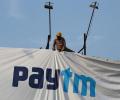
Global brokerage firm Jefferies has reiterated its 'Buy' rating on Paytm, stating that the company's growth engine and profitability will remain intact despite regulatory action on its associate entity Paytm Payments Bank Ltd (PPBL). The company has maintained its price target of Rs 1,350, implying an 18 per cent upside.

Domestic passenger vehicle dispatches in India rose 25.4 per cent year-on-year to 4,37,312 units in April, continuing the strong demand momentum from the previous fiscal year, according to SIAM.

As the 2026 FIFA World Cup comes to the United States, Bay Area soccer clubs and supporters hope the tournament will inspire a new generation of fans and strengthen the region's thriving grassroots football culture.

India's manufacturing sector experienced a mild recovery in April, with the HSBC India Manufacturing Purchasing Managers' Index (PMI) rising to 54.7 from 53.9 in March. However, inflationary pressures intensified, with input costs increasing at the fastest pace since August 2022, largely attributed to the Middle East conflict.

Haryana recorded the fastest growth in unincorporated non-agricultural employment among major Indian states in 2025, with a 29.8 per cent increase to 3.1 million workers, while Gujarat experienced the sharpest contraction, declining by 12.6 per cent to 8 million.

ServiceNow, a leading AI platform for business transformation, is highly optimistic about its growth prospects in the Indian market, according to President and Chief Product Officer Amit Zavery.

Dabur India's stock has fallen over 17 per cent since the start of the Iran war, driven by concerns over a weak monsoon, the West Asian crisis, and rising input costs, which are expected to impact the company's revenues and margins, particularly affecting its significant rural sales and international markets.

A new study suggests the mechanical load from the constant beating of the heart may suppress cancer cell growth, offering insights into why heart cancer is rare. Researchers found that cellular pathways in heart tissues alter gene regulation in cancer cells, preventing proliferation.

Mahindra & Mahindra (M&M) is largely bullish among analysts following its Q4FY26 results, driven by strong SUV demand, a robust product pipeline, and improving growth visibility across segments, despite near-term margin pressures from rising commodity costs and potential weakness in the tractor cycle.

Nasscom's newly appointed Chairman, Srikanth Velamakanni, outlines key priorities including restoring revenue growth in IT firms and promoting the role of artificial intelligence and other technologies in companies.

India's services sector growth reached a five-month high in April, with the HSBC India Services PMI Business Activity Index rising to 58.8, primarily driven by robust domestic demand and a shift from international to local suppliers amidst the West Asia crisis.

India's like-for-like gross Goods and Services Tax (GST) revenue growth slowed to a five-year low of 5.57 per cent in FY26, reaching Rs 23.32 trillion, primarily driven by a significant surge in import revenues.

Mahindra & Mahindra Ltd reported a significant 48.5 per cent jump in consolidated profit after tax to Rs 5,259.91 crore in the March quarter, primarily attributed to strong performance in its auto and farm sectors, alongside ambitious plans for new SUV and EV launches.

Infosys has been recognised as the leading company for career growth in India, according to LinkedIn's '2026 Top Companies' list. The list, dominated by tech firms, consulting giants, and financial institutions, also features Accenture, Amazon, JPMorgan Chase, and SAP in the top five.

Titan Company's ambitious roadmap to achieve a 20 per cent revenue compound annual growth rate (CAGR) by financial year 2030 (FY30) has garnered a positive outlook from analysts, who highlight the company's strong brand, sourcing capabilities, and diversified portfolio as key strengths.

India's industrial production growth decelerated to a five-month low of 4.1 per cent in March, primarily due to the subdued performance of the manufacturing and power sectors, exacerbated by the West Asia crisis.

Godrej Properties closed FY26 with record bookings and presales, exceeding its annual guidance, but brokerages express concerns over weak cash-flow generation and the ability to sustain growth amidst a muted real estate market.

India's unincorporated non-agricultural sector, excluding construction and corporate enterprises, added approximately 7.5 million workers in a single year, reaching 128.1 million employed in 2025, according to the NSO's ASUSE 2025 report.
 © 2026 Rediff.com - Advertise with us - Disclaimer - Privacy Policy - Sitemap - Feedback - About us - Terms of use - Grievances