

'Techies who did a master's there and moved to US companies look down on Indian companies who they consider as just doing body shopping.'
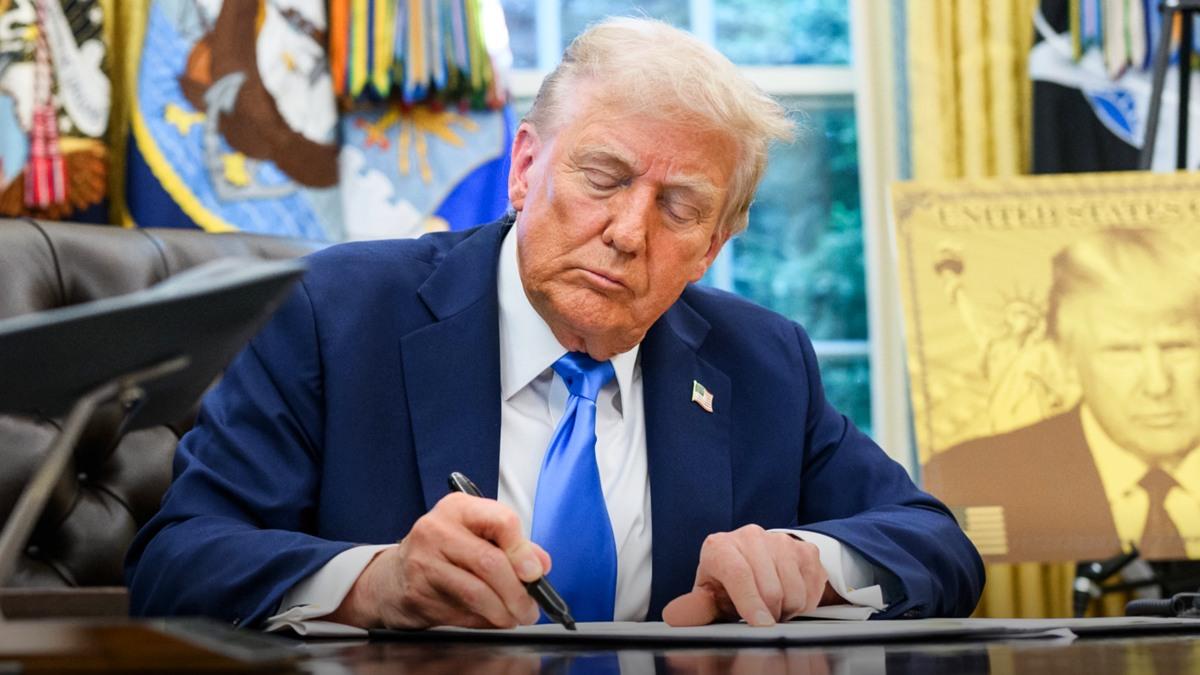
A father of an Indian currently working in the United States explains to Syed Firdaus Ashraf/Rediff the dilemma and choices confronting young Indians on an H1B visa. He agreed to speak on condition that his identity would not be revealed for obvious reasons.
My son, who is on an H1B visa, had gone to the US after completing his bachelor's in computer science for a master's in computer science which he completed around 2017 or 2018.
He has been working there since then at a subsidiary of a top tech company. So, he has been in the US for about nine years.
In Trump's first tenure, he faced similar issues because major tech companies who used to come to their campus where he was doing his master's for placements stopped coming overnight in the first year or two of Trump's first tenure.
He, like many others, was left stranded as he could not get a job from campus placements.
He applied on his own to various places and he was lucky to get interviewed by this tech company's subsidiary and then join them. This is where he currently is all these years.
This generation which graduated with good degrees and a good or above average academic record to the US -- my son is from a BITS Pilani campus and BITS Pilani has a tradition of a large number, I would say maybe even double high double digits percentage, or even half the students in some particular courses, always going abroad for a master's to the US and not taking jobs post undergrad. So, he comes from this background.
This segment of students is very different from the large segment of students who is graduating from second rung colleges in India and then joining Indian tech companies after graduation at 3-4 lakhs rupees per annum and then getting body shopped to the US to work for US clients on an H1B.
This latter segment probably gets $80K per annum from their Indian company as opposed to the ones who do master's abroad and then join a large or medium-sized corporation in the US at say $120K per annum. My son falls in this latter cohort.
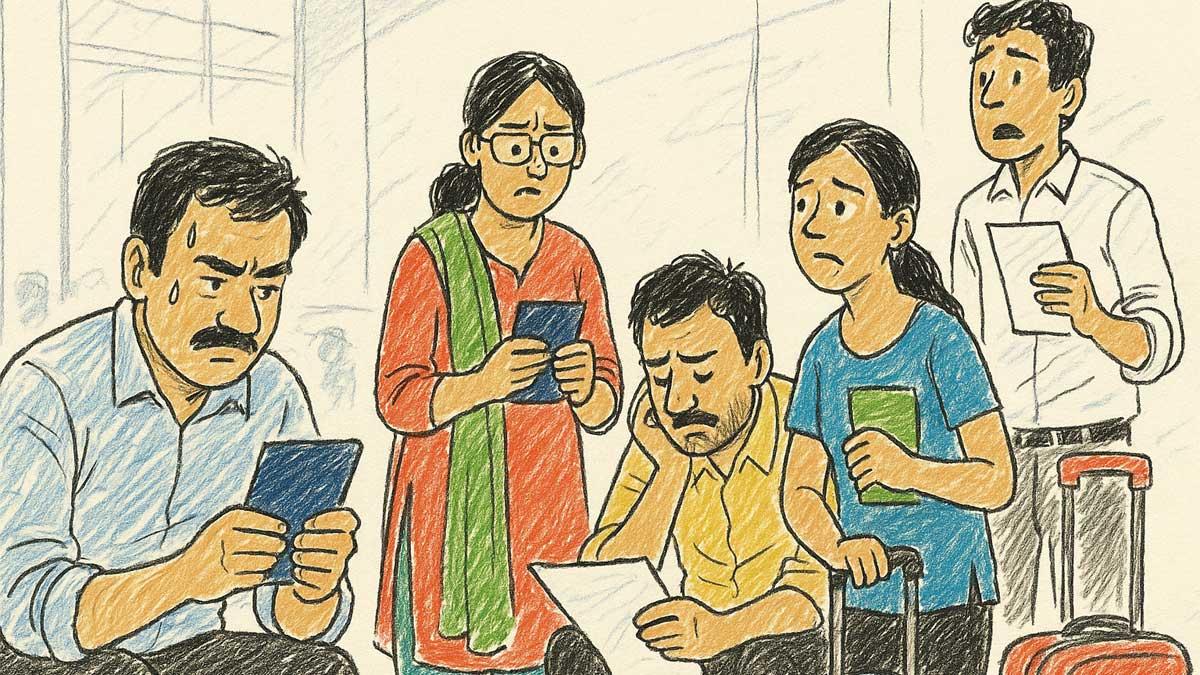
People like my son who go abroad as a matter of course for further studies are not necessarily thinking about settling down there on a long-term basis.
They are looking for higher education to get satisfying jobs that will get them off on a good career.
I would say even the joining salary at these big corporations is not the main motivator, it is the job content and importantly the work culture in the US corporations -- which they know by talking to their seniors and some peers -- is much superior to that at Indian companies.
Even in my days when my IIT batchmates moved to the US in the early 1980s, the job and culture were important factors, though those days the US lifestyles and green cards were also important.
Now the days of aspiring for a green card and settling down permanently are gone. This generation -- I am speaking for my son in particular, of course -- is very global in their thinking and they are not really looking at the long term.
They are looking at optimising their career at a point in time here and now. They know they will not get a green card for decades anyway.
Of course, their expectations have got tempered by what has been happening over the last few years.
He is also in the green card queue like many others and they know that they may never get a green card.
This is very different from the previous generation -- my sister, cousins, friends -- where it was very easy to get a green card within a few years.
So, their expectations itself are low or different. They are looking to make a career in a good company and it is the job satisfaction which even motivates them, not even the salaries.
They also believe that if they face a roadblock in the US, their company, which is global, will transfer them somewhere else or they will get some other job offer elsewhere.
This is a very confident generation of people who are working in the field of computer science.
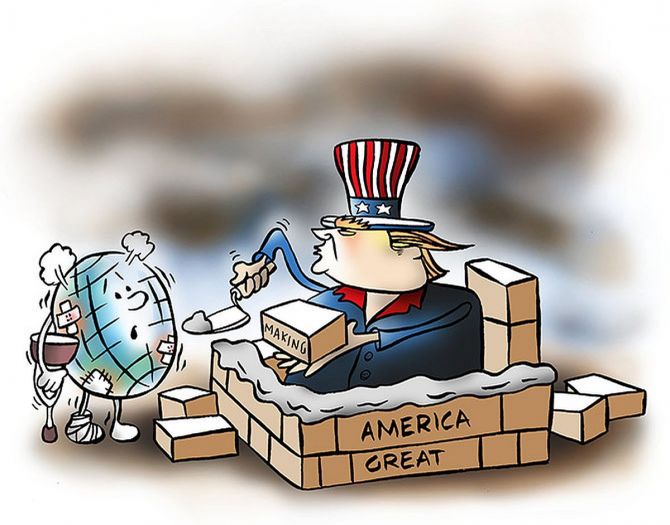
One of his closest friends got laid off by Meta a few days ago and he has time just till early December to find an alternate job. So, there are people impacted.
In his organisation, they have not been recruiting many techies, maybe because of AI. There are a lot of AI projects going on.
The new recruits which are being hired are all been hired to work on AI projects such as making customer service become AI driven.
So, the mood among techies like him is possibly uncertain. But my son personally is a different breed.
He is a little happy-go-lucky and a non-worrying type of person who has inherited that trait probably from his mother. And he has not really revealed his doubts if any to me.
However, he is facing a H1B related hassle. Let me explain. He recently got an H1B visa extension (3 years) in August.
I believe within eight months, by around April 2026 or so, he needs to come at least once to India to get his visa stamped.
His earlier visa extensions happened without a face-to-face interview as far as I remember.
However, there is a new rule which came into being on September 6th, wherein the Trump administration said all short term visas, even people on H1B extensions like my son (he's already had two tenures of H1B now; this is his third extension or third tenure of H1B), needs to have a face-to-face interview in a US consulate, when he travels outside the US, so as to get his visa extension stamped on his passport.
However, he and others who have had their visas extended in August are finding it difficult to get visa face to face appointment slots in US consulates in India.
Only Chennai and Hyderabad consulates offer face-to-face interviews, and none have opened for December (which is the peak season when most people like my son prefer to come to India to get their visas stamped because then they can combine it with the year-end holiday).
There are no appointment slots for December, hardly any even for November, so everybody in tech on an H1B extension in this year's August batch, was sort of already stuck before Friday's announcement.
There is an entire batch of H1B people who are on extension who had their visas renewed waiting to come to India.
To me it seems they have announced this face-to-face appointment thing in Washington, DC without checking whether their consulates are adequately manned to handle so many face-to-face appointments.
Remember, there are B1/B2, fresh H1, H1B extensions and many other visa categories now all waiting for interview slots.
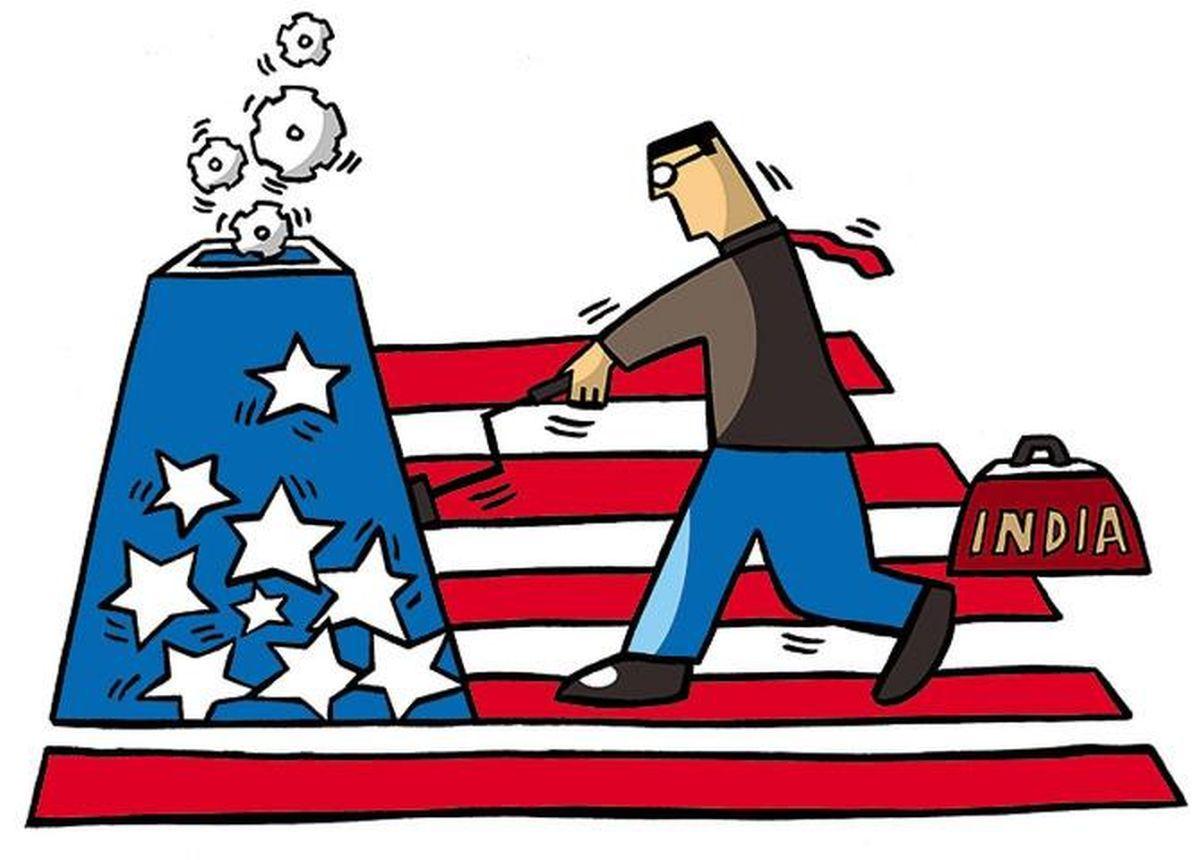
My son is on various Slack groups, etc and other special groups where they discuss these issues. So, he is fully updated as to what is going on.
I do not think they think too deeply about whether they are being unnecessarily targeted; as I said, they live in a different world altogether.
They are global, live for the day. And they are not comparing themselves to their parents and previous generations, it is only their peer group they relate to.
They are taking it as it comes; they have seen this play out since Trump's first term.
I have no idea about the job situation for local Americans, but what I do know is that Americans do not like to do STEM programmes; they like to become lawyers or marketers.
Dan Wang, who lived in China for few years, wrote Breakneck, a book about what is different between the US and China, why the US lags behind China, and the answer in a nutshell is that the leadership in China are engineers while the leadership in America are lawyers.
So, there is a whole culture in America of not doing STEM courses, which is very difficult to change.
Americans are excellent in communication skills, they do law degrees and marketing and whatnot, but when it comes to tech for some reason there are not enough Americans out there who can overnight replace H1B/Indians.
Therefore, there will be a hard choice which the administration will have to make next year because if they really stop these new people coming in next year, then how will US corporations manage? AI may not be able to solve the manpower issue so soon.
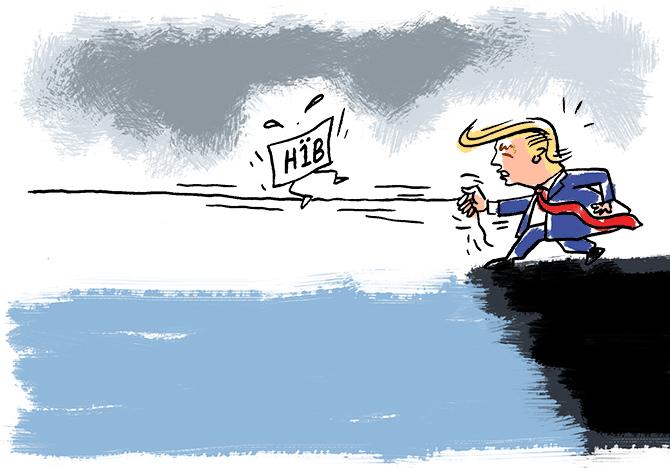
This segment of techies who did a master's there and moved to US corporations/product companies are not considering coming back to India. They look down on Indian companies who they consider as just doing body shopping.
They will certainly manage; they may not want to come back to India because they do not like the infrastructure and the other things here. But the world is an oyster, so they will manage.
Feature Presentation: Rajesh Alva/Rediff







 © 2026