

A meeting with Chinese President Xi Jinping on the sidelines of the SCO summit is being planned.
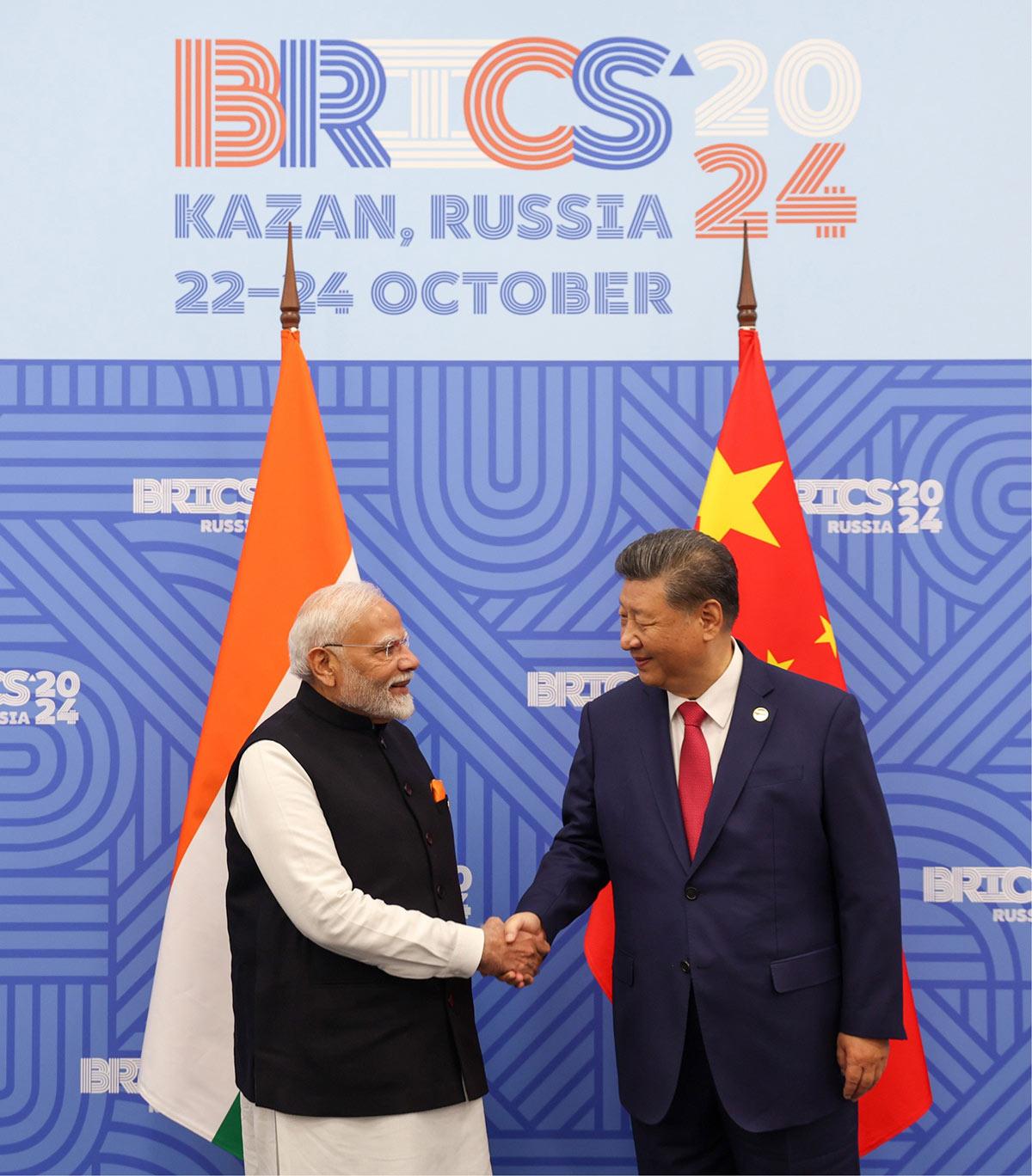
Prime Minister Narendra Modi is set to travel to China at the end of this month -- his first visit to the country in seven years -- to attend the annual summit of the Shanghai Cooperation Organisation (SCO), government sources said on Wednesday.
Ahead of his arrival in China, Modi is slated to visit Japan on August 29.
A bilateral meeting with Chinese President Xi Jinping on the sidelines of the SCO summit is also being planned, the sources said.
While the government has yet to confirm such a meeting, it would likely attract global attention amid heightened tensions in both India-US and US-China relations, following the imposition of tariffs by American President Donald Trump.
Ahead of Modi's trip, Chinese Foreign Minister Wang Yi is expected to visit India for the latest round of the Special Representatives dialogue on the boundary question, according to officials.
On Wednesday, Trump followed through on his warning to impose an additional 25 per cent tariff on Indian goods, citing New Delhi's continued purchase of Russian oil.
The move raises the total US tariff on Indian imports to 50 per cent.
Meanwhile, Russian President Vladimir Putin is also expected to attend the SCO summit, which is due to take place in the Chinese city of Tianjin from August 31 to September 1.
India, China and Russia are not only members of the SCO but also of BRICS, which held its latest summit in Rio de Janeiro in July.
Both Xi and Putin were absent from that gathering, sending deputies in their place.
Sources in New Delhi have not ruled out a possible Modi-Putin meeting on the sidelines of the Tianjin summit.
Ahead of the SCO, National Security Adviser Ajit Doval and External Affairs Minister S Jaishankar are scheduled to travel to Moscow.
At the Rio summit, BRICS nations voiced concern over the rise in unilateral tariff and non-tariff measures that distort global trade and run counter to World Trade Organization rules, though the US was not named directly.
In March, as Washington escalated tariffs on Chinese imports, Wang Yi called for stronger cooperation between New Delhi and Beijing to push back against 'hegemonism and power politics', stating that 'making the dragon and elephant dance is the only choice'.
On April 1, marking the 75th anniversary of India-China diplomatic ties, Xi sent a message to President Droupadi Murmu, saying the two nations should aim for 'a cooperative pas de deux of the dragon and the elephant'.
Modi and Xi last met on October 23, 2024, on the sidelines of the BRICS summit in Kazan, Russia.
The encounter marked a thaw in relations after the severe deterioration triggered by the Galwan Valley clash between Indian and Chinese troops in June 2020.
The Kazan meeting led to disengagement at two key friction points along the Line of Actual Control, completed by November 2024.
It also paved the way for the resumption of the Mansarovar Yatra, tourist visas for Chinese citizens, and discussions on reviving direct flights.
Nevertheless, relations between the two countries have remained bumpy in recent months.
In April, India raised concerns over Chinese restrictions on the supply of rare earth elements.
A month later, it said Beijing provided military assistance to Pakistan during Operation Sindoor, India's offensive to dismantle terrorist infrastructure across the border.
According to Indian officials, Pakistan deployed Chinese weapons and drones, and benefited from Chinese intelligence during the conflict.
India has also been working to deepen ties with several of China's neighbours.
On Tuesday, India and the Philippines signed agreements aimed at enhancing military cooperation.
Their navies also conducted joint exercises near Scarborough Shoal, an atoll in the South China Sea that is the focal point of a maritime dispute between Beijing and Manila.
Modi last visited China in June 2018 for the SCO summit, while Xi last visited India in October 2019.
In the run-up to the Tianjin summit, Defence Minister Rajnath Singh, Jaishankar, and Doval had all visited China for preparatory SCO meetings.
The two sides have also revived the Special Representatives dialogue and other engagement mechanisms.
Pakistan, too, is a member of the SCO. In June, Singh refused to endorse a draft joint statement by the bloc's defence ministers, citing its failure to mention the Pahalgam terror attack and omission of references to Pakistan-backed cross-border terrorism.
Feature Presentation: Ashish Narsale/Rediff










 © 2026