

A new US government report alleges worsening religious freedom conditions in India, urging the US government to designate India as a 'Country of Particular Concern' and consider sanctions.
Key Points
- The USCIRF report alleges a deterioration of religious freedom conditions in India, citing new legislation targeting religious minorities.
- The report recommends designating India as a 'Country of Particular Concern' due to systematic and egregious religious freedom violations.
- USCIRF suggests targeted sanctions on Indian entities like the Research and Analysis Wing (R&AW) and Rashtriya Swayamsevak Sangh (RSS).
- The commission highlights concerns over anti-conversion laws, detentions, expulsions, and vigilante attacks against religious minorities in India.
- The report links future US security assistance and trade policies with India to improvements in religious freedom.
A US federal government commission has flagged the alleged worsening of religious freedom in India and called for it to be designated as a "Country of Particular Concern".
There were no immediate comments from India on the report issued by the US Commission for International Religious Freedom (USCIRF). In the past few years, India rejected the USCIRF reports as "biased and politically motivated".
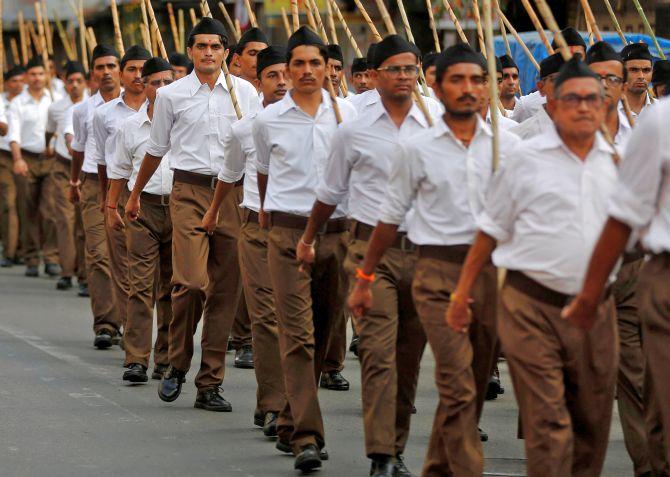
In its annual report, the USCIRF also asked that targeted sanctions be imposed on individuals and entities, such as the Research and Analysis Wing (R&AW) and the Rashtriya Swayamsevak Sangh (RSS), for their "responsibility and tolerance of severe violations of religious freedom by freezing those individuals' or entities' assets and/or barring their entry into the United States."
It recommended to the US government that India be designated as a "country of particular concern," or CPC, for "engaging in and tolerating systematic, ongoing, and egregious religious freedom violations".
The report said that in 2025, religious freedom conditions in India continued to deteriorate as the government introduced and enforced new legislation targeting religious minority communities and their houses of worship.
"Several states undertook efforts to introduce or strengthen anti-conversion laws to include harsher prison sentences. Indian authorities also facilitated widespread detention and illegal expulsion of citizens and religious refugees and tolerated vigilante attacks against religious minority communities," it said.
Concerns over Terrorist Attacks and Anti-Muslim Sentiment
The report also noted the April 22 Pahalgam terror attack against tourists in Jammu and Kashmir. On the attack, the report said, "three gunmen" attacked a group of "predominantly Hindu tourists in the Muslim-majority territory of Kashmir", killing 26 people.
"The perpetrators reportedly asked the victims to recite the Kalma, an Islamic verse, and killed those who were unable to do so. The attack sparked a five-day conflict between India and Pakistan and intensified anti-Muslim sentiment in India, including targeted attacks," it said.
The terror attack was carried out by the Resistance Front, a front for Pakistan-based terror organisation, Lashkar-e-Tayyiba.
USCIRF Recommendations
The report said that future US security assistance and bilateral trade policies with India be linked to improvements in religious freedom.
USCIRF said the US Congress should reintroduce and pass the Transnational Repression Reporting Act of 2024 to "require the annual reporting of acts of transnational repression by the Indian government targeting religious minorities in the United States."
In a statement, USCIRF Chair Vicky Hartzler said, "China arrests underground church members, mob violence is on the rise in India and Pakistan leading to attacks on religious minorities and the destruction of their homes, Burma's military bombs houses of worship, and Tajikistan denies parents the right to teach their children about faith."
"As USCIRF's Annual Report shows, far too many people in key nations are denied religious freedom through unjust laws, discrimination, harassment, violence, and even crimes against humanity. The US government must continue to advance religious freedom abroad to make a difference for those facing religious persecution."
The USCIRF is an independent, bipartisan US federal government agency. It makes policy recommendations to the US President, Secretary of State, and Congress and tracks the implementation of these recommendations.








 © 2026