

'If the BJP seriously addresses employment, examination integrity and systemic corruption, they might salvage their position. Otherwise, they are heading toward serious trouble in 2027.'
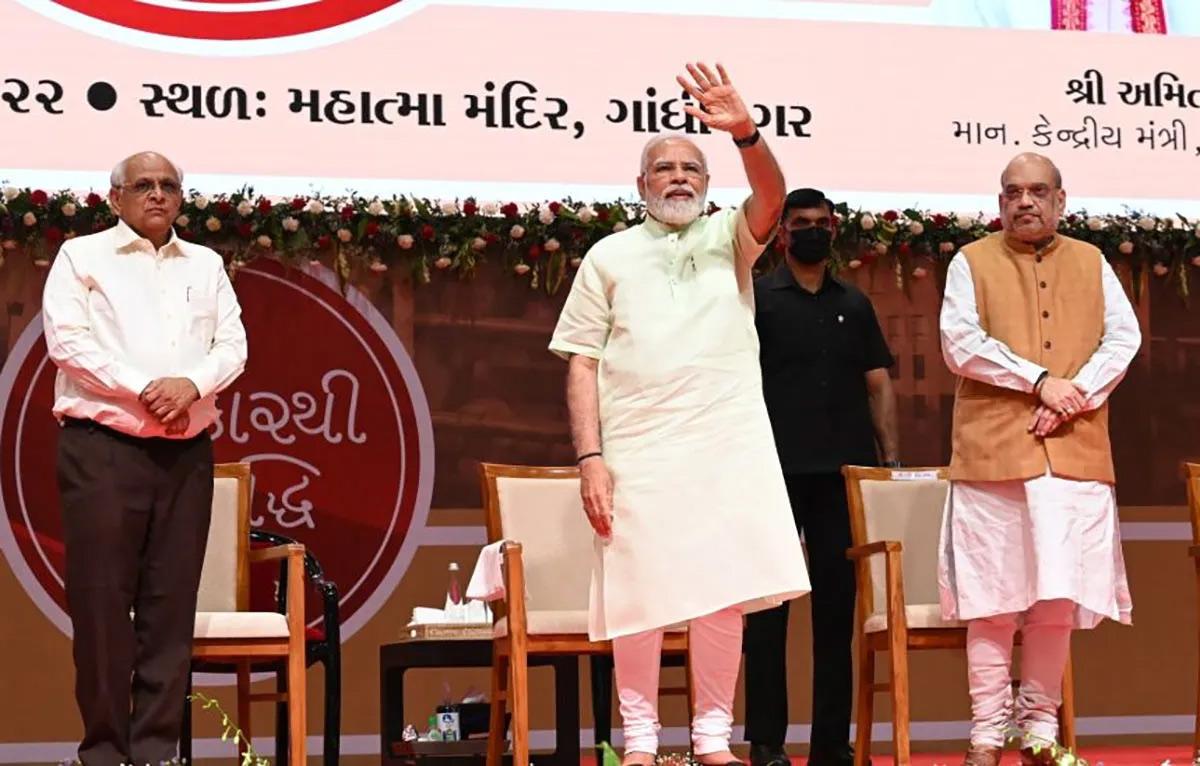
Senior Gujarat journalist and YouTuber Mayur Jani calls Friday's ministeral reshuffle a "nervous" move by a "confused" Bharatiya Janata Party attempting to mask failures rather than address systemic performance issues.
Gujarat Chief Minister Bhupendra Patel's ministry underwent a significant overhaul with 19 fresh faces joining the state government, expanding its strength from 16 to 27 members. The reshuffle, which retained only six senior ministers while replacing most others, has been portrayed by the BJP as a performance-based audit of ministerial work.
In a candid interview with Prasanna D Zore/Rediff, Mr. Jani argues that the reshuffle primarily serves to demonstrate Prime Minister Narendra Modi and Home Minister Amit Shah's continued control over Gujarat politics.
Can you help us understand the rationale behind Gujarat's ministerial reshuffle? Nineteen fresh faces have been inducted, expanding the ministry significantly. How has regional balance been achieved?
Frankly, there was no compelling reason for this reshuffle. The government retained six senior cabinet ministers while replacing most others with new faces. While change isn't inherently problematic, this exercise was fundamentally unnecessary.
What was genuinely required was decisive action against ministers embroiled in serious corruption scandals involving schemes like MNREGA and land irregularities.
The government should have removed them earlier and initiated strict legal proceedings -- setting an example for other politicians. But this administration lacks such moral conviction.
Instead, they waited for this reshuffle, framing it as a performance audit. They claim, 'We evaluate ministers' work, and if they underperform, we replace them.'
But how can you fairly assess a minister's performance within just two-and-a-half to three years? When you are new to a portfolio, you don't understand its intricacies or administrative nuances. You are dependent on bureaucrats who often manipulate you.
Even a sincere, qualified minister needs eight to nine months minimum to grasp their portfolio effectively -- and that's assuming they are actually qualified for the position. The government randomly distributes portfolios without considering expertise.
Performance evaluation under these circumstances is meaningless.
So what really necessitated this reshuffle?
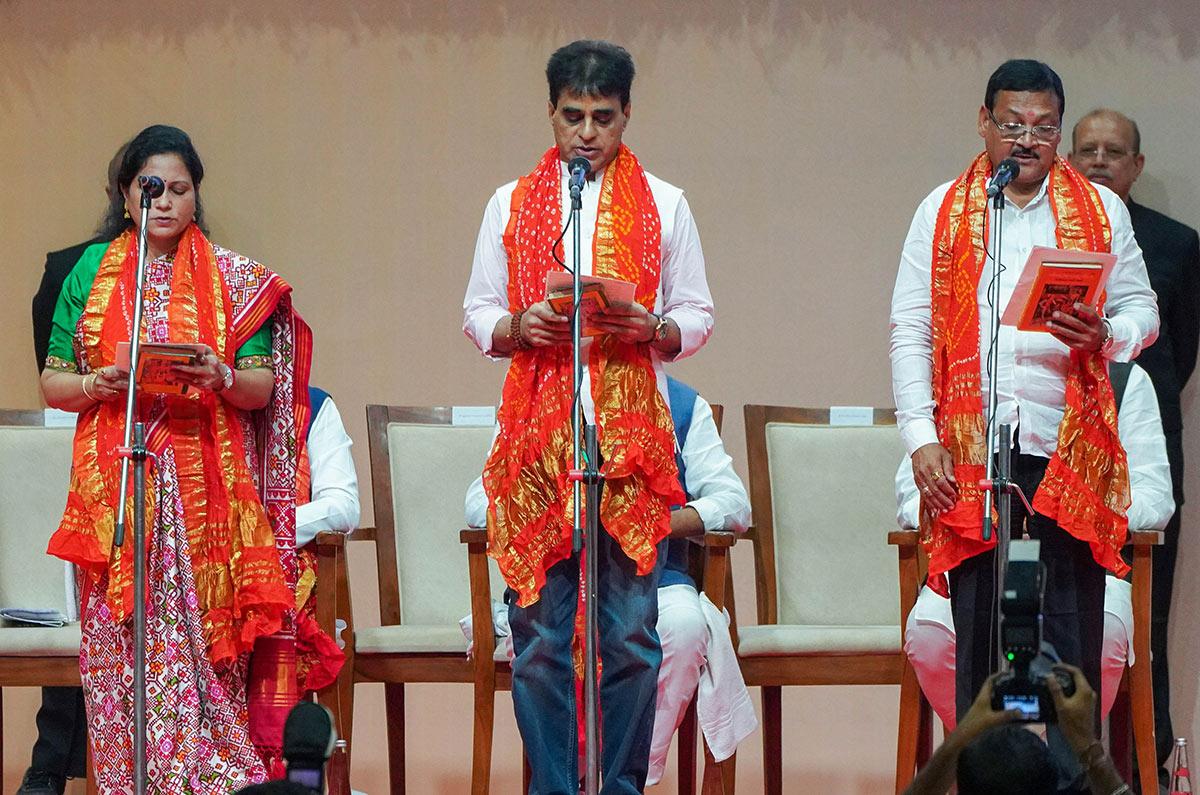
They are attempting to project this as evidence of accountability -- that they audit ministerial performance and replace failures with competent alternatives. But that's not happening in reality.
This is classic Modi-Shah showmanship -- demonstrating that they still control Gujarat politics. It's a display of their enduring grip on the state and a signal to other states: 'We can do this here; we can do it anywhere.'
I'm currently travelling through Madhya Pradesh, and journalists here sense a similar reshuffle is imminent -- possibly including the chief minister (Mohan Yadav). The same pattern may unfold in Bhopal after the Bihar elections.
The ministry strength increased from 16 to 27 including the chief minister. What's driving this expansion?
They are attempting to appease different castes and regions. Saurashtra-Kutch received maximum representation with nine ministers. Caste-wise, OBCs also got nine ministerial positions, Patidars received around eight, with SCs getting three and STs two or three.
They are crafting a narrative: 'We provide equal representation across communities -- you should feel happy and proud. We're the only party doing this.'
But there's no genuine autonomy here. Everything is decided in Delhi. They handpick individuals and present them to Gujarat as ministers -- people who often lack solid grassroots leadership credentials even within their own communities. Authentic caste leaders are systematically denied opportunities.
Gujarat has traditionally been the BJP's strongest bastion. What explains this major shakeup just two years before the next assembly election? Is the party concerned about brewing dissatisfaction?
Dissatisfaction and unrest began during the final days of Vijay Rupani's tenure as chief minister (who served as CM from 2016 to 2021). It intensified when C R Paatil became Gujarat BJP president. There was visible conflict between Rupani and Paatil. Eventually, Rupani was forced out, and Paatil began controlling both the government administration and party organisation.
Amit Shah refocused his attention on Gujarat. This triggered internal dissent at block and district levels across the state.
Currently, the Gujarat BJP is the most fractionally divided state unit. From the block level upward, you'll find two to three groups fighting each other -- one aligned with a particular leader, another with someone else, another with Paatil.
These factional battles manifest in cooperative sector elections, local body polls, tendering processes -- anything that establishes one group's supremacy. We witness incidents of rebellion daily across Gujarat.
Would you say this reshuffle results from Amit Shah's renewed focus on Gujarat?
Partially, yes. But primarily, there's a widespread perception of governmental failure under Bhupendra Patel's administration. After 28 years in power, if you still cannot construct roads that last 10, 15, or 20 years, what's the justification for continuing with the same party?
Yet the BJP wins with huge majorities. How does that square with public sentiment?
People didn't vote for them in 2022. They didn't vote for them in 2017 either. The BJP manages to win through other means.
There's a massive misconception about Gujarat's electorate -- that Gujaratis adore the BJP and Modi unconditionally. This has never been true. It's a carefully constructed and propagated perception across the country, but it doesn't reflect reality.
They control the political machinery and win elections because they understand how to misuse power systematically. They possess power and exploit it to any extent necessary to maintain their grip.

Do you see any new faces emerging as secondary leadership in this ministry?
I don't see any new face capable of becoming second-tier leadership or representing the future. There's one possibility: The way Harsh Sanghavi has been promoted. At 36, he was minister of state for home; now at 40, he's deputy chief minister. He might eventually become chief minister -- but not immediately.
They are waiting for the Bihar elections. Depending on how that unfolds, changes may follow. Bhupendra Patel has requested relief from his position four to five times. He's not keen on continuing.
Was Rivaba Jadeja's inclusion surprising?
Nobody was surprised. The way she was given a ticket, the party machinery's support for her electoral victory -- it was all orchestrated. Amit Shah backs her because he wants to diminish the dominance of Poonamben Maadam (the BJP MP from Jamnagar) and Parimal Nathwani (Businessman-politician, currently a Rajya Sabha MP from Jaganmohan Reddy's YSRCP in Andhra Pradesh, though originally from Gujarat).
Rivaba will definitely have a much bigger role in Gujarat politics going forward.
Has the old guard been pushed aside? Is this rejuvenation or ruthless sidelining?
It's both ruthless sidelining and degeneration -- not rejuvenation. This has been happening since 2007. Many senior leaders, mostly Patidars, were systematically cut down to size. Gordhan Zadaphia and Nitin Patel were sidelined.
Even the upper caste leadership has been marginalised -- you'll find hardly any Brahmin representation in the BJP now. Figures like Shankar Chaudhary and Parshottam Rupala have been diminished.
Isn't the BJP thinking beyond the Modi-Shah era?
They don't care about that scenario because the BJP doesn't think -- only Modi thinks, only Shah thinks. They determine everything.
Who is the BJP more afraid of in Gujarat -- AAP or the Congress?
Still Congress. The Congress retains a huge vote base -- there's no doubt about it. They simply need proper leadership from block to district to state level. If they achieve this in the next two-and-a-half years, they can mount a serious challenge.
Despite Modi and Shah's ruthless attempts to eliminate the Congress leadership from Gujarat, they haven't succeeded in eradicating the Congress ideology or its thought process. Even after 28 years of brutal tactics, the Congress isn't eliminated.
In 2017, the Congress secured 41% of votes. They would have won 110 to 116 seats if not for major manipulation in Surat. Harsh Sanghvi emerged from that episode, though C R Paatil and especially Mansukh Mandaviya (now Union minister of labour, employment and youth affairs) played bigger roles.
There was immense anger then (against the BJP) due to GST implementation. Surat industrialists -- mostly Patidars and Maheshwaris who were the BJP's main donors -- were furious. The Patidar Andolan was at its peak.
Many adversities confronted the BJP, but they managed through manipulation. There was definitely manipulation in 2017 -- not overwhelmingly, but sufficient to form the government.
Does this reshuffle show a confident BJP shaping the future or a nervous party trying to cover its cracks?
What I see is a nervous BJP trying to cover its cracks -- and a confused BJP that doesn't know what to do, just attempting to create or recreate some favourable perception.
What factors should the BJP guard against before the 2027 elections?
Excellent question. If the BJP can address these issues, they might recover ground:
First, jobs. The BJP has promised government jobs for years but consistently fails to deliver. More than 30,000 teacher vacancies exist -- they are not filling them. Instead, they offer the youth 11-month contracts as Gyan Sahayaks with fixed salaries. The youth are angry.
Similarly, police constable and inspector vacancies remain unfilled.
Secondly, GPSC positions -- Rupani promised around 2016 or 2018 that Gujarat Public Service Commission would offer Class-1 and Class-2 officer positions annually. It hasn't happened. Between 2022 and 2024, numerous competitive exams saw paper leaks.
Thirdly, corruption in APMCs and cooperative sectors -- if they start removing corrupt individuals from agricultural produce marketing committees and cooperative institutions, it would significantly help them face the public.
If the BJP seriously addresses employment, examination integrity, and systemic corruption, they might salvage their position. Otherwise, they are heading toward serious trouble in 2027.








 © 2026