

'This is purely transactional politics -- there exists no family reunion as such.'
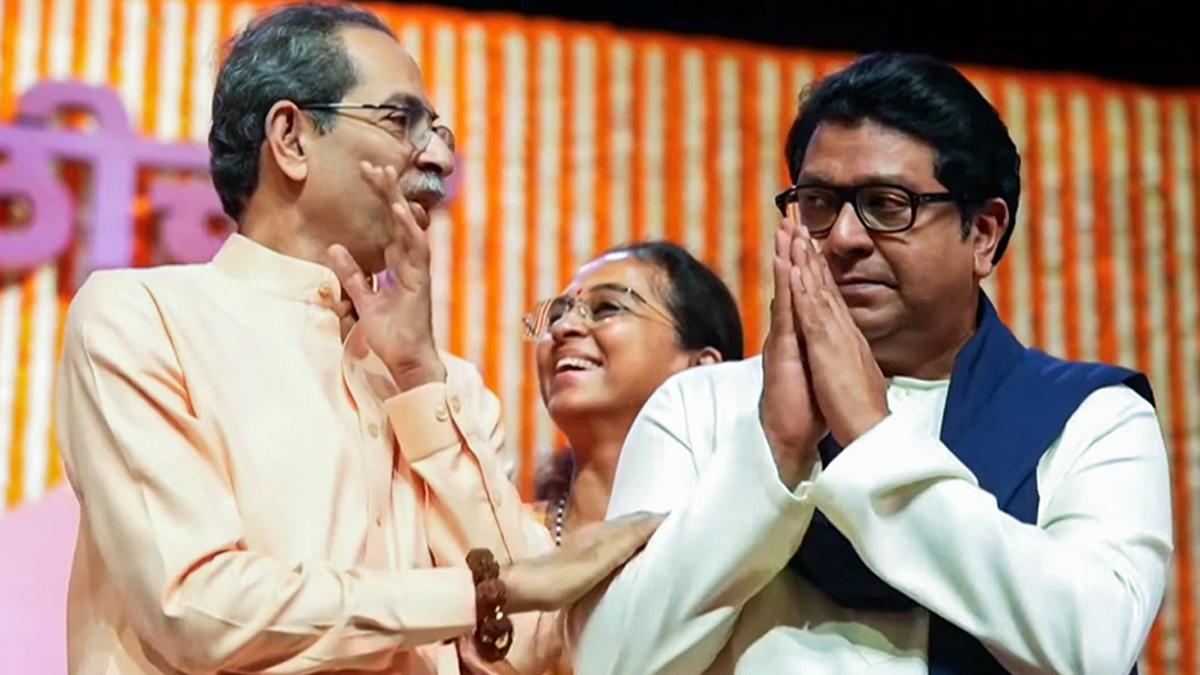
As Maharashtra prepares for the high-stakes municipal corporation elections on January 15, the political reunification of the Thackeray cousins -- Uddhav and Raj -- after nearly two decades of estrangement has emerged as the most compelling narrative.
Yet, according to Kiran Tare, editor-in-chief, The Perfect Voice, this alliance represents not a romantic reunion of the Thackeray legacy, but rather a desperate attempt at political survival by two parties confronting existential crises.
The Bharatiya Janata Party last week established its dominance across Maharashtra, securing 117 municipal council president posts in local body elections, while Chief Minister Devendra Fadnavis characterised the Mahayuti alliance's success as a 'trailer' for the forthcoming civic corporation contests.
Against this backdrop of BJP ascendancy, the Thackerays face formidable challenges in reclaiming their traditional strongholds.
In this extensive conversation with Prasanna D Zore/Rediff, Tare provides a granular analysis of Mumbai's complex demographic arithmetic, the limitations of Marathi vote consolidation, and why the BJP's strategic positioning amongst non-Marathi communities and slum populations may prove decisive.
Is the coming together of Uddhav and Raj Thackeray merely dictated by electoral mathematics, or does it possess emotional resonance capable of reuniting the Marathi electorate?
There exists no emotional connectivity whatsoever in this arrangement. This represents purely the arithmetics of politics -- the politics of power, if you will.
Both parties find themselves confronting existential crises of considerable magnitude. Raj Thackeray's Maharashtra Navnirman Sena currently holds zero MPs, zero MLAs, zero corporators in Mumbai.
Uddhav Thackeray's situation, while marginally superior, remains precarious with merely 20-25 MLAs (60 of the 84 who had won on the undivided Shiv Sena symbol in 2017 have joined Eknath Shinde's Shiv Sena).
We must appreciate that the BrihanMumbai Municipal Corporation serves as Uddhav Thackeray's political oxygen. Should he forfeit control of the BMC, his party faces certain obliteration.
Consequently, Uddhav desperately requires Raj's support, while Raj requires Uddhav to demonstrate some semblance of relevance in state politics. This is purely transactional politics -- there exists no family reunion as such.
You suggest this alliance is driven by political survival rather than ideology or Marathi asmita (pride)?
Naturally, they maintain that Marathi asmita constitutes their core agenda -- they cannot retreat from that foundational position. However, despite possessing this common ideological ground regarding Marathi pride and Marathi identity, they require political accommodation to maintain relevance in state politics. That necessity has brought them together.
Will this alliance benefit the two Thackerays? What potential does this partnership possess to upset electoral outcomes, particularly given the BJP's current momentum?
Consider the arithmetic carefully. Should Raj Thackeray's MNS secure merely 10 seats in the BMC, his electoral rise would be tenfold, given his current position of zero representation.
Similarly, if Uddhav Thackeray manages to exceed 50 seats, that would constitute a victory for him.
In the previous BMC general body, he commanded 90 corporators. However, approximately 60 of those have departed to join Eknath Shinde's faction. He retains only 20-25 at present. Therefore, increasing from 20-25 to 50 represents a substantial gain -- a significant achievement in his current circumstances.
Will the Thackeray alliance directly erode the BJP-Shiv Sena-NCP vote base, or might it actually benefit the BJP?
The contest will prove particularly intense in central Mumbai constituencies where Marathi voters hold dominant positions -- areas such as Lalbaug, certain sections of Mahim, Bandra, Vikhroli, Bhandup, Dadar, Worli and similar localities.
The critical factor becomes which candidate opposes the joint Shiv Sena-MNS nominee.
My assessment suggests the BJP has strategised to position Shinde faction candidates wherever Thackeray alliance candidates stand.
This maintains the Marathi connectivity, as all three parties -- Shiv Sena (UBT), MNS, and Shinde's Shiv Sena -- claim to champion Marathi asmita. The BJP possesses its own resources in these areas.
Where no direct confrontation exists between Marathi candidates, the BJP can field either Marathi or non-Marathi candidates depending upon demographic composition.
The BJP has articulated its ambition to capture the BMC. Does this Thackeray alliance complicate that objective?
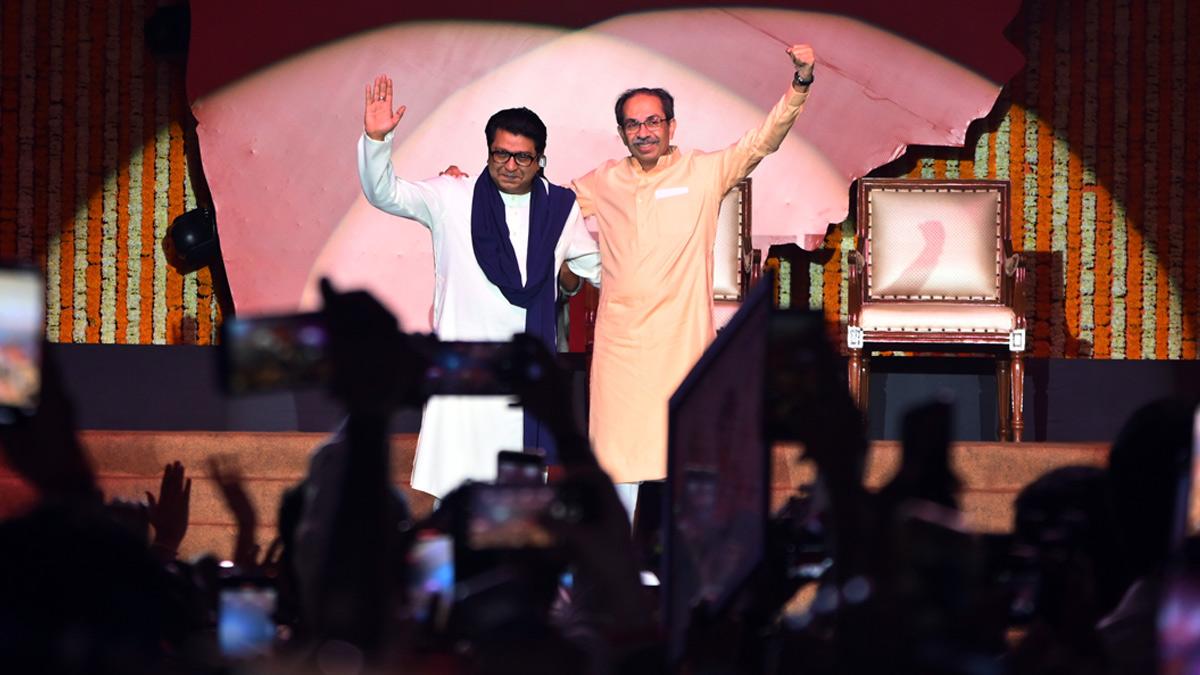
Considerable speculation exists that the BJP will succeed in wresting control of the BMC. The fundamental reason concerns the Thackerays' excessive focus upon Marathi voters exclusively.
Marathi voters constitute merely 37 per cent of Mumbai's population. Furthermore, the Thackerays fail to secure 100 per cent of even these Marathi votes -- historically, they obtain only approximately 50 per cent, and that was during Balasaheb Thackeray's era.
Balasaheb is no longer with us. Additionally, the Shiv Sena vote has fragmented.
Who ultimately determines the outcome of this municipal election?
This election will be directly determined by the voters who reside in slums and non-slum residents.
Mumbai's geography has bifurcated -- 50 per cent of the population resides in slums, 50 per cent in residential buildings. Those residing in towers constitute traditional BJP supporters. However, their voting percentage remains considerably low.
Conversely, slum dwellers represent a collective electorate -- but they vote across parties. Critically, voting percentage proves substantially higher in these areas. Therefore, the party that mobilises its traditional supporters to polling stations will prevail.
Does this alliance represent the Thackerays' final realistic defence of their brand in Mumbai?
The Thackeray brand undoubtedly persists. However, should they unite, a critical question emerges: Who represents the bigger Thackeray -- Raj or Uddhav? Should the alliance assume BMC power, who shall administer it?
Raj projects considerably greater dominance in alliance negotiations. Should Uddhav permit Raj to assume that prominent position, then Raj becomes the superior brand -- he becomes the Thackeray brand.
Will this alliance transform Raj Thackeray into a kingmaker, or dilute his identity?
Whether he becomes a kingmaker depends upon corporator numbers. Should he secure 50 corporators, undoubtedly he assumes kingmaker status. Within 10 to 12 seats, he becomes merely another leader. He has already compromised his identity.
I must highlight an intriguing dimension: Numerous Muslim voters supported Uddhav in recent elections to the Lok Sabha and Vidhan Sabha. When Raj -- whose image remains that of a Hindutva supporter -- joins Uddhav's alliance, will Muslim voters accept this?
I believe this explains why the Congress has determined to contest independently. The Congress calculates that Muslims will support them instead. This provides the Congress an urban revival opportunity.
What political space will the Congress and Eknath Shinde's Shiv Sena occupy?
The Congress is contesting independently, which potentially provides favourable prospects. Should they consolidate non-Marathi slum voters and the Muslim electorate, they could perform well.
However, should Muslim votes fragment amongst various parties, the Congress may struggle to exceed 25 to 30 seats.
Conversely, should the Congress prevent Muslims from voting for the Shiv Sena (UBT), a remarkable situation could emerge. Forty-seven wards exist where Muslims hold dominant positions. Should the Congress secure even 40 of those 47 wards, the Congress becomes a kingmaker.
Will a Thackeray success reset Maharashtra's Opposition politics beyond civic elections?
I believe it will reshape Maharashtra politics comprehensively. Fifty per cent of the state is urbanised. Should municipal corporations vote favourably for the Thackerays, they acquire bargaining power.
MLC elections follow shortly, with MLCs being elected from municipal corporations. Uddhav's legislative council term concludes in 2026. He cannot secure election through MLAs, as he requires 42 votes but possesses only 20. He must depend upon the BMC, which elects two MLCs. He requires at least 50 corporators in Mumbai for re-election.







 © 2026