
'When India opened its doors to the world, moving away from an agrarian to a market economy, everything, whether life or love, was commodified.'
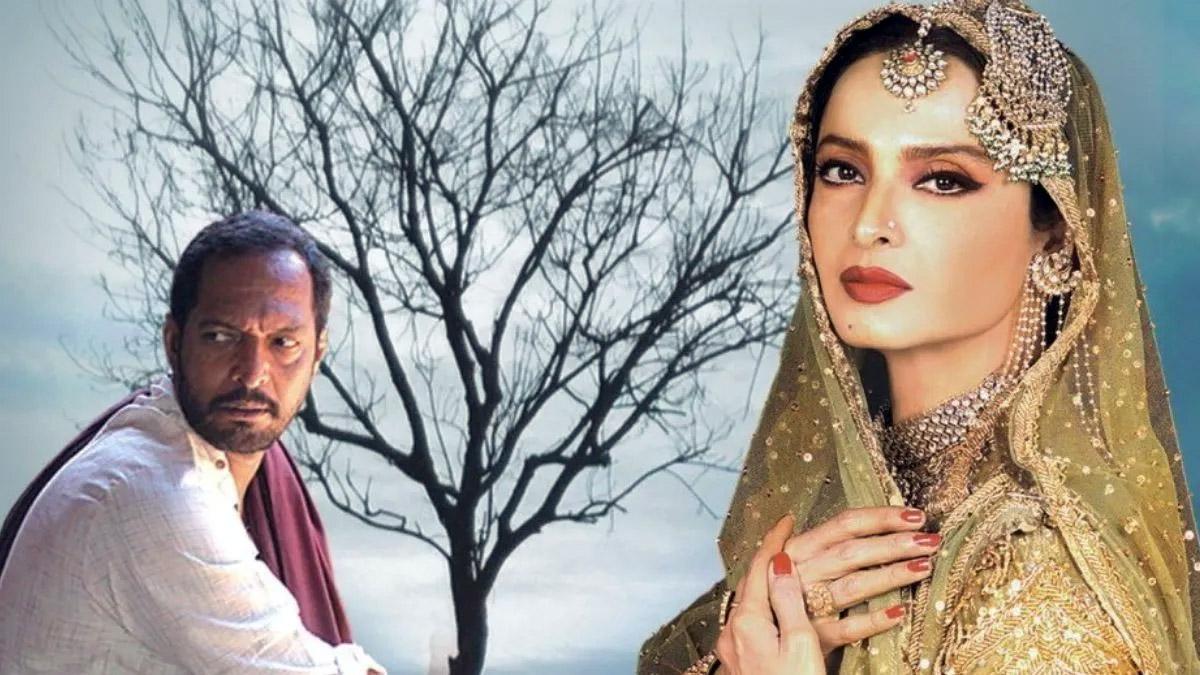
In the first part of a fascinating interview, film-maker Goutam Ghose was worried about 'cinema's greatest challenge'.
"Capitalism has been there since the late 19th century, but now there's the need to grab everything, to destroy and construct. Corporates are only interested in profits and the 'work 24x7' mantra is leading to early burnout. Controlling this speculative economy is essential to our survival," Ghose tells Rediff Senior Contributor Roshmila Bhattacharya in the concluding segment of the interview.
What is the greatest challenge human beings are facing today?
I should think it is greed.
Corruption is no longer a bad word; it is a part of our lives today.
In 1991, when India opened its doors to the world, moving away from an agrarian to a market economy, everything, whether life or love, was commodified.
Since I travel with my films around the world, I could understand what was happening and tried to sound a warning through Gudiya and Yatra.
But not many understood what I was saying then.
Our greatest gift as human beings is the power to think. Once we stop doing that, we become robots and that's scary.
Talking about Yatra, how did you elicit such a wonderful performance from Rekha who has always been a part of mainstream Hindi cinema?
Rekha, Nana Patekar, Deepti (Naval), they were all superb.
As a director, it is your responsibility to point out to your cast that while you admire their stardom, it is imperative that they become your character.
I have had friendly relations with all my actors and if there are any arguments or conflicts, even that's desirable as it can only help the film.
I have fond memories of Rekha.
She needs to do more serious films.
Would you want to go on another yatra with her?
Why not? That would be interesting as she is a wonderfully spontaneous actress with an innate sense of music and dance.
But now, many want me to make another Telugu film.
My first film was in Telugu, and even after our decades, evokes a lot of nostalgia.
Maa Bhoomi is a cult film today and Hyderabad is still like a second home for me.
(Laughs) Everyone there keeps asking me to make another Telugu film and I joke, 'You think I should make my swan song here?'
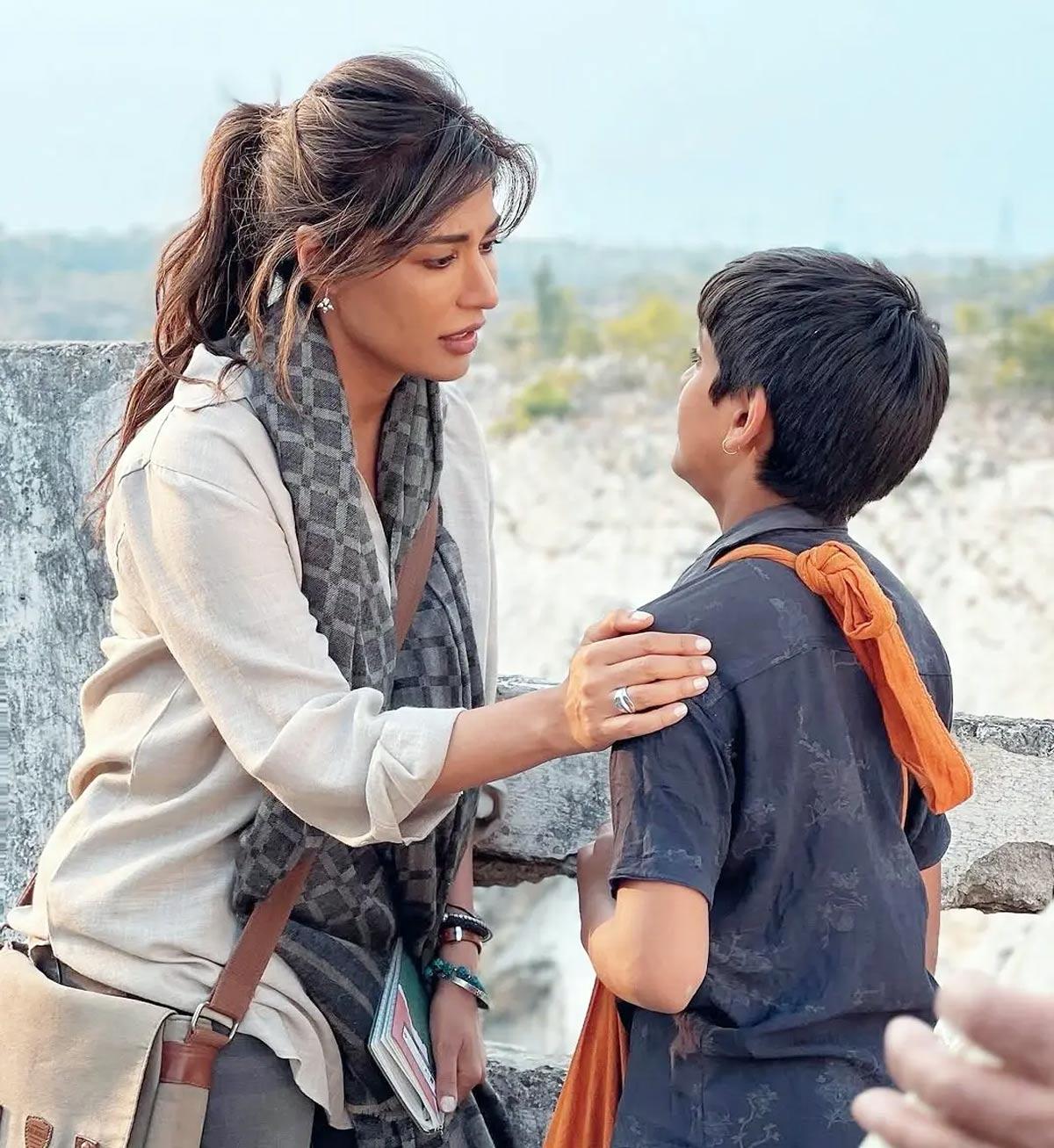
Language is not a problem?
With a good interpreter you can make films anywhere in the world and in any language.
Parikrama is in Italian, English and Hindi, maybe I can make this one in Telugu and English.
Commercially, Tollywood is doing better than Bollywood or even Bengali cinema...
Yes, Bengal has a viewership of 28 crore (280 million), including the diaspora and Bangladesh, yet its turnover is less than Rs 300 crore (Rs 3 billion).
Telugu cinema in comparison caters to a population of just 9 crore (90 million), but has an annual turnover of Rs 3,000 crore (Rs 30 billion).
The young people there are making wonderful films and are marketing them successfully around the world.
Cross-pollination of talent is a trend today. You could make your Telugu film with actors from Bollywood, Bengal and the South.
Yes, and I could even cast actors from the North Eastern states like Assam and Manipur.
Right now, I'm still working on the idea, it has to inspire me to turn it into a film otherwise I'm happy making my documentaries.
I've learnt a lot from my documentaries on Ustad Bismillah Khan, Satyajit Ray, the Dalai Lama and K G Subramanyan to name a few.
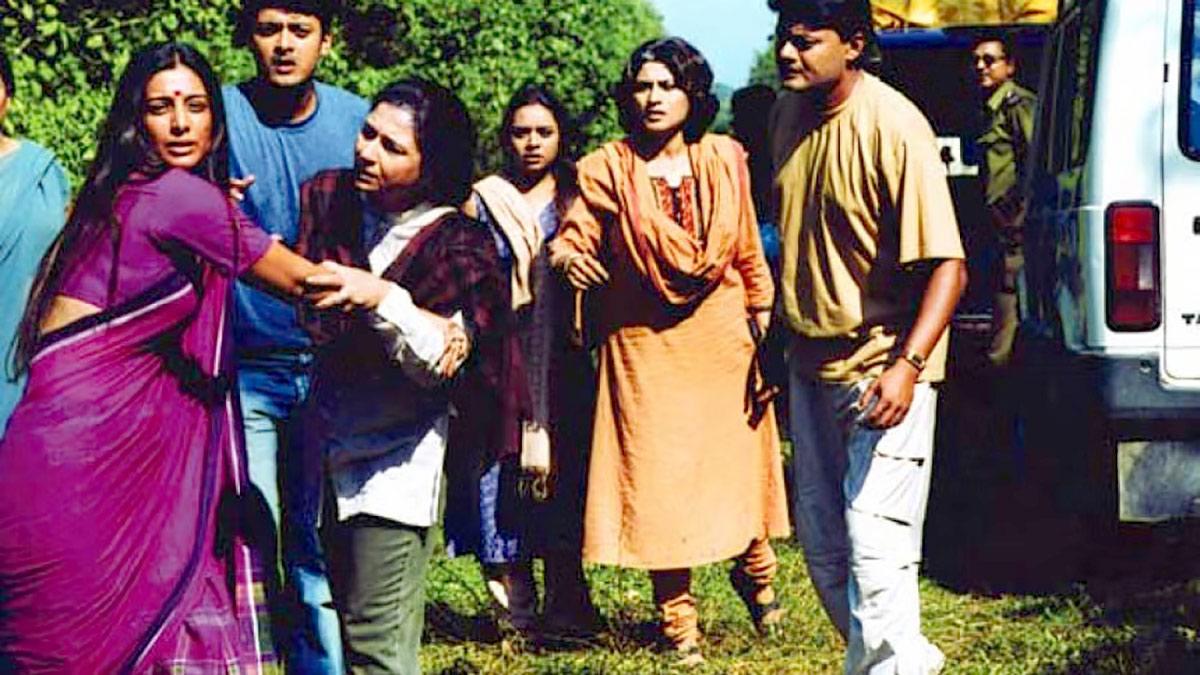
Talking about Ray, it must have taken a lot of courage to make a sequel to his 1970 cult classic Aranyer Din Ratri.
The idea came to me when after his demise, I was working on the documentary Ray: Life and Work on Satyajit Ray.
Since the original cast, with the exception of Rabi Ghosh, were still alive and active then,Abar Aranye seemed like a feasible idea.
More than a sequel, the 2003 film is a tribute to Satyajit Ray, and Sunil Gongopadhyay whose novel I had read much before I watched the film.
My film released three decades after the original film and underlined the fact that the ignorance of city dwellers, when it comes to forests, has only increased.
All the senior actors, from Soumitra Chatterjee and Sharmila Tagore to Subhendhu Chatterjee and Samit Bhanja, even the younger ones like Tabu, Jisshu Sengupta and Saswata Chatterjee would tell me whenever we met later to make a third part as Abar Aranye had been one of their most enjoyable outdoors.
Will you?
Why not? Twenty years have passed and so much has changed.
Maybe we could go on another journey to the mountains or the desert this time.
There was another journey, Antarjali Yatra, in 1987, perhaps the only film for which Shatrughan Sinha was never late on the sets, even if he was required at 4 am.
I'm so grateful to Shatru, who with great humility and courtesy, has reiterated, time and again, that Antarjali Yatra is the best film of his career and making it was a great experience.
Much to my embarrassment, he said this even at a conference he attended as a politician to which I was invited as a friend.
I cast him as the chandala Baiju as he is from Bihar and so would get the accent right.
Also, we made the film in both Bengali and Hindi, Shatru knows Bengali too.
There is a Hindi version?
Yes, it's lying in the vault.
After the Bengali film won the National Award, the Grand Prix Golden Semurg at the Tashkent Film Festival in 1988 and was screened at Cannes, the Hindi version was never released.

Parikrama is another journey film. Why did it take five years to complete?
It's an official Indo-Italian co-production and there were agreements to be signed between the two countries.
Then, the COVID-19 pandemic arrived.
We started the film in Italy in January 2020, leaving the country around February 4.
Within a week, a lockdown was imposed there and slowly spread across the world.
After the pandemic, the producers could not financially support the Indian portions which make up 75 percent of the film and I had no choice but to wait.
I made a short film in the interim, but I did not take up another feature because as that would have disheartened the producers.
This film has been a test of endurance and today, irrespective of how it fares at the box-office, I'm ecstatic that it is finally releasing.
It will have a staggered limited release, with Mumbai following Kolkata and Delhi soon.
We are also in talks for a release overseas.
Since 1985, following the Narmada Bachao Andolan, the Narmada has been in the eye of many storms. Today, when even the smallest of issues trigger a call for a ban and violence, aren't you apprehensive?
My film has nothing to do with the people's movement in Narmada, it is about how the reservoirs displaced people from their homes, like Lala and his family.
It even changed the path of the pilgrims.
But it could not displace faith and the parikrama continues.
(Sighs) Violence is our legacy and the product of ignorance.
After Independence, we could not give our people a holistic education and this kind of frenzy was tapped for votes.
In the 19th century, the Indian renaissance gave us many visionaries and artists like Raja Ram Mohan Roy, Bankim Chandra Chattopadhyay, Swami Vivekananda, Rabindranath Tagore, right up to Satyajit Ray.
But their mix of Western enlightenment and Indian wisdom did not reach the masses.
In Italy, even a peasant has heard about Leonardo da Vinci.
In The Netherlands, even a worker knows Vincent Van Gogh.
But in India, very few have heard of an artist by the name of Jamini Roy which is really sad.
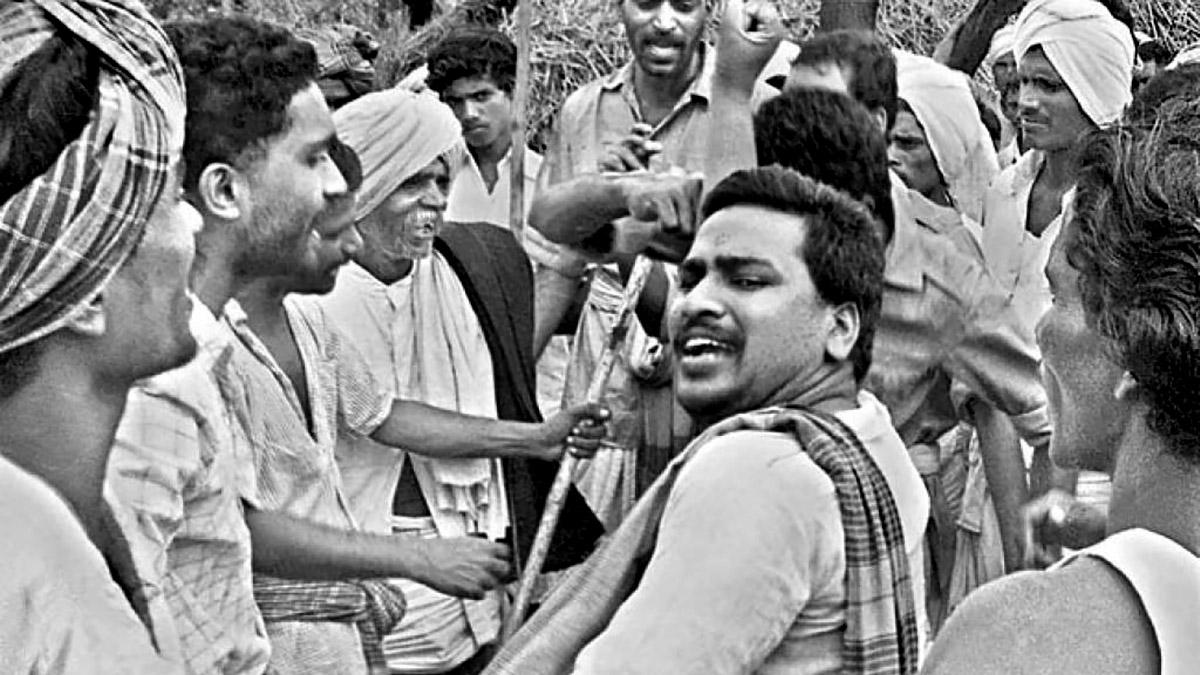
So, Parikrama is not a political film?
My first film, Maa Bhoomi, was a political film, dealing with the peasant uprising during the Nizam rule, which continued even after Independence.
Parikrama is about love, compassion and courage.
It is about thousands of boys like Lala who grow into little big men showcasing the indomitable Indian spirit.
It is about maya which underlines that neither joy nor suffering is permanent, everything is transient.
Would you say you have changed as a person thanks to your films?
Film-making is an interesting process; you are painting life. Since you don't work alone, some of the actors and technicians are also affected.
During Moner Manush, I made Prosenjit Chatterjee prep for four months to play Lalon Fakir and he later confided that the film changed the way he looked at life and cinema.
Charlie Chaplin, whose Tramp made him a huge success across the world, returned after the war with Monsieur Verdoux and King in New York.
The films didn't work because people were expecting to see the popular character again, but Chaplin refused to go back to it.
He reasoned that the world had changed and the romance of the Tramp was lost.
Our world has also changed?
Yes, capitalism has been there since the late 19th century, but now there's the need to grab everything, to destroy and construct.
Corporates are only interested in profits and the 'work 24x7' mantra is leading to early burnout.
Controlling this speculative economy is essential to our survival.
We've seen how everything collapses during a recession and we cannot let our lives be dictated by share markets.
There is also a growing realisation that we need to save our planet and there is an overriding global concern for environment and ecology.
We should also try to end and avoid wars as they disturb the ecological balance of the planet...
Yes, but the problem is that we never learn from our mistakes.
We are a warring race, so one war leads to another.
Sometimes I dream that I'm floating in space and barring the sound of meteors falling, it's so serene.
Then, I zoom in on the blue planet and instantly, I'm assailed by the deafening explosions of bombs and missiles.
The human race which is so infested with intolerance and violence can learn a lesson or two from the lemurs.
I want to make a documentary on these peaceful, wet-nosed primates endemic to Madagascar and their organised society.






 © 2025