

A quiet power struggle has erupted within the storied 156-year-old Tata Trusts a year after group patriarch Ratan Tata's death.
All Illustrations: Dominic Xavier/Rediff
Tata Trusts is the philanthropic backbone that controls two-thirds of Tata Sons, the holding company of the $328 billion Tata Group (market cap as on March 31, 2025; external link).
What began as a dispute over reappointments and access to information has spiralled into a full-blown split between two camps of trustees, facing government intervention and reviving memories of the group's earlier corporate storms.
At the centre of the rift stands Noel Tata, 66, the low-profile half-brother of the late Ratan Tata, who took over as chairman of the Trusts on October 11, 2024, after the latter's death on October 9, 2024. Known for his discretion and managerial steadiness, Noel's elevation was seen as a natural continuation of the Tata legacy.
He now finds himself defending the traditional 'Tata way' -- where decisions are made by consensus rather than by vote. He is backed firmly by Venu Srinivasan (Chairman Emeritus, TVS Group) and Vijay Singh (former defence secretary), the two vice-chairmen who have long been among the most powerful figures within the Trusts hierarchy.
Together, they represent continuity and the Old Guard. Read Who's Who In Tata Trusts.
The flashpoint came on September 11, 2025, when the board voted on whether Vijay Singh, 77, should continue as a nominee director on the Tata Sons board.
The rule that required annual reappointment of elderly nominees over 75 years had been introduced soon after Ratan Tata's passing. When the vote was held, four trustees opposed Singh's renewal, defeating the motion 4-2.
It was a first in the Trusts' history -- decisions had always been unanimous. Singh soon resigned from the Tata Sons board, and the collegial culture of Bombay House changed overnight.
Leading the rebellion is Mehli Mistry, a businessman and long-time associate of Ratan Tata, who also happens to be the first cousin of the late Cyrus Mistry, who had a bitter fallout with Ratan Tata after his removal as chairman of Tata Sons (between December 28, 2012, and October 24, 2016), the holding company of the Tata Group (Read the entire coverage here).
Backed by three fellow trustees -- Pramit Jhaveri, Darius Khambata and Jehangir HC Jehangir -- Mehli Mistry has questioned what he calls opacity and selective disclosure in the Trusts' functioning.
Mehli Mistry's group has demanded access to minutes, agendas and board papers of Tata Sons, arguing that trustees have a right to oversight.
The Noel Tata camp accuses Mehli Mistry of attempting to turn the Trusts into a 'super-board' that could second-guess Tata Sons' management decisions.
Noel Tata is married to Aloo Mistry, Cyrus Mistry's elder sister. The Shapoorji Pallonji group, which is majority owned by Cyrus Mistry's family, holds about 18 per cent of Tata Sons.
Mehli Mistry's position as trustee, though officially equal to others, has become politically weighty, especially as the dissenting bloc's informal leader. Some insiders have described his bid to join the Tata Sons board as a 'coup attempt'; others see it as an overdue demand for institutional transparency.
Among his allies, Pramit Jhaveri, the former CEO of Citi India, brings global banking and governance credentials. He has pressed for professionalised structures within the Trusts, calling for clear rotation norms, performance metrics and defined disclosure policies.
Darius Khambata, Maharashtra's former advocate general, provides the legal heft behind the dissenting camp's arguments, ensuring their positions are carefully articulated within the Trusts' framework.
Jehangir HC Jehangir, a quiet philanthropist with deep family roots in Mumbai's charitable circles, adds moral legitimacy to the bloc's push for transparency.
In contrast, Venu Srinivasan, the other vice-chairman and a veteran of the Tata ecosystem, is viewed as the organisational stabiliser.
As a long-time nominee director on the Tata Sons board, he has wielded considerable influence over key appointments and strategy discussions. His alliance with Noel Tata is both ideological and operational -- both men are determined to preserve the spirit of unanimity and the trustees' collective discretion.
Here's a sneak-peek into the seven dramatis personae and their role in the Tata Trusts, and how they are tied to the present conflict.
Noel Tata

Noel Naval Tata, the late Ratan Tata's half-brother, emerged in October 2024 as chairman of Tata Trusts -- the philanthropic umbrella controlling about 66% of Tata Sons.
His elevation wasn't entirely surprising: He already served as trustee in both the Sir Dorabji and Sir Ratan Tata trusts -- the two largest philanthropic entities within the Tata Trusts, collectively holding a significant stake in Tata Sons -- and had deep operational experience across Tata group companies.
In August 2025, during the 107th annual general meeting the shareholders cleared his nomination to the Tata Sons board, bolstering his institutional clout.
In the current dispute, Noel leads the camp arguing for continuity, consensus-driven decisions, and maintenance of the Trusts' traditional decision culture.
His legitimacy is reinforced by backing from 'old-timers' and alignment with the Tata legacy.
Venu Srinivasan
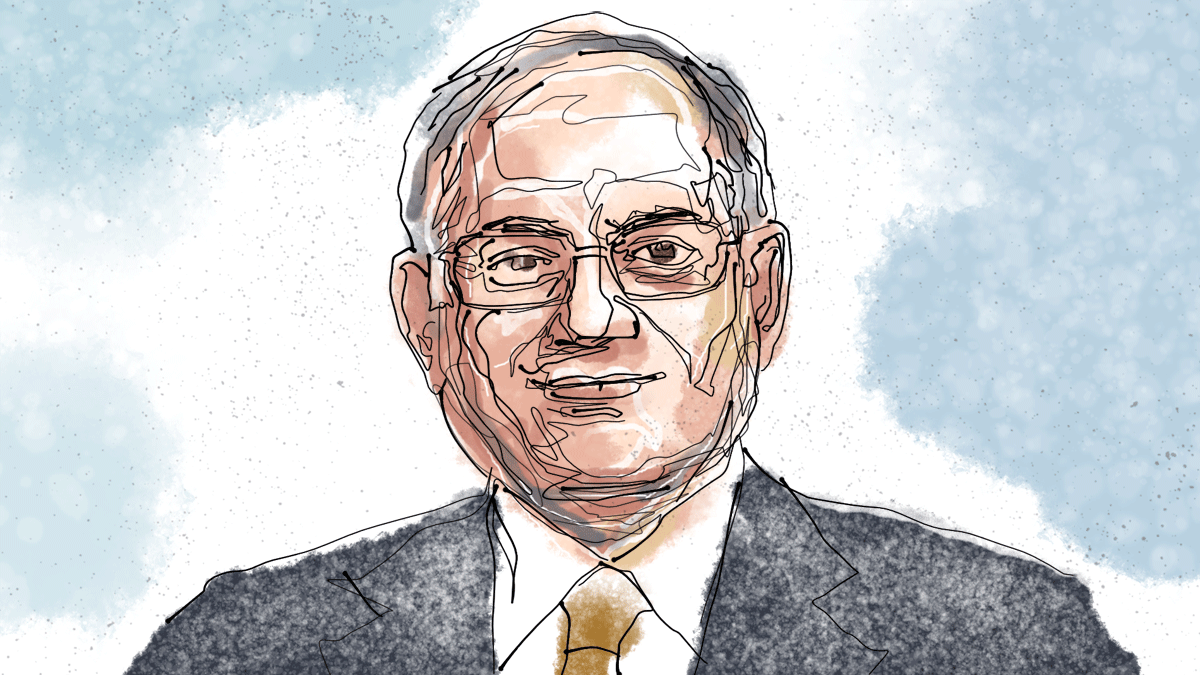
Venu Srinivasan serves as vice-chairman of Tata Trusts and is a longstanding nominee director of Tata Sons -- making him one of the more powerful trustees in the group's intricate governance web.
His role positions him as both a gatekeeper and behind-the-scenes influencer in nominations and oversight. In the power tussle, Venu stands firmly with Noel's camp, defending the 'Tata way' of consensus and resisting what they cast as destabilising challenges to the status quo.
His alliance helps preserve institutional continuity and shields the chairman's decisions from dissident interference. His influence is partly procedural -- he sits on the executive committee that steers Trusts' internal decisions.
Vijay Singh
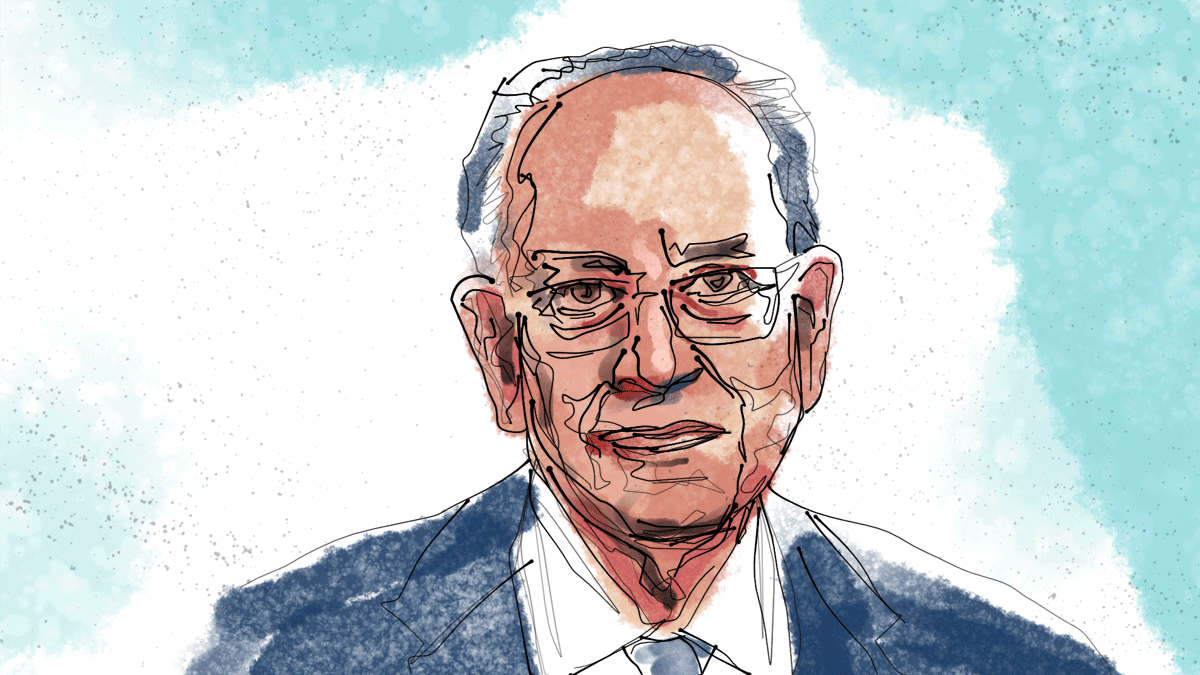
Former defence secretary Vijay Singh holds the post of vice-chairman in Tata Trusts and until recently was one of the Trusts' nominee directors on the Tata Sons board.
The dispute ignited when his reappointment by the Noel Tata camp was challenged: After the Trusts introduced a rule that directors above 75 must be reappointed annually, the vote to renew Singh's seat failed 4-2.
Four trustees -- Mehli Mistry, Darius Khambata, Pramit Jhaveri and Jehangir HC Jehangir -- opposed the renewal, reflecting the influence of the faction associated with Mehli Mistry.
On the other side, Noel Tata and Venu Srinivasan supported Singh's continuation, advocating for stability and adherence to established governance practices within the Trusts.
The outcome, a 4-2 rejection, ultimately led to Singh stepping down, underscoring the deepening rift in the Trusts' leadership and a sharp rupture in the Trusts' tradition of unanimity.
Singh resigned from Tata Sons' board, and that act became the detonator of deeper governance conflict.
In the present fault lines, Singh symbolises how procedure and rule changes can reshape power.
Mehli Mistry
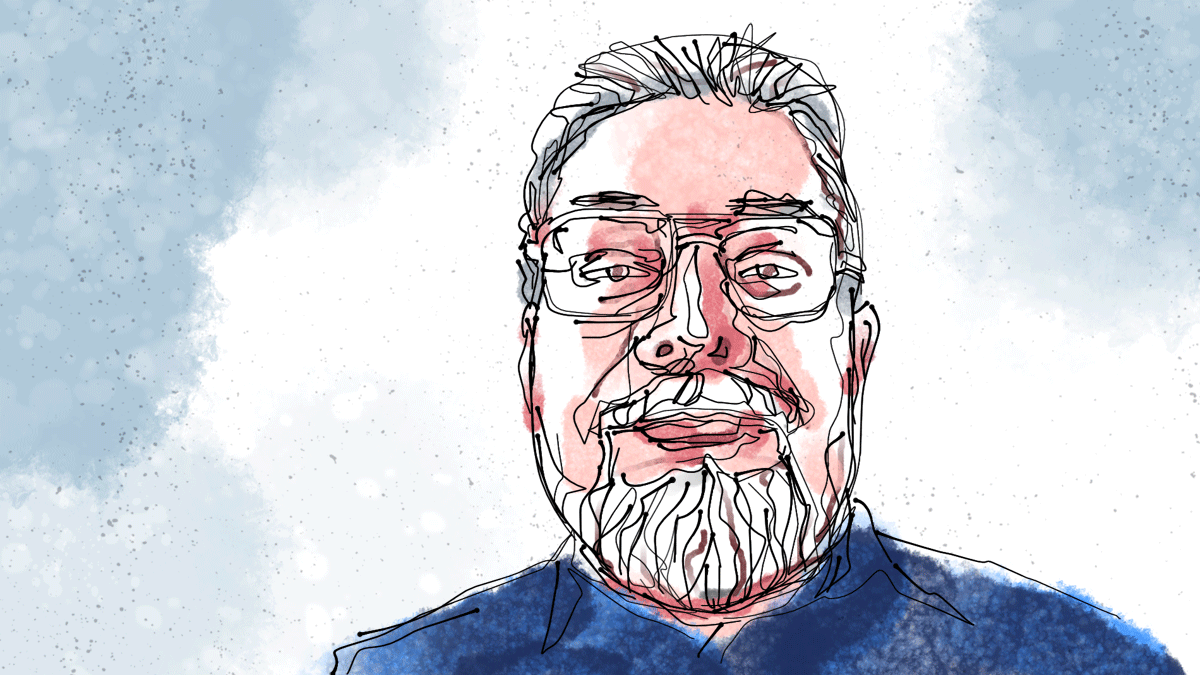
Mehli Mistry, the late Cyrus Mistry's first cousin, is the central figure of the dissenting bloc -- a trustee who has challenged the prevailing power structure.
He joined the Trusts in October 2022 and was a longtime associate of Ratan Tata.
Mehli's camp demands greater access to board minutes, agendas, and oversight -- accusing the chairman's allies of opacity. His attempt to get himself or allies nominated to Tata Sons' board was blocked, intensifying the split.
In media narratives, he is presented as pressing for structural reform though critics see in him a push for influence.
Pramit Jhaveri

The former CEO of Citi India brings governance credentials and an outsider's outlook on institutional reform. He has publicly flagged the need for clearer rotation rules, disclosures and internal accountability.
In the current clash, his voice lends credibility to the reformist demand that trustees not be sidelined from decision cycles. He may not have independent backing of equity, but his professional reputation underscores the challenge to the status quo.
Darius Khambata

A senior advocate known for representing the Tatas in legal matters, his legal acumen allows him to frame the reformist claims in firm trust-law terms. He was part of a delegation meeting with central ministers Amit Shah and Nirmala Sitharaman to signal that the dispute is not just internal but affects public interest.
He insists on reforming the internal information regime -- demanding the same access to agendas, minutes and board reports that majority trustees enjoy.
In this power drama, Khambata is the ideological and legal anchor of dissent, elevating grievances from personal to structural.
Jehangir HC Jehangir
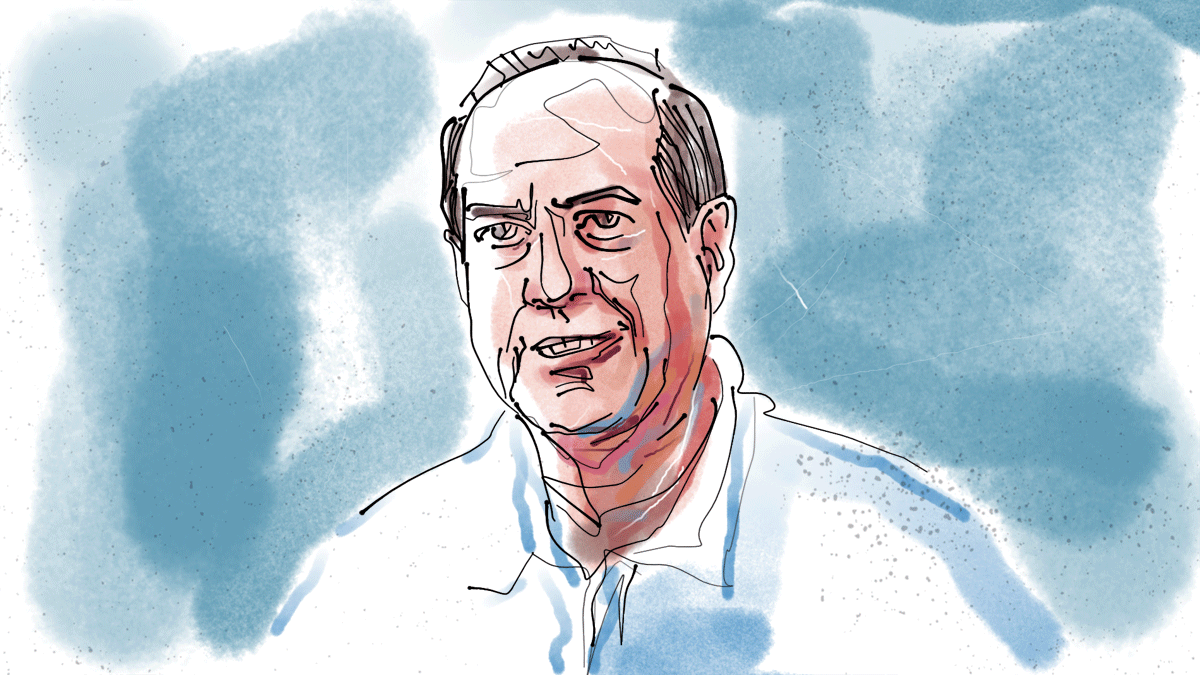
The Pune-based businessman and philanthropist is aligned with Mehli Mistry and supports the push for transparency, reform, and greater trustee inclusion.
Though less public in rhetoric than his fellow dissidents, his presence buttresses the bloc's claim to broad-based trust representation.
He adds a philanthropic legitimacy to the dissent -- someone who works in the public interest rather than boardroom politics. His influence is more moral than structural, but it matters in a dispute over trust legitimacy.
Behind the veneer of procedural disputes lies the question of control.
The Tata Trusts collectively own about 66 per cent of Tata Sons, giving it the decisive vote in appointing one-third of the holding company's directors. Those nominee directors carry veto powers on major decisions, from raising capital to mergers and top-level appointments.
Whoever influences the Trusts effectively influences Tata Sons -- and, by extension, the entire $328 billion Tata Group.
Concerned about instability in one of India's most systemically important conglomerates, Home Minister Shah and Finance Minister Sitharaman summoned both sides -- Noel Tata, Tata Sons Chairman N Chandrasekaran, Venu Srinivasan and dissenting trustee Darius Khambata -- to a meeting this week.
According to media reports, the ministers urged the trustees to 'restore stability by whatever means necessary,' reminding them of the Trusts' public-interest responsibilities.
There is also a wider backdrop: Speculation over a possible listing of Tata Sons and the continuing negotiations to buy out the Shapoorji Pallonji group's stake.
Some insiders believe the reformist trustees favour a partial listing to improve transparency, while the Noel Tata camp wants to retain the traditional private structure.
The parallels to Cyrus Mistry's October 24, 2016 ouster are unmistakable -- that conflict was about operational control; this one, about governance and oversight.
For now, both factions insist that dialogue is ongoing, but the collegial tone that once defined the Tata Trusts has given way to calculation and mistrust.
The stakes are immense: Whoever prevails will shape not only the governance of India's most respected conglomerate but also the moral authority of the institution that bears its founder's name.









 © 2026