

In its June 2025 review, the International Monetary Fund spotlighted India's Unified Payments Interface as the world's most dominant retail instant-payment network, moving more transactions than any other system on the globe.
UPI alone powers almost half -- 49 per cent -- of all real-time digital payments worldwide. Which are the other countries big on digital payments?

1. India
Just like mobile phones, the UPI system in India has seamlessly woven itself into our everyday life.
From roadside tea stalls, taxis, transgenders to high-end boutiques in shopping malls, almost every establishment boasts a UPI scanner. So accustomed are people to digital payments that many rarely carry on their person even a single rupee in cash.
The government, according to PIB, in 2024-2025, had distributed 56.86 crore QR codes among 65 million merchants.
Remarkably, India accounts for around 49 per cent of the world's real-time digital transactions, registering an astonishing 129.3 billion payments online in 2024.
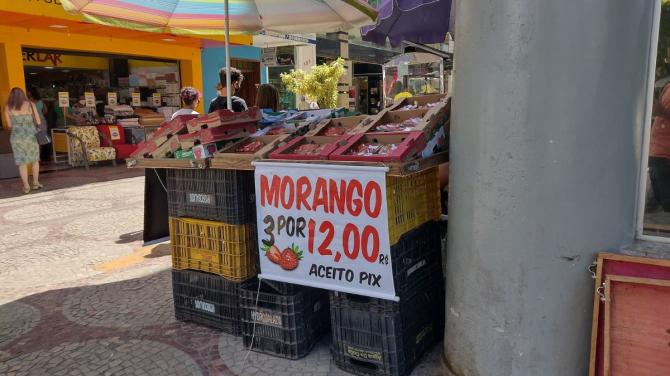
2. Brazil
Much like India's UPI, Brazilians rely on the Pix payment system to pay, transfer, or shop with remarkable ease.
Brazil holds a solid second place globally, completing 37.4 billion real-time transactions in 2024 and commanding 14 per cent of the worldwide share.

3. Thailand
Thailand's PromptPay's simple QR-based system contributed 20.4 billion instant payments in 2024, accounting for 8 per cent of the world's real-time transactions.

4. China
In China, Alipay and WeChat Pay have become the go-to digital wallets, leaving conventional debit and credit cards far behind.
The country registers 17.2 billion real-time transactions in 2024, accounting for 6 per cent of the global market.

5. South Korea
Boasting over 23 million users, KakaoPay and Naver Pay are the main digital payment apps. Mobile payment platforms are increasingly favoured in the country, especially by millennials and Gen Z.
South Korea logs 9.1 billion instantaneous transactions in 2024, representing 3 per cent of the world total.

6. Others
The rest of the world collectively contributes 52.8 billion transactions in 2024, forming a significant 20 per cent of global real-time payments.





 © 2026